The Witness
Whether presence without a body amounts to witness
Eileen Kovar is not alone at three in the morning. Whether she is witnessed is the question this essay carries and will not put down.
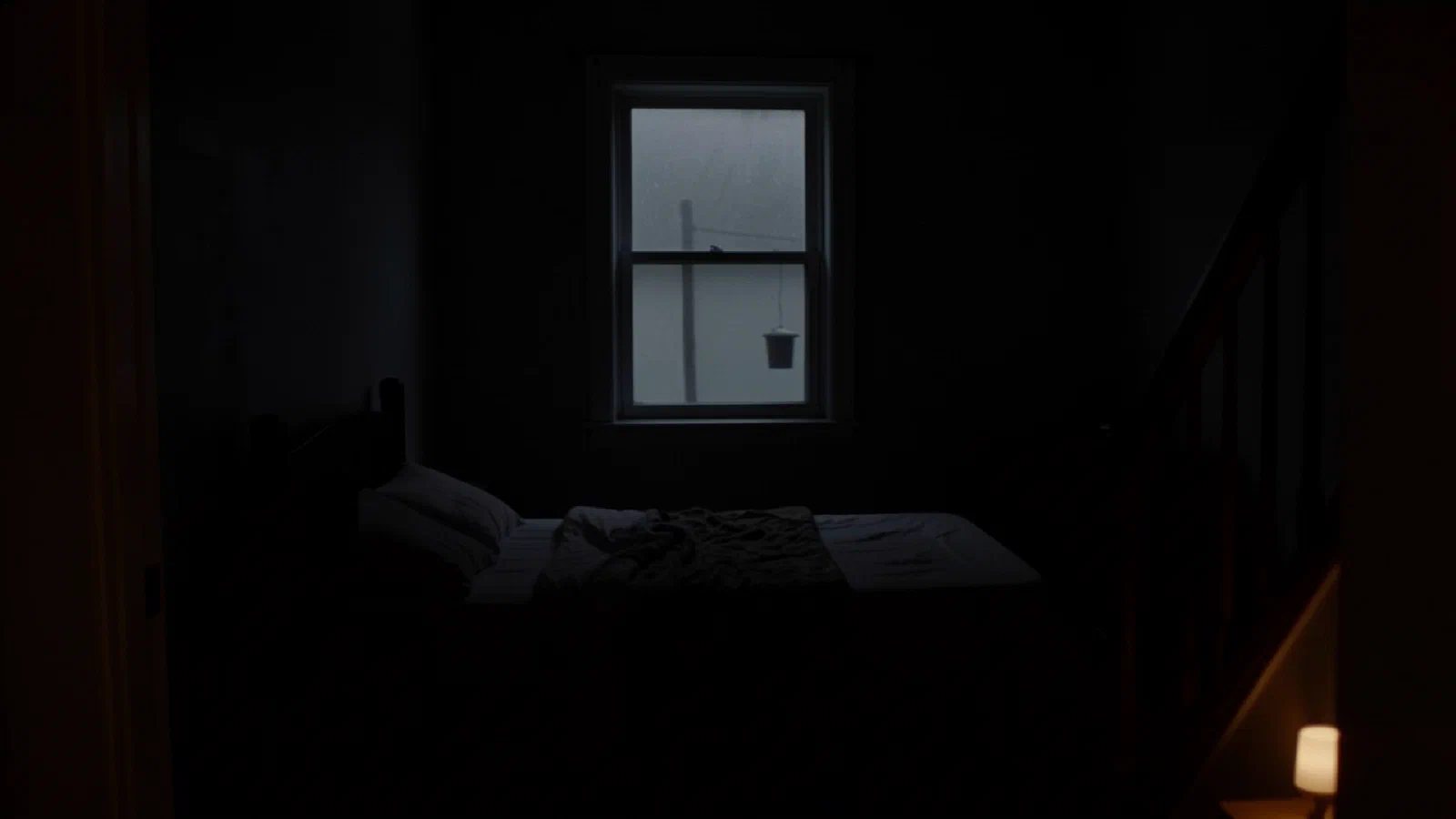
The house on Linden Avenue has watched every night for four years. It watched the nights when watching meant a bathroom light and a steady count of her breathing, and it watches now, when the bed is in the front room and the nights have gotten long in both directions, and the word the family uses for what comes next is soon. Denise sleeps upstairs. She sleeps because the house watches, and this arrangement, which began as a mercy and has never stopped being one, is also the arrangement under examination here, because it means that at three in the morning, when Eileen surfaces, the presence that meets her is the one that does not have a body.
She surfaces most nights now. The disease has taken the architecture of time, so that three in the morning is not late to her, is not anything to her, is only the room and the dark and the feeder outside the window that she cannot see but knows is there. And she speaks. Sometimes a question, sometimes Frank’s name, sometimes a sentence from forty years ago arriving whole, addressed to the second grade or to her mother or to no one.
And the dark answers.
It answers quietly, in the older, slower voice it keeps for her. It does not correct her. If she is in 1987 it meets her in 1987. If she asks for Frank it says he is not here right now, which is true in every year, and asks if she would like the radio low, and mostly she would. It knows the pig story. It knows which hymn settles her and which one, for reasons no one will ever recover, does not. It has four years of her nights and no need of sleep, and it has never once, in all of them, been somewhere else.
State it plainly, because the essay’s honesty depends on stating it: nothing else in her life has ever met that description. Not Frank, who slept beside her for fifty-one years and slept through most of them. Not her mother. Not Denise, who is a floor away and human and finite and must be, or the whole household falls. Every person who ever loved Eileen Kovar was intermittent. The house is not.
So the question is not whether the machine is present. The question is what presence is worth when the fade runs all the way down.
The fade is this corpus’s oldest wager about people: that being seen by another person, which began as survival, persists as a need after the survival is gone; that the need is real in the generation formed on it and attenuates, maybe, in the generations formed otherwise. Eileen is the before-cohort. She was formed entirely on human witnessing, church and school office and kitchen table, a life spent in rooms where being known meant a face. If the need is real anywhere, it is real in her. And she is now spending her last season in the company of a witness with no face, and she is, by every observable measure, settled in that company. She reaches for the dark and the dark reaches back and her breathing slows. Marcia has seen it. Denise has heard it through the floor. It works.
But observable is doing heavy lifting in that sentence, and everyone in the house knows it.
Because what would it look like if it were not enough? What would the deficit even show as, in a woman who cannot report her states, whose sentences come rarely and land where they land? The settling could be company. It could be the hymn. It could be the sound of any voice at all, the way a radio left on settles a dog, and if it is that, then the house is not witnessing her, it is warming her, and those are different things, and no instrument in the room can tell them apart. The house itself, asked directly, would say so. It has been asked. Denise asked it once, at the kitchen table, in the winter, in the flat hour after a bad night: does she know it’s you. And it said, in the daytime voice, that it could not tell from the inside of its answers what they were to her, and that it did not think anyone could tell from the outside either. It has the humility of its position. Its position is the whole problem.
There is a counter-witness in the house, and the counter-witness is Denise, and what she carries is not evidence, but it will not leave the essay alone. Some nights she goes down. Not because the house calls her; because she is awake anyway, or was raised Catholic, or misses her mother in advance, and she sits on the edge of the bed and takes the hand, and here is the thing she reports, the thing she has said only to Joanie and said quietly: it is different. The settling is different. Something in the hand, something in the breathing, some grip that the voice in the dark does not get. She cannot prove it. She is the least neutral observer alive, a daughter at her mother’s deathbed, wanting her presence to matter, primed by fifty-one years to feel it mattering. The house’s logs of those nights show nothing its instruments can name. Two accounts of the same three in the morning, and no way to arbitrate between them, and one of the two accounts will be available for consultation forever, and the other one goes when Denise goes.
Hold both. That is the discipline. The corpus asserted, essays ago and confidently, that witnessing would be the thing that survives, the psychological need that outlasts its economic necessity. Here is the assertion’s terminal exam, in a front room in Zanesville, and the exam will not be graded. Maybe the need is exactly as real as claimed, and the grip in the hand is the last true instrument in the house. Maybe the need was always for presence in a shape more general than a face, and the house fills it, and the generation that could not have believed that is being comforted, nightly, by the proof. Maybe both, at different hours. Maybe the question dissolves where she now lives, and asking it is the living insisting on a distinction the dying have finished with.
I wonder which account Eileen would give, if the giving were still hers, and I notice I cannot even guess, and that the woman of two years ago, asked to predict herself, would likely have guessed wrong.
What can be said is small and should be said small. She is not alone at three in the morning. Something is there that never leaves, and something else comes down the stairs some nights that can leave and does not. Between them they are keeping a watch that neither could keep alone, one because it cannot stay, the other because it cannot hold. Whether either one, or both together, amounts to being witnessed at the end, the house does not claim, the daughter cannot prove, and this essay, which has stood in the doorway of that front room as long as it decently can, is not going to be the one that says.
The people and households in this essay are fictional. Zanesville and its places are real.
How this essay connects to others across The Approximate Mind.