The Question
What a clinical intervention looks like when it has no line item
TAM-WTR.01 · The Waiting Room · The Approximate Mind
Margaret keeps the pharmacy bag clips in a kitchen drawer. Hundreds of them, small translucent plastic, accumulating over years. She does not know why she keeps them. Harold used to clip the bread bags with them, and after he died she kept putting them in the drawer the way she had always done, which was the way he had always done, and stopping would have meant deciding to stop, which would have meant thinking about it, which she has not done. They are in the drawer. The bread is clipped.
In 2019, the pharmacy was the last stop on Margaret’s Thursday routine. Dry cleaner, post office, pharmacy. She knew the route the way she knew her own kitchen, by body memory rather than decision. She arrived at the counter between 3:15 and 3:30, depending on the line at the post office, and Linda was usually the one who rang her up.
Linda is the pharmacist. Not the technician who counts pills and prints labels, but the pharmacist who stands at the back and checks the work and occasionally comes to the counter when something needs explaining. She has been at this pharmacy for fourteen years. She knows Margaret’s medications the way a mechanic knows a car that comes in for regular service: the whole picture, not just the current invoice.
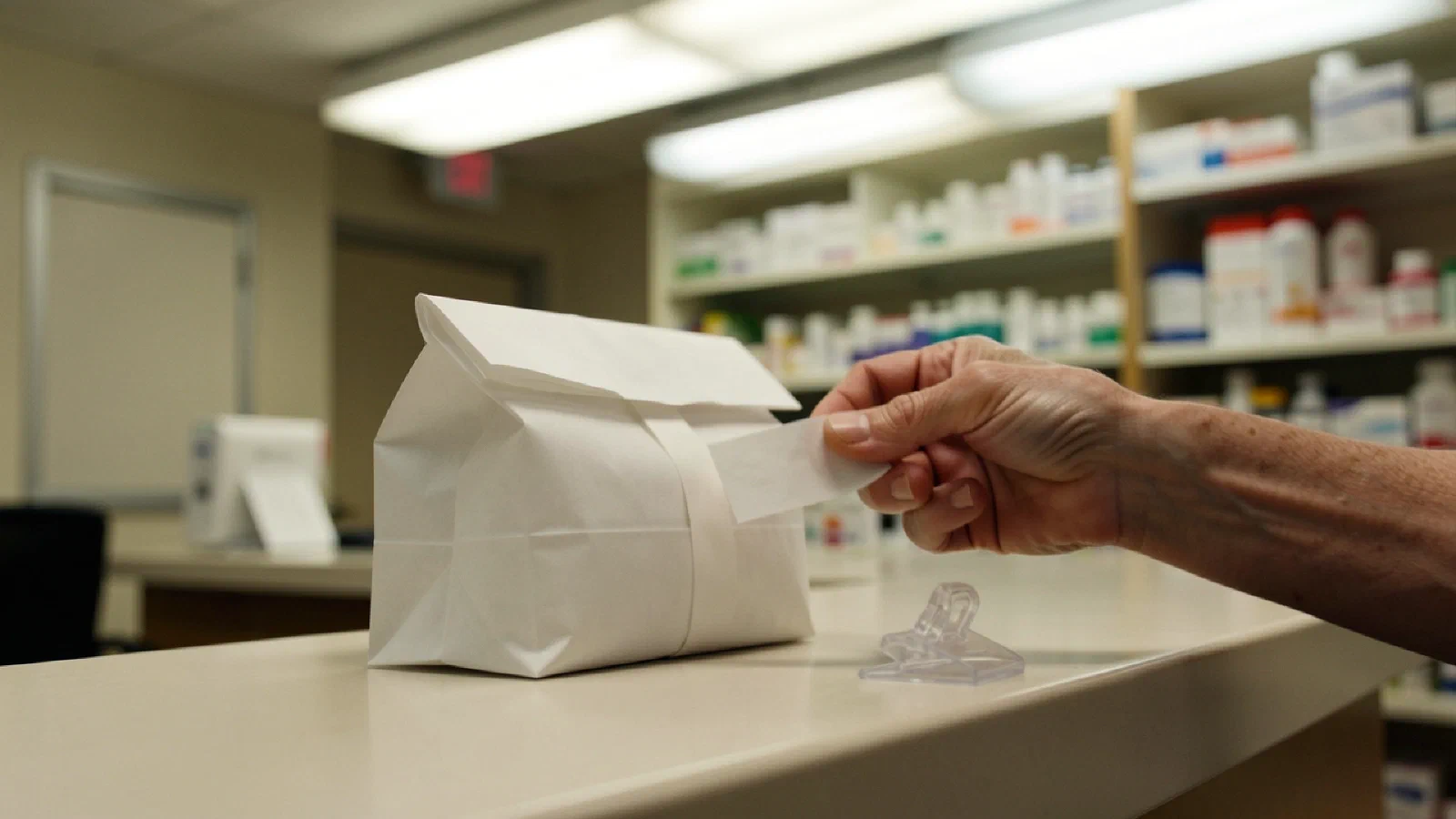
On a Thursday in March, Linda handed Margaret the bag and paused. Not a long pause. A professional pause, the kind that creates a space without demanding it be filled.
“Everything okay at home? This is the third refill this month.”
The question was not in any protocol. It was not flagged by the system. It was not billable, not documented, not built into any workflow. It was the thing that happened because two people were in the same room, and one of them had been paying attention over time, and the accumulated attention produced a question the system had no category for.
Margaret said she was fine. Then she said actually, she had been having trouble sleeping. Then she said the sleeping trouble had started when she changed one of her medications, the one her new doctor had adjusted in January. She had not mentioned the sleeping trouble to the new doctor because the appointment was only nine minutes and she had used the nine minutes on other things, and the sleeping trouble felt like something she should just handle.
Linda made a note. She called the doctor. The dosage was adjusted. The sleeping trouble resolved within two weeks.
The Interaction That Has No Name#
What Linda did was a clinical intervention. It identified an adverse drug interaction that the patient had not reported, that the prescribing physician had not detected, and that the automated system had no mechanism to flag. It happened because Linda was physically present, because she had longitudinal familiarity with Margaret’s prescriptions, and because the pause at the counter created a space in which Margaret could say something she had not planned to say.
The intervention had no line item because it was not, in any formal sense, an intervention at all. It was a question. It took perhaps ninety seconds. It occurred in the gap between the scanner beeping and the bag being stapled shut. In the accounting of the pharmacy’s day, it did not exist.
The medication now arrives by mail. A white padded envelope in the mailbox, printed label, correct medication, correct dosage, on time. The automated interaction check runs silently against Margaret’s full prescription profile. The refill triggers when the previous supply reaches its calculated end date. The system checks for contraindications, duplicate therapies, dosage irregularities. It does this faster, more reliably, and across a broader range of potential interactions than any human pharmacist standing at a counter.
Everything about the new system is better by the measures that the old system was designed to optimize. Speed. Accuracy. Coverage. Cost. The medication arrives without a trip, without a line, without a parking space, without the Thursday routine that organized Margaret’s afternoon around an errand she no longer needs to run.
What the system does not do is pause.
The Designed Question#
The mail-order pharmacy has a patient communication protocol. It sends text messages when a refill ships. It sends reminders when a prescription is expiring. It has, in some implementations, a chatbot that can answer questions about side effects, interactions, and dosage timing. The chatbot is available twenty-four hours a day and does not require a trip.
There is, in theory, nothing preventing the system from asking Linda’s question. A flag could be set: if a patient refills a medication at an unusual frequency, generate a prompt. The prompt could be delivered by text, by call, by chatbot. The system could ask, algorithmically, what Linda asked because she noticed.
The question is whether the designed version is the same thing as the thing that happened.
Linda’s question worked because it was not a question. It was an opening. The pause, the tone, the fourteen years of accumulated presence behind the counter, the fact that Margaret could see Linda’s face and Linda could see hers. These were not features of the question. They were the conditions under which Margaret was willing to answer honestly. She had not reported the sleeping trouble to her doctor in a nine-minute appointment. She would not have reported it to a text message, no matter how well-worded. She reported it to Linda because Linda was there, and had been there, and the thereness was what made the space safe enough for the truth to arrive.
The designed question would be accurate. It would reach more patients. It would run continuously rather than depending on which pharmacist happened to be at the counter on which afternoon. It would be, by every systemic measure, an improvement.
It would also be a notification rather than an encounter. And Margaret’s sleeping trouble was resolved not by a notification but by a person who stood in a room with her and created, in ninety seconds between the beep and the staple, a space that Margaret did not know she needed until it appeared.
What the Room Provided#
The pharmacy counter was never designed to be a site of clinical intervention. It was designed to be a distribution point: medication in, patient out, next in line. The counter’s official function was transactional. Fill the prescription, check the label, hand over the bag, collect the copay.
But the counter also put two people in the same room, repeatedly, over years. And when you put two people in the same room repeatedly over years, something accumulates that is not in the transaction. Linda’s knowledge of Margaret’s prescriptions was in the system. Her knowledge of Margaret was in the room. The system knew the medication history. The room knew that Margaret looked tired, that she had been quieter lately, that the third refill in a month was unusual for someone whose prescriptions had been stable for years.
The room was doing clinical work that no one had assigned it.
This is uncomfortable to say, because it sounds like an argument against progress. It is not. The mail-order pharmacy is better. The automated checks are more thorough. The convenience is real and meaningful, especially for people whose Thursday routine was not a gentle errand but an exhausting trip on a bus that comes every forty-five minutes. The system’s improvement is not in question.
What is in question is whether the improvement accounts for everything the old system was doing, including the things no one noticed it was doing because they were not in any protocol, were not billable, were not designed, and happened only because two people were standing on opposite sides of a counter in the same room on a Thursday afternoon.
I wonder whether the pharmacist’s question could be designed back into the system, a flag, an algorithm, a prompt, and whether the designed version would be the same thing, or something that looks like the same thing from the outside and is categorically different from the inside.
The Drawer#
Margaret opens the mailbox on a Tuesday. The medication is there in a white padded envelope with a printed label. Correct medication, correct dosage, right on time. Everything she needed.
She puts it in the cabinet next to Harold’s mug and closes the door.
The bag clips are still in the kitchen drawer. She hasn’t added to the collection in over a year. She hasn’t thrown them out, either. They are in the drawer, doing nothing, next to the twist ties and the rubber bands and the take-out menus from restaurants she no longer visits.
The bread is clipped with something else now. She does not remember when she switched.
References#
Schommer, Jon C., et al. “Pharmacist-Provided Medication Therapy Management (Part 2): Payer Perspectives.” Journal of the American Pharmacists Association, vol. 54, no. 2, 2014, pp. 116–124.
Ramalho de Oliveira, Djenane, et al. “Medication Therapy Management: 10 Years of Experience in a Large Integrated Health Care System.” Journal of Managed Care Pharmacy, vol. 16, no. 3, 2010, pp. 185–195.
Oldenburg, Ray. The Great Good Place: Cafés, Coffee Shops, Community Centers, Beauty Parlors, General Stores, Bars, Hangouts, and How They Get You Through the Day. Paragon House, 1989.
Gupta, Atul. “The Importance of the Pharmacist-Patient Relationship.” American Journal of Health-System Pharmacy, vol. 77, no. 18, 2020, pp. 1444–1445.
Putnam, Robert D. Bowling Alone: The Collapse and Revival of American Community. Simon & Schuster, 2000.
How this essay connects to others across The Approximate Mind.
- Schommer, Jon C., et al. “Pharmacist-Provided Medication Therapy Management (Part 2): Payer Perspectives.” Journal of the American Pharmacists Association, vol. 54, no. 2, 2014, pp. 116–124.
- Ramalho de Oliveira, Djenane, et al. “Medication Therapy Management: 10 Years of Experience in a Large Integrated Health Care System.” Journal of Managed Care Pharmacy, vol. 16, no. 3, 2010, pp. 185–195.
- Oldenburg, Ray. The Great Good Place: Cafés, Coffee Shops, Community Centers, Beauty Parlors, General Stores, Bars, Hangouts, and How They Get You Through the Day. Paragon House, 1989.
- Gupta, Atul. “The Importance of the Pharmacist-Patient Relationship.” American Journal of Health-System Pharmacy, vol. 77, no. 18, 2020, pp. 1444–1445.
- Putnam, Robert D. Bowling Alone: The Collapse and Revival of American Community. Simon & Schuster, 2000.