
The Investigations
The Ungoverned Frontier
What happens when the capacity to discover escapes the mind that initiated the discovery. Fourteen essays on bias-in-intent, the commissioning authority, the autonomous pipeline, companion architecture, invisible knowledge, and the cost collapse that makes universal basic intelligence infrastructure economically inevitable.

TAM_UNF_01
The Commissioner
What It Means to Produce What You Do Not Know
He produced 183 articles on a subject he did not understand before and does not understand now. The articles are accurate and useful. What he built was not content but a knowledge …

TAM_UNF_02
The Specification
What Intent Cannot Contain
She did not specify the warmth. She specified the behavior, and the search returned what she asked for plus something she had no word for until she touched it. The gap between what …

TAM_UNF_03
The Collision
Serendipity Without a Discoverer
Three researchers received the same notification at the same moment, different domains, different purposes, none aware of the others. The material existed in the overlap of three …

TAM_UNF_04
The Autonomous Pipeline
Why Need Humans?
Nadia typed eleven words and left for Vienna. The system found something that may matter for forty million people. Nobody was changed by finding it. Epistemic instinct has always …

TAM_UNF_05
The Companion Architecture
What the Pipeline Requires
The drug file was complete by every regulatory standard. It did not say what the drug did to people the trials had not enrolled. Four companion systems need to exist alongside …

TAM_UNF_06
The Invisible Knowledge
What Documentation Cannot Hold
She has been writing the handover document for six weeks. Thirty years as head nurse in the NICU, and she cannot make the document say what she needs it to say. The map of human …

TAM_UNF_07
The Known Map
The Topology of What We Have Not Asked
A system traversed the full corpus of published human knowledge and produced something that had never existed: a map of the topology of what we do not know. The explored territory …

TAM_UNF_08
The Unknown Map
Reading What the Pipeline Cannot Produce
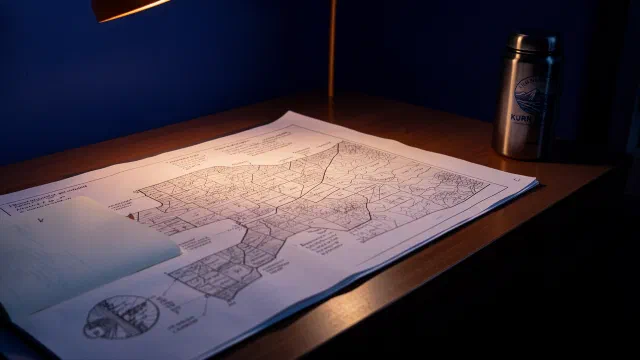
Faraday drew lines of force for thirty years before the mathematics arrived to make them rigorous. The cartographer of unknown gaps does not read the map the pipeline produces. She …

TAM_UNF_09
The Framework Problem
Generating the Coordinate System
Poincare stepped onto a bus in Coutances and the new geometry arrived whole. The framework discoverer's skill is domain-independent: pattern recognition across cases with no …
TAM_UNF_10
The Revelation
What It Means to See the Map
The questions in the notebook were not anomalies. They were coordinates in a larger topology, each one pointing at a specific region of unmapped territory. The map changes what …

TAM_UNF_11
The Cost Collapse
When Compute Stops Being the Barrier
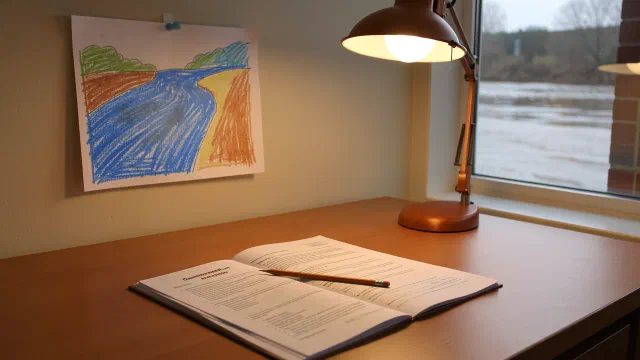
Yuki Tanaka assembled her marine biology swarm on a Friday afternoon, a thermos with a dent from the Kuril Islands beside her monitor. Five small specialized models, less to build …
TAM_UNF_12
The Utility Layer
When the Distance Between Discovery and Benefit Compresses
On average, seventeen years from clinical discovery to routine medical practice. Sofia Reyes received a deployment guide three working days after the Dutch paper arrived. She found …

TAM_UNF_13
The Education Reckoning
What the Pipeline Era Requires of a Prepared Mind
He guided his son toward anthropology and philosophy not despite the AI era but because of it. Anthropology teaches you to see your own framework from outside. Philosophy makes it …
TAM_UNF_SYN
The Arrival
On Humanity's Relationship to Its Own Discovery
Every major technological leap left the human at the center. The printing press required a knowing author. The moon landing required Armstrong. The autonomous pipeline finds things …