The Skilled Trades
When Your House Calls Its Own Repairman#
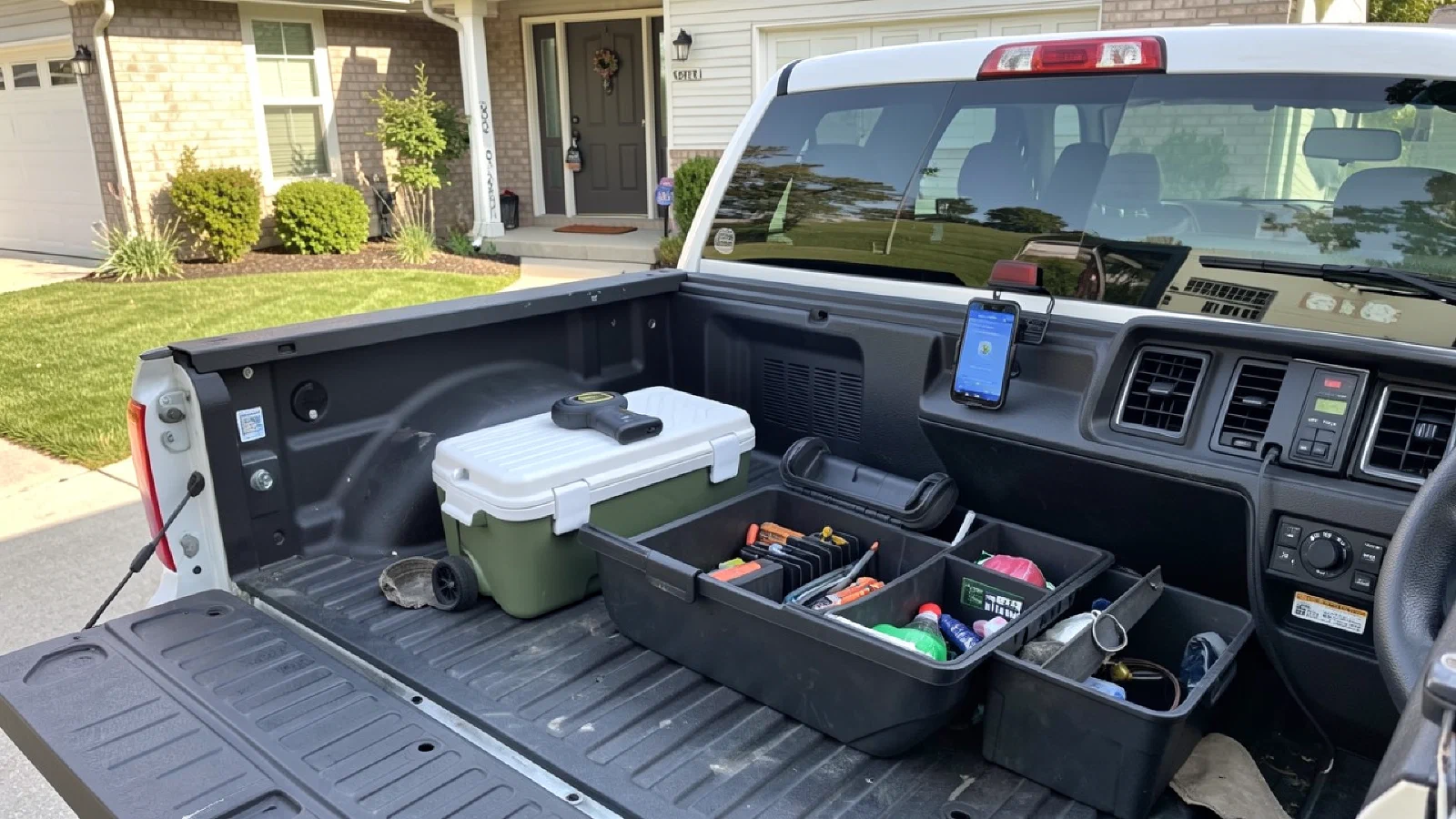
Sandra Ruiz coaches youth basketball on Thursday evenings. She has been doing it for six years, ever since her nephew started playing and she showed up to practices because no one else would and then found herself staying. She keeps a cooler of Gatorade in her truck for the kids who forget water bottles, which is most of them, most weeks.
I mention this because Sandra is a plumber, and when people talk about plumbers and AI, they tend to talk about plumbing. They talk about sensors and predictive maintenance and AR overlays. They talk about the transformation of trades work and what it means for wages and apprenticeships and middle-class mobility. These are real questions and I will get to them. But first Sandra is a person who coaches basketball on Thursdays and keeps Gatorade in her truck, and that detail matters before any of the other details do.
She gets the dispatch at 7:14 AM. Her phone shows the address, the diagnosis, and the parts she will need. A pressure sensor in a second-floor bathroom has detected micro-vibrations in a copper joint, consistent with early-stage corrosion. Left untreated, the joint will fail in four to six weeks. The replacement coupling is waiting at the supply house on her route, flagged under her contractor number.
She arrives at 8:30. The homeowner is surprised to see her. “We didn’t call anyone.” Sandra explains: his home monitoring system flagged the issue and his maintenance plan routed it to her company. She shows him the data on her tablet. He looks uncertain. Nothing is leaking. Nothing is wrong, as far as he can see.
Sandra goes upstairs, opens the access panel, scans the joint with a handheld imaging tool, and confirms what the sensor detected: hairline degradation invisible to the eye, highlighted in red on her AR overlay. She makes the repair in forty minutes. Clean cut, new coupling, pressure test, done.
Ten years ago, this would have been an emergency call. Water through the ceiling, damage to the floor below, a full day’s work plus remediation. Sandra would have spent the first hour diagnosing: tracing the leak, reading the building’s plumbing through sound and feel and experience. That detective process was the part of the trade that took a decade to learn and that separated the skilled plumber from the competent one.
Sandra has not diagnosed a plumbing problem herself in months.
She is busier than she has ever been, better paid than she has ever been, and less sure than she has ever been about what her expertise actually is.
The Counternarrative#
Something different is happening here.
The dock workers (The Dock Workers) face the dissolution of their leverage. The farmers (The Farmers) face the erosion of embodied knowledge. In both cases, the transformation threatens something essential about what the profession provides beyond its economic function. The natural expectation, following the arc’s logic, is that the trades face something similar.
They do not. Or rather, they face a transformation equally profound but moving in the opposite direction.
The infrastructure that the modern world runs on is aging, expanding, and complexifying faster than the workforce that maintains it. Water systems in American cities average over fifty years old, with some components dating to the nineteenth century. The electrical grid is being retrofitted for renewable energy, EV charging, battery storage, and data center demand that has grown faster than any planner anticipated. HVAC systems are becoming climate adaptation infrastructure. Smart buildings require installation and maintenance of sensor networks and automated platforms that did not exist a decade ago.
The demand for people who can work with physical infrastructure is not shrinking. It is exploding. And the workforce cannot keep pace. The construction and trades sectors in the United States alone face a shortage of hundreds of thousands of workers, a gap widening each year as fewer young people enter the trades and experienced workers retire. The American Society of Civil Engineers estimates an infrastructure investment gap of over two trillion dollars. Every dollar of that gap represents physical work that requires human hands.
AI does not threaten these professions. In the most direct sense, it is rescuing them.
What the Sensor Moved#
The traditional trades model is reactive. Something breaks. You call someone. They come, diagnose the problem, and fix it. The expertise is concentrated in the diagnosis: the plumber who can hear water pressure through a wall, the electrician who reads a panel by the hum of the breakers, the HVAC technician who feels a compressor’s rhythm and knows it is laboring.
The predictive model inverts this. The house monitors itself. The system detects degradation before failure. The technician arrives with the diagnosis already made and the parts already matched. The work becomes execution of a known repair rather than investigation of an unknown problem.
This is faster, cheaper, and less disruptive for the homeowner. It prevents damage. It extends the life of systems. By every reasonable measure, it is better.
It also moves the expertise from the technician to the system.
Sandra’s AR overlay shows her exactly where to cut, which fitting to use, how the plumbing runs behind the wall. A technician with two years of experience, wearing the same overlay, could execute the same repair to the same standard. The guidance compensates for what experience would otherwise provide. This is the arc’s apprenticeship question inverted: in medicine, AI automates the developmental work that produces expert judgment, creating distance between junior and senior clinician. In the trades, AI compresses that distance, allowing less experienced technicians to perform at a level that previously required a decade of pattern recognition.
The result is that more workers can enter the field faster, which addresses the most acute problem the trades face.
But I keep circling back to something Sandra said. Her father was a plumber too. He worked forty years with a pipe wrench and a knowledge of water systems he carried in his hands and his memory. He could listen to a wall. He could look at a fitting and know whether it would hold. Sandra does not do these things, because the sensor has already listened and the imaging tool has already looked, and the information they produce is better than what her father’s ears and eyes could provide.
She is more productive than he was. She is not sure she is more skilled.
The IKEA Supercharged#
Picture a kitchen renovation. The cabinets arrive flat-packed with precision-cut components and embedded alignment markers. Autonomous installation units, working from the same kind of coordinated system intelligence that manages an automated port terminal, position and secure the cabinetry, countertops, and basic plumbing connections. The work that used to take a crew of three a week completes in two days.
A human technician arrives for the final connections. The gas line. The electrical panel integration. The water supply hookups where error has catastrophic consequences: a gas leak, an electrical fire, a flood.
This pattern, automation of the routine with human expertise concentrated at the points of maximum consequence, is visible in every profession this arc examines. The diagnostician reads only the hard cases. The farmer manages only the exceptions. The dock worker monitors only the anomalies. The trades worker connects only the critical junctions.
The pattern produces better outcomes. It also produces a profession that is narrower, more specialized, and more dependent on the system that feeds it work.
Sandra handles more critical connections per day than she ever did. Her work is more consequential and less autonomous. She is more productive and less independent. Whether that constitutes a promotion depends entirely on what you think a trade is for.
The Middle-Class Question#
For millions of people, the skilled trades are the path to a middle-class life without a four-year degree. A licensed plumber, electrician, or HVAC technician in the United States can earn sixty to a hundred thousand dollars annually, with specialists and business owners earning substantially more. The path requires an apprenticeship, typically four to five years, during which the trainee earns while learning. No student debt. Clear progression. Real demand.
This pathway matters enormously for the class structure of the AI transition. If knowledge work is hollowed out, as many economists predict for at least some white-collar professions, the trades become even more important as a route to economic stability for people without advanced degrees. The professions the college-for-everyone discourse dismissed as fallback options may turn out to be among the most resilient positions in an AI economy.
The transformation introduces a tension the good-news framing tends to skip. If AI compresses the learning curve, if two years of AI-assisted training produces a technician who can perform at what used to be a ten-year competency level, does this democratize access to the trades or devalue the expertise that justified the compensation?
The optimistic reading: compressed training means more people can enter the field faster, addressing the shortage and opening the trades to populations that could not afford a five-year apprenticeship. Demand is so far ahead of supply that even a larger workforce does not depress wages for a long time.
The cautious reading: when the AR system makes the two-year technician equivalent to the ten-year veteran on routine work, the premium for expertise narrows. The veteran’s value concentrates in the edge cases, the complex retrofits, the unusual configurations, the judgment calls the system cannot make. Exception handling, while more intellectually demanding, may not support the same labor market as broad-based skilled craft work.
I do not know which reading is right. The shortage is real enough that for the next decade, the optimistic reading will likely hold. Beyond that, the question is whether the trades follow manufacturing, where automation initially increased demand for skilled operators and eventually reduced both the workforce and the wage premium, or whether the physicality and unpredictability of trades work creates a floor that manufacturing did not have.
What the Hands Know#
Sandra’s father would not recognize her morning routing algorithm or her AR overlay. He would recognize the moment when they fail.
Because they do fail. The sensor misses things. The building’s actual layout does not match the plan, which is most of the time. The repair requires improvisation because the parts the system ordered do not quite fit the configuration behind the wall. The pipe was rerouted sometime in the 1980s by someone who did not file updated drawings and the whole model is wrong.
When the overlay goes dark and the dispatch has no guidance to offer and Sandra is standing in a crawlspace with a flashlight and a problem that the system did not anticipate, she falls back on something else entirely: the ability to look at a physical situation, understand it spatially, and figure out a solution using whatever is at hand.
Her father would recognize this moment. It is the moment where the trade is still a trade.
The hands are the last thing. The physical work. The irreducible fact that someone must cut the pipe, pull the wire, braze the fitting, in a space that is cramped and poorly lit and full of surprises and utterly unlike the clean environment of a factory floor. The trades will be the last professions to be fully automated, if they ever are, because they require working through the physical chaos of the built world. And the built world resists standardization in ways that container terminals and sensor farms do not.
The craft question remains. The dock workers asked it about leverage: when physical control disappears, what remains of power? The farmers asked it about knowledge: when embodied understanding is superseded by algorithmic understanding, what remains of farming? The trades workers ask it about craft: when the diagnostic intelligence moves from the practitioner to the system, what remains of mastery?
What remains, in the trades, is the wall that does not match the drawings. The joint that requires an improvised solution at 9 AM on a Thursday when Sandra has three more stops before noon and a cooler of Gatorade in the truck for later.
She handles it. She always handles it.
Her father would be proud, even if the work looks different than he expected.
This is the tenth essay in The Transformed and the third in Arc 2, “The Quiet Revolution.” After examining physical leverage (The Dock Workers) and embodied knowledge (The Farmers), this essay introduces a counternarrative: a profession that grows through AI transformation rather than shrinks. The skilled trades complicate the displacement story while raising parallel questions about what mastery, craft, and expertise mean when the diagnostic intelligence moves from the practitioner to the system. Future essays in this arc will examine dentists, clergy, veterinarians, and the infrastructure thread that connects them all.
References#
Craft, Skill, and Work
Crawford, Matthew B. Shop Class as Soulcraft: An Inquiry into the Value of Work. Penguin, 2009.
Rose, Mike. The Mind at Work: Valuing the Intelligence of the American Worker. Penguin, 2004.
Sennett, Richard. The Craftsman. Yale University Press, 2008.
Infrastructure and Workforce
American Society of Civil Engineers. 2021 Report Card for America’s Infrastructure. ASCE, 2021.
Bureau of Labor Statistics. Occupational Outlook Handbook: Construction and Extraction Occupations. U.S. Department of Labor, 2024.
Technology and Skill Development
Autor, David H. “Work of the Past, Work of the Future.” AEA Papers and Proceedings, vol. 109, 2019, pp. 1-32.
Billett, Stephen. Vocational Education: Purposes, Traditions and Prospects. Springer, 2011.
Deming, David J. “The Growing Importance of Social Skills in the Labor Market.” Quarterly Journal of Economics, vol. 132, no. 4, 2017, pp. 1593-1640.
Fuller, Alison, and Lorna Unwin. “Towards Expansive Apprenticeships.” Teaching in Further Education: New Perspectives for a Changing Context. Routledge, 2003.
How this essay connects to others across The Approximate Mind.
- Crawford, Matthew B. Shop Class as Soulcraft: An Inquiry into the Value of Work. Penguin, 2009.
- Rose, Mike. The Mind at Work: Valuing the Intelligence of the American Worker. Penguin, 2004.
- Sennett, Richard. The Craftsman. Yale University Press, 2008.
- American Society of Civil Engineers. 2021 Report Card for America’s Infrastructure. ASCE, 2021.
- Bureau of Labor Statistics. Occupational Outlook Handbook: Construction and Extraction Occupations. U.S. Department of Labor, 2024.
- Autor, David H. “Work of the Past, Work of the Future.” AEA Papers and Proceedings, vol. 109, 2019, pp. 1-32.
- Billett, Stephen. Vocational Education: Purposes, Traditions and Prospects. Springer, 2011.
- Deming, David J. “The Growing Importance of Social Skills in the Labor Market.” Quarterly Journal of Economics, vol. 132, no. 4, 2017, pp. 1593-1640.
- Fuller, Alison, and Lorna Unwin. “Towards Expansive Apprenticeships.” Teaching in Further Education: New Perspectives for a Changing Context. Routledge, 2003.