The Unschooled
What Happens When Learning Never Looked Like School#
They are the same age, from the same city, and they have almost nothing in common.
Zara and Leo meet during an orientation week for a new kind of program, something between what used to be called university and what used to be called an apprenticeship. It has no name yet. It accepts seventeen-year-olds and gives them two years of mentored project work across multiple domains. It exists because the old categories stopped making sense.
Zara spent her formative years in a school that restructured early. By the time she was twelve, content delivery had been handed to AI. Her human teachers designed challenges, refereed disagreements, noticed who was withdrawing and why. The week was organized around problems, not subjects. Zara cannot remember the last time she sat in a row of desks while someone talked at her.
Leo attended a school fifteen minutes away. Same district. Same funding. Different principal. His school added AI tutoring as a supplement and changed nothing else. Forty-five-minute periods. State curriculum. Textbook pacing. The AI tutor was available for homework help, a layer of personalization spread thinly across a structure his grandmother would have recognized.
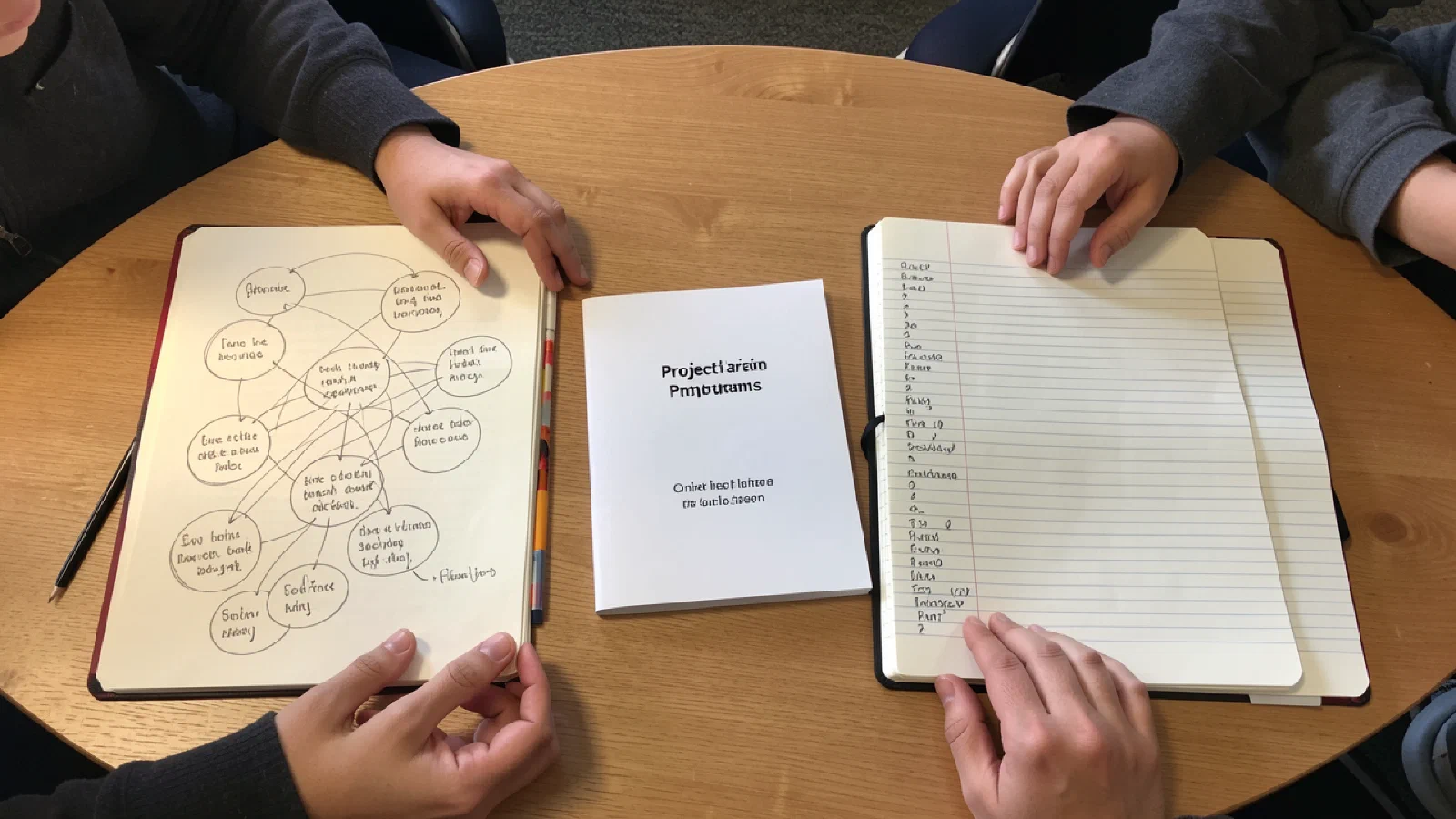
During orientation, they are paired for a collaborative exercise. Within twenty minutes, they discover they approach problems differently at every level. Zara starts by reframing the question. Leo starts by looking for the right answer. When Zara says “what are we even trying to do here?” Leo looks at her like she is making things harder on purpose. When Leo says “but what’s the actual answer?” Zara looks at him like he has missed the point entirely.
They are two versions of the same generation, educated on different planets.
Three Schools, One Question#
When AI could retrieve any fact and produce competent analysis across every academic domain, schools faced a question they had been avoiding for decades. What is education for?
Some answered: judgment. If the knowledge base is handled, then the human development was always the point. These schools restructured. They replaced subjects with problems. Their teachers became designers of developmental environments rather than deliverers of information. Zara is their product. She is fluent in framing, comfortable with uncertainty, genuinely skilled at thinking. She is also, and this matters, occasionally shallow. She has engaged with dozens of problems across multiple domains. She has never spent a year immersed in a single subject, building the kind of deep familiarity that comes only from sustained attention to one body of thought.
Some answered: knowledge. These schools bolted AI onto the existing structure and preserved the curriculum. The AI tutoring system, layered onto a content-delivery framework, created a dissonance everyone could feel. The AI taught the content faster and more adaptively than the teacher. The teacher, still at the front of the room, became visibly redundant in the one function that had defined the role. Leo is their product. He has solid content knowledge, organized by subject, reinforced by assessment. He is comfortable with structure. He is also trained for a world that is disappearing.
Some answered: discipline. These schools restricted AI use, either from genuine conviction that cognitive development requires unassisted effort, or from institutional inertia dressed as philosophy. Their students carry something Zara and Leo do not: the experience of learning the hard way. Whether this constitutes an advantage depends on what you believe education develops.
I do not know which answer is right. I suspect none of them is fully right. What I know is that N1 experienced variation not in educational quality but in the educational model itself. Previous generations all sat in classrooms, all had subjects, all took tests. The variation was in how well the model was executed. N1 experienced different models entirely, and they carry the results.
Knowledge Without Effort#
Here is a scene that every N1 teacher recognizes.
A fourteen-year-old produces an essay that reads like the work of a bright college junior. Structurally sophisticated, factually grounded, analytically competent. The teacher is not sure whether the student wrote it, co-wrote it with AI, or directed AI to write it while providing only the topic. The student, when asked, is not sure either. The boundary between “I thought this” and “I thought this with AI” has become so blurred that the question feels nonsensical, like asking whether you walked to school with your legs or with your shoes.
This is genuinely new. Previous generations had tools that extended their capabilities. Calculators did the arithmetic. Spell-checkers fixed the spelling. You could point to the moment where your thinking ended and the tool’s contribution began. AI does not work this way for N1. The AI participated in the thinking itself. It suggested framings. It offered counterarguments. It restructured the logic. For children who grew up collaborating with AI from early childhood, thinking-with-AI is not experienced as tool use. It is experienced as thinking.
This produces real capability. A seventeen-year-old working with AI can engage meaningfully with problems that would have required years of specialized training a decade ago. The AI provides the domain knowledge. The human provides the curiosity, the judgment about what matters, the sense of purpose that directs the inquiry.
But it also produces a dependency that is invisible from the outside and sometimes invisible to the student. The essay that reads like genuine intellectual development and the essay that represents sophisticated cognitive outsourcing look the same. The distinction lives entirely in what happened inside the student’s mind during the process, and we have not yet developed the tools to see it.
The Boredom Deficit#
I know this will be unpopular with everyone who hated school, which is nearly everyone.
Some of what traditional education provided was productive boredom. The experience of sitting with material you did not choose, at a pace you did not set, in a room you could not leave. The worksheet that was too easy for Devin, who drew comics in the margins. The lecture that was too fast for the girl who cried over fractions.
This was, by almost every measure, bad education. But it produced something. It produced the experience of extracting value from suboptimal conditions. The discovery that interest sometimes follows effort rather than preceding it. The capacity to sit with tedium and find, occasionally, that the boring chapter contains one paragraph that changes how you think.
Personalized learning eliminates this entirely. The AI meets you where you are, adjusts to your interest, optimizes for engagement. The student is never bored because the system is designed to prevent boredom. By every metric we know how to measure, this is better education.
The question is whether there are things we do not know how to measure.
N1 members educated in fully personalized environments are now entering late adolescence, the period when life presents conditions that are not personalized. A first job where the tasks are tedious. A relationship where the other person does not adjust to your communication style. A period of grief where no system intervenes to re-engage you.
Some handle this with resilience. Their personalized education built confidence that transfers. Others struggle. They have never practiced extracting value from conditions that were not designed for them. They reach for the companion to process the discomfort, and when the companion is not available, they are unmoored.
The better we made education, the less it prepared some students for a world that is not education. School became more humane, more effective, more respectful of individual difference. The world outside school remained indifferent to individual difference, as it always has and always will.
What They Can Do#
It would be a mistake to tell this as purely a story of loss.
The strongest N1 graduates carry capacities that previous generations did not develop until graduate school, if they developed them at all. They frame problems before solving them. They move across domains without treating the boundaries as walls. They collaborate with AI the way a skilled musician collaborates with other musicians: not directing, not following, but listening and contributing in a dynamic exchange.
They are comfortable with not knowing. Previous generations were educated to treat not-knowing as a deficit to be remedied. You don’t know the quadratic formula? Here it is. N1’s strongest graduates treat not-knowing as a starting position for inquiry. The response is not “where do I find the answer?” but “what is the right question?” This is valuable. It is, in fact, the epistemic stance the post-professional world requires.
Whether it can substitute for deep domain knowledge, whether framing ability without foundational understanding produces genuine wisdom or merely its appearance, we do not know. N1 is young. The test has not come.
Zara and Leo#
The program they are entering was designed for exactly this variation. It assumes N1 arrives with different formations and treats the difference as material to work with. Zara and Leo are paired deliberately. Her framing ability and his content discipline. Her comfort with ambiguity and his comfort with structure. The program’s theory is that the generation’s educational incoherence might, in the right environment, become a kind of intellectual biodiversity.
This is optimistic. It may be true. Or it may be a comforting story that institutions tell themselves to avoid reckoning with the fact that they ran a generation-wide experiment without controls, without consensus, and that the results are as varied and unpredictable as the conditions that produced them.
Zara and Leo will figure it out. They are seventeen. Figuring things out is what seventeen-year-olds do.
What they will not do is resolve the question their generation embodies. The question is not which school got it right.
What is education for when the knowledge it used to deliver is free, the skills it used to develop are augmented, and the credentials it used to grant are losing their meaning?
The AI did not transform education. It revealed what each school had always believed education was for. And N1, scattered across those different beliefs, carries the results. The answer is still forming. So are they.
This is the second essay in Arc 5 of The Transformed, “The Natives.” The previous essay, The Rememberers, established who N1 is and what their fragmentary memory of the before-times means. This essay examines their educational formation: the radical variation in their schooling and what the different institutional responses to AI reveal about what education was always for. The Transformed builds on the philosophical foundations of The Approximate Mind, particularly The Living Curriculum and The Shapers.
References#
Dewey, John. Experience and Education. Kappa Delta Pi, 1938.
Freire, Paulo. Pedagogy of the Oppressed. Translated by Myra Bergman Ramos, Herder and Herder, 1970.
Biesta, Gert. The Beautiful Risk of Education. Paradigm Publishers, 2014.
Ericsson, K. Anders, et al. “The Role of Deliberate Practice in the Acquisition of Expert Performance.” Psychological Review, vol. 100, no. 3, 1993, pp. 363-406.
Willingham, Daniel T. Why Don’t Students Like School? Jossey-Bass, 2009.
Kapur, Manu. “Productive Failure.” Cognition and Instruction, vol. 26, no. 3, 2008, pp. 379-424.
Csikszentmihalyi, Mihaly. Flow: The Psychology of Optimal Experience. Harper and Row, 1990.
Tyack, David, and Larry Cuban. Tinkering Toward Utopia: A Century of Public School Reform. Harvard University Press, 1995.
Cuban, Larry. Teachers and Machines: The Classroom Use of Technology Since 1920. Teachers College Press, 1986.
Selwyn, Neil. Should Robots Replace Teachers? AI and the Future of Education. Polity Press, 2019.
Luckin, Rose. Machine Learning and Human Intelligence: The Future of Education for the 21st Century. UCL Press, 2018.
How this essay connects to others across The Approximate Mind.
- Dewey, John. Experience and Education. Kappa Delta Pi, 1938.
- Freire, Paulo. Pedagogy of the Oppressed. Translated by Myra Bergman Ramos, Herder and Herder, 1970.
- Biesta, Gert. The Beautiful Risk of Education. Paradigm Publishers, 2014.
- Ericsson, K. Anders, et al. “The Role of Deliberate Practice in the Acquisition of Expert Performance.” Psychological Review, vol. 100, no. 3, 1993, pp. 363-406.
- Willingham, Daniel T. Why Don’t Students Like School? Jossey-Bass, 2009.
- Kapur, Manu. “Productive Failure.” Cognition and Instruction, vol. 26, no. 3, 2008, pp. 379-424.
- Csikszentmihalyi, Mihaly. Flow: The Psychology of Optimal Experience. Harper and Row, 1990.
- Tyack, David, and Larry Cuban. Tinkering Toward Utopia: A Century of Public School Reform. Harvard University Press, 1995.
- Cuban, Larry. Teachers and Machines: The Classroom Use of Technology Since 1920. Teachers College Press, 1986.
- Selwyn, Neil. Should Robots Replace Teachers? AI and the Future of Education. Polity Press, 2019.
- Luckin, Rose. Machine Learning and Human Intelligence: The Future of Education for the 21st Century. UCL Press, 2018.