The Translators
Speaking Both Languages at the End of the World#
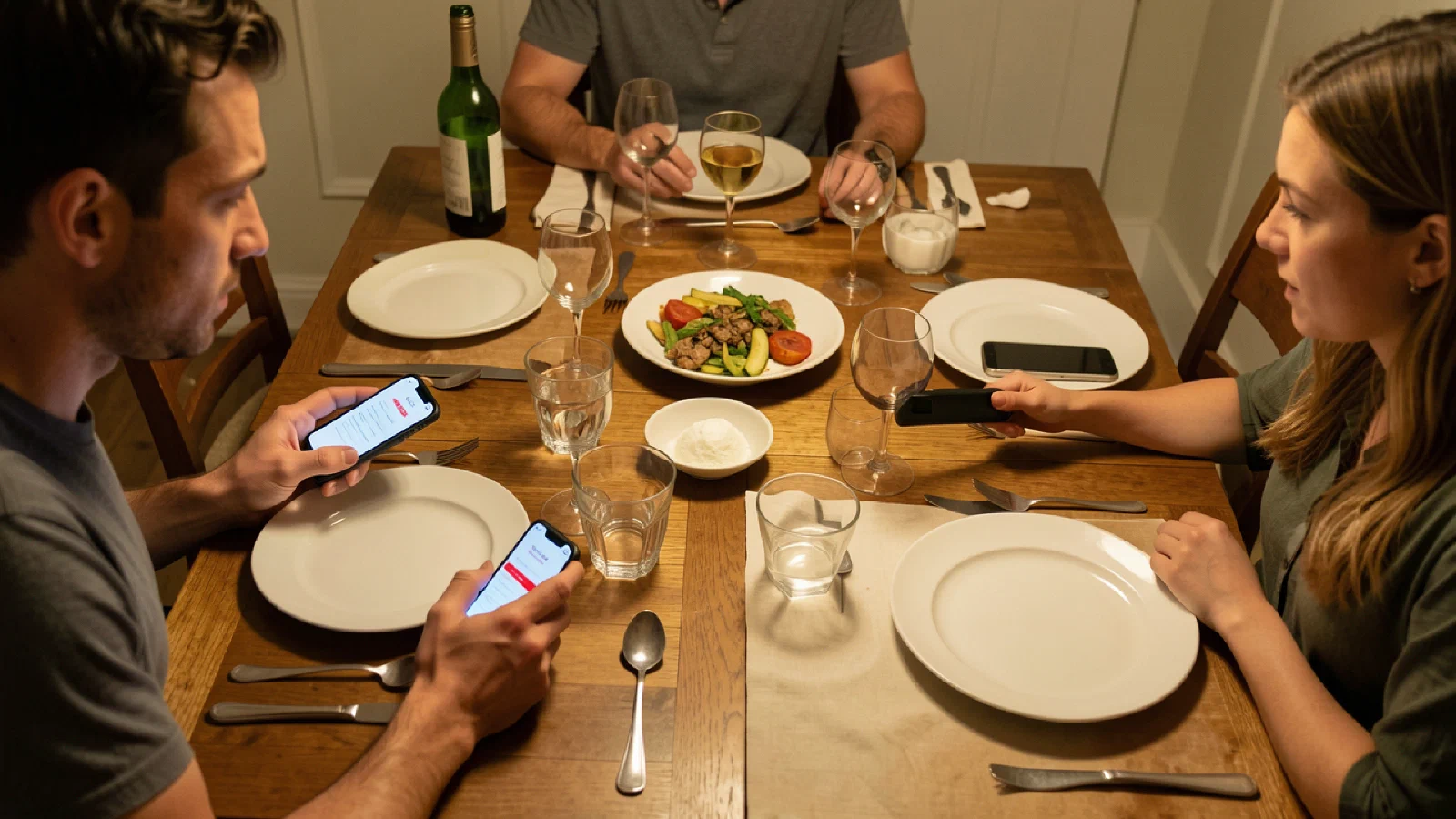
The argument starts the way it always does, over something small.
Davi’s father, Marco, is telling a story about trying to reach the insurance company. Forty minutes on the phone, routed in circles by an automated system, before reaching a person who told him his claim had been denied by an AI review process he did not understand and could not appeal the way he was used to appealing, which was to explain his situation to a human who had the authority to override a decision. The new process requires a portal, which requires a login he cannot find, which requires a password reset, which requires a verification code sent to a phone number that is no longer his. He is fifty-three and furious in the way that people are furious when the world they learned to navigate treats their competence as irrelevant.
Davi’s sister, Lucia, is eleven. She is listening with patient incomprehension. She does not understand why her father did not just ask his AI to handle the claim. She does not understand why he called a phone number. The idea of spending forty minutes being routed in circles by a system that does not know who you are is, to Lucia, like hearing about cranking a car engine by hand. She knows it happened. She does not understand why.
Davi is seventeen. He is sitting between them.
He understands his father’s fury because he remembers, faintly, a version of the world that worked the way his father describes. He was seven or eight. The memory is not crisp. It is a feeling more than a scene: the sense that the adult world required a kind of endurance that had nothing to do with competence.
He understands his sister’s incomprehension because he shares her fluency. He could handle his father’s insurance claim in ten minutes. He does this regularly, not just for his father but for his grandmother, for a neighbor, for anyone over forty who is drowning in a world reorganized around capabilities they were not formed to have.
He does something else, too. Something neither his father nor his sister can do.
He translates.
“Dad,” he says, “the system is broken. Not you. It’s being rebuilt, but right now you’re caught in the gap between the old way and the new way, and the gap is where all the pain is.”
His father hears this as validation. Someone understands.
“Lucia,” he says later, when their father has left the room, “Dad isn’t bad at technology. He’s good at a world that doesn’t exist anymore. The way he knows how to talk to people, how to explain what he needs, how to make someone care about his problem, that stuff still matters. The system just doesn’t let him use it.”
Lucia is beginning to understand that the world she takes for granted was not always there.
Nobody asked Davi to do this. Nobody trained him. The position was assigned by birth year, and he fills it because he is the only person in the room who can.
The Bridge#
Every major transition produces a bridge generation. A cohort old enough to remember the previous world and young enough to be fluent in the new one. The generation that straddled oral and literate culture. The generation that grew up during electrification. The generation that came of age as the internet arrived.
In each case, the bridge generation translated. They carried the wisdom of the old world into the language of the new one. They were the last people who could feel, rather than merely study, what had been lost. And when they died, the translation capacity died with them.
I think N1 is the bridge generation for the largest transition of all. Not just communication, not just information, not just illumination. Everything: work, knowledge, relationship, identity, the fundamental architecture of how humans organize their lives. The bilateral legibility that Davi carries, the ability to read both operating systems, to feel what the old world meant and understand what the new world offers, exists at a scale no previous bridge generation has faced.
The Weight#
Translation is honored in retrospect and exhausting in practice.
Davi does not experience his position as historically significant. He experiences it as a series of daily tasks nobody else can perform. His father needs help with the insurance claim. His grandmother needs help understanding why her pension payments changed. His neighbor, a retired electrician, needs help because the certification renewal has been automated and the system does not recognize paper credentials held for thirty-five years.
Each task is small. None takes more than twenty minutes. But they accumulate, and the accumulation is a weight he carries without recognition, because the work of translation is invisible to people who do not need it.
His peers carry similar weights. Every N1 member who grew up with parents or grandparents who did not form in the AI era performs a version of this work. They are the help desk of the civilizational transition, fielding requests from people they love who are struggling with a world reorganized around capabilities they do not have.
The requests are practical: fix this, explain this, handle this. The emotional substrate is something else: help me not feel obsolete. Help me understand why everything I learned no longer works.
N1 members do not always handle this gracefully. They are teenagers. The patience required to sit with a fifty-three-year-old’s frustration about a portal, to take it seriously rather than dismissing it, to validate competence that is real but contextual, this patience is not a natural capacity of adolescence. Some develop it. Some burn out. Some retreat into the fluency of their own world and leave their parents to manage alone.
The ones who develop it carry something valuable. Not a skill, though translation is a skill. Something closer to a moral capacity: the ability to honor two worlds at once, to refuse the easy contempt of the fluent for the struggling, to recognize that the father who cannot work the portal can do something the son cannot, even if neither of them can name what it is.
What They Carry#
Not everything from the old world is worth preserving. The insurance phone tree was terrible. The bureaucratic maze of paper forms was often cruel. Nostalgia is not an honest assessment.
But some of what the old world contained was valuable in ways the new world does not automatically preserve, and N1 is the last generation that can feel what those values were.
The experience of being recognized by a person, not identified by a system. The bank teller who knew your name. The pharmacist who asked about your mother. The teacher who noticed you were quiet. Brief, imperfect, embedded in flawed institutions. But carrying something: the experience of mattering to someone who represented a larger system.
The discipline of dealing with imperfect systems. Getting things done in the old world required patience, persistence, social reading. You learned that institutions were made of people, that people had good days and bad days, that showing up and looking someone in the eye sometimes mattered more than having the right form. Miserable, often. Educational, always.
The knowledge that things were otherwise. Perhaps the most important thing N1 carries. The current arrangement is not natural. It was built. It was chosen, mostly by default. It could have been built differently. For N2 and beyond, the AI-organized world will feel like nature. N1 knows it is not because they remember, however faintly, when it was not there.
If N1 translates these things, the future will have access to a felt understanding of what was lost and what was gained. If the fragments fade without translation, the future will have only data about the before-times. And data without felt understanding is history without meaning.
The Gap#
Bridge generations pay a psychological cost. They belong fully to neither world.
Marco sees Davi as fluent in the world that displaced him. He may not think this consciously. But when Davi solves the insurance problem in ten minutes, a problem that consumed Marco’s afternoon, the ease is a quiet humiliation. His son is at home in a world that has made him a stranger. The gratitude is real. The sting underneath it is real too.
Lucia sees Davi as weirdly sentimental about things that do not matter. When he talks about libraries and teachers who knew your name, she hears nostalgia for an inefficient world. She does not dismiss him. She simply does not understand why these things move him.
Davi feels a displacement he cannot fully articulate. He is competent in the new world. He navigates it fluently. But he carries a quiet sense that something is missing, not a specific thing but a quality, a texture, a way that the world used to feel when its institutions required you to show up in person and its knowledge took effort to acquire.
He does not romanticize this. He knows the old systems were often cruel. But he also knows, in a way he cannot quite defend, that something in the encounter mattered. The forty minutes on the phone were forty minutes of being reckoned with, however reluctantly. The AI that denies the claim does not reckon with anything. It processes.
This is not a position that resolves. It is a position N1 lives inside, permanently. The gap is not comfortable. It is the only place from which both worlds are visible.
Davi on the Porch#
The argument is over. Marco is watching a show. Lucia is in her room, talking to her companion. The house is quiet.
Davi is on the porch. He is thinking about his grandfather, who died when Davi was nine. He remembers the old man only in fragments: pipe tobacco, a workbench, a way of holding a wrench that made it look like an extension of his hand. His grandfather was an electrician, trained in an apprenticeship, employed for thirty-eight years by the same company. He wired buildings. He could read a circuit the way a musician reads a score.
Davi knows this profession no longer exists in the same form. Autonomous systems handle most wiring now. His grandfather’s knowledge, the feel for a live wire, the ear that could hear a short circuit, the judgment about which code to follow when two codes conflicted, lives in no system. It lives in Davi’s fragments.
He does not know what to do with them. They are not useful in any practical sense. They do not help him handle the portal or translate between his father and his sister. They are just there, quiet and persistent, like a language he almost speaks, enough to recognize when he hears it, not enough to hold a conversation.
He is seventeen. He has time.
The question is whether he will do something with the fragments before they fade. Whether the pipe tobacco and the wrench and the quality of attention will survive in some shape beyond his own unreliable memory.
The bridge will not stand forever. The generation that can feel both worlds is forming now, and the world they carry memory of is receding. What they translate, persists. What they do not, becomes data.
And data without meaning is a library with no one in it who remembers why the books were written.
This is the sixth essay in Arc 5 of The Transformed, “The Natives.” Previous essays established who N1 is, how they were educated, how they formed with companions, how they face a post-professional world, and the equity gap in their formation. This essay examines their defining historical function: translation between the world their parents built and the world their siblings will inherit. The Transformed builds on Memory Scaffolding, The Weight of Words, and the administrative burden arc (The Paperwork of Being Alive, The Burden of Rights, and The Honest State).
References#
Ong, Walter J. Orality and Literacy: The Technologizing of the Word. Methuen, 1982.
Havelock, Eric A. Preface to Plato. Harvard University Press, 1963.
Eisenstein, Elizabeth. The Printing Press as an Agent of Change. Cambridge University Press, 1979.
Halbwachs, Maurice. On Collective Memory. Translated by Lewis A. Coser, University of Chicago Press, 1992.
Assmann, Jan. Cultural Memory and Early Civilization. Cambridge University Press, 2011.
Benjamin, Walter. “The Task of the Translator.” Illuminations, edited by Hannah Arendt, translated by Harry Zohn, Schocken Books, 1968, pp. 69-82.
Mannheim, Karl. “The Problem of Generations.” Essays on the Sociology of Knowledge, edited by Paul Kecskemeti, Routledge and Kegan Paul, 1952, pp. 276-322.
Mead, Margaret. Culture and Commitment: A Study of the Generation Gap. Natural History Press, 1970.
Graeber, David. The Utopia of Rules: On Technology, Stupidity, and the Secret Joys of Bureaucracy. Melville House, 2015.
Lipsky, Michael. Street-Level Bureaucracy: Dilemmas of the Individual in Public Services. Russell Sage Foundation, 1980.
How this essay connects to others across The Approximate Mind.
- Ong, Walter J. Orality and Literacy: The Technologizing of the Word. Methuen, 1982.
- Havelock, Eric A. Preface to Plato. Harvard University Press, 1963.
- Eisenstein, Elizabeth. The Printing Press as an Agent of Change. Cambridge University Press, 1979.
- Halbwachs, Maurice. On Collective Memory. Translated by Lewis A. Coser, University of Chicago Press, 1992.
- Assmann, Jan. Cultural Memory and Early Civilization. Cambridge University Press, 2011.
- Benjamin, Walter. “The Task of the Translator.” Illuminations, edited by Hannah Arendt, translated by Harry Zohn, Schocken Books, 1968, pp. 69-82.
- Mannheim, Karl. “The Problem of Generations.” Essays on the Sociology of Knowledge, edited by Paul Kecskemeti, Routledge and Kegan Paul, 1952, pp. 276-322.
- Mead, Margaret. Culture and Commitment: A Study of the Generation Gap. Natural History Press, 1970.
- Graeber, David. The Utopia of Rules: On Technology, Stupidity, and the Secret Joys of Bureaucracy. Melville House, 2015.
- Lipsky, Michael. Street-Level Bureaucracy: Dilemmas of the Individual in Public Services. Russell Sage Foundation, 1980.