The Grand Convergence
When Understanding Humans Becomes the Hardest Technical Skill#
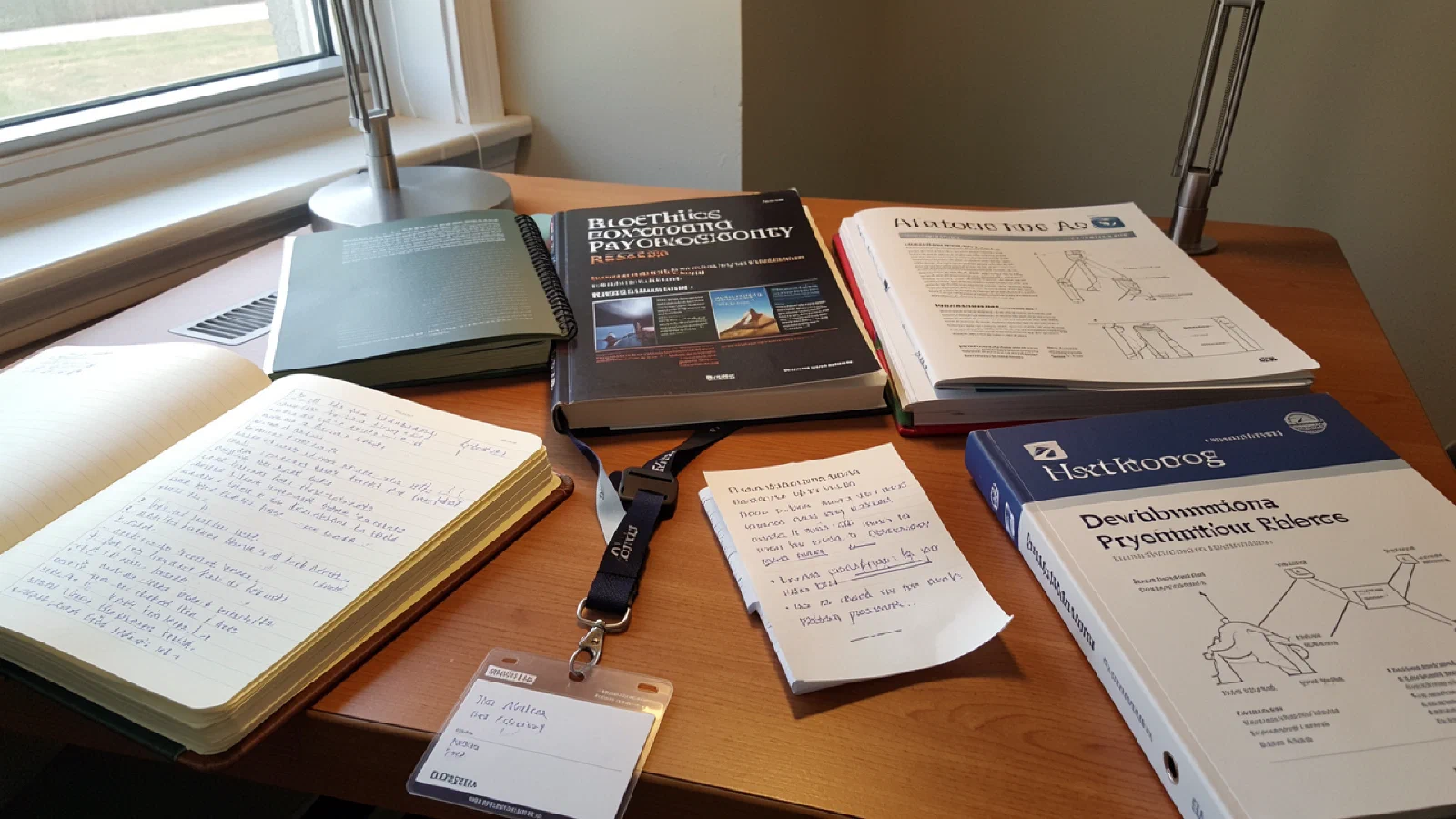
On Amara Osei’s desk, next to her laptop and a stack of clinical protocols she has been meaning to read for two weeks, is a small notebook with a green cover. She started it the day she accepted the job at Mercy Health System and has been writing in it, irregularly, ever since. It is not a work journal. It contains no meeting notes, no task lists, no performance metrics. Each entry is one sentence, occasionally two, about a specific person. She writes them after difficult days, when she has seen something the system could not see and she needs to put it somewhere before it disappears.
She has never shown it to anyone. She is not sure it would make sense to anyone who had not been in the room.
The job posting went up on a Tuesday.
“Director of Human-AI Integration,” it read. Mercy Health System, Cincinnati. The position required understanding of cultural dynamics in technology adoption, ethical reasoning in clinical contexts, psychological impact assessment for patients and staff, historical precedent analysis for healthcare technology transitions, governance design for algorithmic decision-making, and community stakeholder engagement across diverse populations. Must hold advanced degree in… and here the posting trailed off. It listed acceptable fields: anthropology, sociology, philosophy, psychology, political science, public health, “or related discipline.” The “or related discipline” was doing a lot of work. The degree the posting was actually describing did not exist at any university in the country.
Three hundred and twelve people applied. The resumes told a story about the gap between what institutions teach and what the world now needs. Anthropologists who had taught themselves data ethics. Psychologists who had fallen into technology policy. Philosophers who had picked up enough sociology to map institutional dynamics. Historians who could trace regulatory precedents across centuries but had never taken a governance design course because no such course existed when they were in school.
Amara, who got the job, had a master’s in medical anthropology from Emory, a certificate in bioethics from the Hastings Center, two years in a developmental psychology research lab at Michigan, and a self-taught understanding of AI systems acquired by being the kind of person who reads everything. She was, by accident of curiosity, exactly what the future requires. She was also, by the standards of every discipline she drew from, not quite credentialed in any of them. The anthropologists would note she never completed a PhD. The bioethicists would note her certificate was not a degree. The psychologists would note she left the lab before publishing.
She knew all of this. She still had the notebook.
The Case That Requires Everyone#
Three months into the job, Amara faces the case that justifies the title.
Mercy Health is deploying an AI system for mental health triage in its emergency departments. The system analyzes intake information, behavioral observations, and available medical history to recommend priority levels and initial care pathways. It is technically sophisticated, clinically validated in three pilot studies, and endorsed by the system’s chief medical officer. It is also, Amara recognizes immediately, a problem that no single discipline can solve.
The anthropologist’s question: how does this community understand mental illness? The system was validated in academic medical centers serving predominantly white, insured, English-speaking populations. Mercy’s emergency departments serve communities where mental health carries different stigma, where distress presents differently, where the relationship between patient and institution carries historical weight the system’s designers never considered. The gap between “clinically validated” and “culturally appropriate” is the gap the anthropologist sees.
The sociologist’s question: what social structures are producing the distress? A triage system that sorts individual patients by acuity treats mental health as an individual clinical problem. But the communities Mercy serves are experiencing collective stressors: housing instability, economic precarity, the slow dissolution of social institutions that once provided belonging. A system that sees individual pathology without seeing structural cause will sort people efficiently into treatment pathways that address symptoms while the conditions producing those symptoms continue unchallenged.
The philosopher’s question: what values should govern triage decisions? The system optimizes for clinical acuity, but acuity is not a value-neutral concept. Prioritizing the acute over the chronic seems obvious until you ask: does this systematically disadvantage patients whose conditions are chronic precisely because they never received adequate early intervention? Does prioritizing the acute effectively punish the underserved for being underserved? These are moral questions wearing clinical clothing.
The psychologist’s question: how will patients experience AI-mediated assessment? A person arriving at an emergency department in mental health crisis is at their most vulnerable. They are about to describe their inner life to a stranger. If that stranger’s first act is to consult a screen, what does that communicate about the value of what the patient is about to say? The psychological architecture of the clinical encounter changes when AI enters the room, and the change is not captured in any clinical metric.
The historian’s question: what happened the last time a triage system was deployed in a population like this one? Previous mental health triage protocols deployed in underserved communities consistently produced lower acuity scores for patients of color, not because those patients were less acutely ill but because the scoring instruments embedded assumptions about how distress presents, calibrated to the populations where the instruments were developed. The systems worked as designed. They were designed on the wrong people.
The governance designer’s question: who has oversight, and how do patients appeal? If the system’s recommendations produce disparate outcomes across racial or socioeconomic groups, who reviews the pattern? Who has the authority to modify or suspend the system? Who represents the community’s interests in the ongoing operation of something that affects their most vulnerable moments?
No single discipline produces someone who can hold all six questions at once. The anthropologist sees the cultural gap but may not design the governance remedy. The philosopher names the value conflict but may not map the psychological impact. The historian identifies the precedent but may not build the institutional response. The governance designer constructs the oversight structure but may not understand the cultural dynamics that determine whether anyone will use it.
Amara holds all six. Not because she is smarter than the specialists. Because she learned, by necessity and by a particular kind of restlessness, to think across the boundaries that academic disciplines erected for administrative convenience rather than for any feature of how human problems actually arrive.
The Disciplines Were Never Separate#
Here is the argument the preceding six essays have been building toward: the humanities were never separate disciplines studying separate things. They were different lenses on the same subject.
Anthropology asks: how do humans organize their worlds? Sociology asks: what structures emerge from those organizations? Philosophy asks: what should those structures serve? Psychology asks: what do those structures do to the people living within them? History asks: how have those structures changed, and what happened when they did? Political science asks: who holds power within those structures, and how is that power made accountable?
These are not six questions. They are one question viewed from six angles: what does it mean to be human in a world we have built?
The disciplines were separated for practical reasons. Universities needed departments. Departments needed criteria: different methods, different journals, different tenure committees, different professional associations. The separation produced extraordinary depth within each discipline. It also produced extraordinary blindness between them. The anthropologist who could see cultural patterns with exquisite precision could not design the governance structure to address them. The political scientist who could design institutions could not see the psychological dynamics that determined whether those institutions would be trusted.
AI does not care about disciplinary boundaries. When an AI system enters a hospital, it creates effects that are at once cultural, structural, ethical, psychological, historical, and political. The system does not produce an anthropological impact on Monday and a philosophical impact on Tuesday. It produces all of them at once, in ways that interact and compound. The professional who can address these effects must think the way the effects operate: across disciplines, in interaction, all at once.
This is not a new insight. It is the insight the humanities were always pursuing, from the inside of their separated departments, unable to act on it because the institutions rewarded depth over integration. AI has not created the need for convergence. It has made the cost of its absence visible in ways that administrative convenience can no longer ignore.
The Credential Gap, and Its Other Name#
In 2025, sixty-two percent of computer science programs in the United States saw undergraduate enrollment declines. Students were not abandoning technology. They were moving toward interdisciplinary AI programs that blended technical training with ethics, policy, and domain application. At the same time, overall humanities enrollment fell another seventeen percent. Departments closed. Tenure lines disappeared. The implicit message was clear: understanding humans is admirable; understanding machines is necessary.
Both trends are wrong, and wrong in ways that will produce specific failures before anyone in the room connecting them understands why.
No university offers a degree that prepares someone to do what Amara does. The people doing this work are assembled by accident: self-directed reading across disciplines, lateral moves between fields, the willingness to be undercredentialed in everything in order to be adequate in the specific combination the work requires. The credential gap is real, it is widening, and the institutions groping toward solutions are mostly polishing the parts when the world needs the assembly.
There is an equity problem buried inside the credential gap that tends to go unnamed. The person who can study anthropology, then certificate in bioethics, then spend two years in a psychology lab is the person with the time, institutional access, and financial resources to absorb the costs of an unconventional path. The convergent professional assembled by accident is almost always assembled by privilege: the latitude to follow curiosity across disciplines, the safety net that allows the unoptimized trajectory, the networks that make the improvised credential legible to hiring committees.
This matters because the communities that most need Amara’s work, the communities least likely to have been designed for in the systems affecting them, are also the communities least able to produce her. The credential gap is not only a curriculum problem. It is a distribution problem. And distribution problems do not solve themselves when institutions catch up. They require the same kind of deliberate structural attention the governance designer brings to every other system that concentrates benefit at the top.
I wonder sometimes whether the institutions will move before the failures accumulate into a visible pattern. History, as The AI Historian argues, suggests they usually do not. And the people who will be sorted incorrectly while we wait for the credential to be invented are the people the credential was invented to protect.
The Draw That Cannot Be Credentialed#
There is something underneath the credential gap that the gap itself obscures, and it is the hardest thing this arc has tried to say.
Amara is not just disciplinarily broad. She is constitutively oriented toward something that most people are not oriented toward: the specific person, before the aggregate. The patient who came in on a Tuesday and was almost sorted into the wrong pathway, not because the system failed technically, but because the system was right about the pattern and wrong about the person. Amara noticed this not because her training provided a checklist for noticing it. She noticed it because something in her is drawn toward the gap between the pattern and the person, the place where general knowledge fails to account for the specific life.
The Gravity, elsewhere in this collection, argued that AI is distilling every profession to its vocational essence: the draw that predated training and will remain after AI absorbs everything the training was supposed to produce. The teacher who notices the withdrawn child before any protocol gives her vocabulary for what she’s seeing. The healer who cannot leave a suffering person without attending to them. The governance designer who keeps a 1973 petition because she cannot stop thinking about the names. These people were oriented toward the core thing their profession required before the profession gave them tools to act on that orientation.
The convergent professional belongs in that list. What she has, beyond the disciplines, is the inability to accept an answer that reduces people to data: the pull toward the specific, the uncertifiable, the human remainder that the system cannot capture. She was oriented toward this before she knew it was a profession. The credential came after, assembled from parts by accident, because she was looking for a way to do the thing she was already doing.
There is a student at Purdue studying anthropology and AI, with additional work in psychology and political science. He is building by intention the credential Amara assembled by accident, designing his education around a future the institutions have not yet recognized. He did not arrive at this combination by following an existing path. He arrived at it because the combination was what the questions he could not stop asking required. The bet is not that the credential will be ready when he is. The bet is that the draw is real, and the questions are urgent enough, and that the world will need people like this before it knows how to train them.
That bet is already being won, by people the institutions do not yet know how to count.
But here is the limit of this argument, and it is worth stating clearly: the credential gap can be closed. Curricula can be redesigned. Degrees can be created. Programs can be funded. None of this will produce the draw. The draw toward human complexity that refuses resolution, toward the specific person who falls outside the model, toward the question that makes a meeting run late because something in the data does not add up to the person in front of you: none of it can be installed by curriculum. It can only be recognized and given room to develop. The work of building the convergent profession is partly institutional and partly something older: the work of creating conditions where people who are drawn toward difficult questions are not sorted out of the educational pipeline before they find their way to the work those questions require.
What Margaret Encounters#
Margaret does not know any of this. She does not know about disciplinary convergence or credential gaps or the institutional lag between what the world needs and what universities produce.
What she knows is that three years ago, when Dr. Chen’s office started using the AI system, nobody asked her how she felt about it. Nobody asked when she trusted it. Nobody asked whether the system’s recommendations made sense in the context of her life, not just her lab results.
Now someone does. Claire, the woman Amara hired and trained, sits with Margaret once a quarter. Not to discuss clinical results. To ask questions nobody used to ask: how is the system working for you? When it recommends something, do you understand why? Has it ever suggested something that did not fit your situation? Do you feel like your doctor still listens, or has the screen changed something?
Margaret cannot articulate why these questions matter. She knows only that being asked makes her feel like a person and not a data point. Claire understands something about her life that the system does not capture: the bridge club that provides more mental health benefit than any prescription, the garden that structures her days, the pharmacist who knows her by name and asks about her grandchildren.
Claire was trained in medical anthropology, psychological assessment, and community health. She reports to Amara. She does work that did not have a name three years ago and barely has one now. She is the human at the interface, the person who stands between the system and the life and translates in both directions. She is, without knowing the term, a convergent professional. So is Amara. So are the hundreds of people across the country doing this work under improvised titles, assembled by accident. They are proof that the convergence is real, that it is happening despite the institutions, and that it is happening too slowly for the people who needed it yesterday.
The Reframe#
For decades, the question was: what can you do with a humanities degree?
The question assumed the value of education is measured by its direct application to existing jobs. By that measure, a philosophy degree is worth less than an engineering degree, and a history degree is a luxury for people who can afford impracticality.
The AI age forces a different question: what happens when systems can measure everything and understand nothing?
The answer is Mercy Health in 2031, deploying a validated triage system in communities it was not designed for, optimizing for acuity in ways that systematically disadvantage the chronic, without anyone in the room who knows how to ask whether the system is doing what the institution actually intends. The answer is the archive of the current transition, being written in real time by the systems producing the transition, without anyone building the provenance structures that would allow future generations to learn from it. The answer is the traffic system performing surveillance without the accountability structures that make surveillance legitimate. The answer is the credit scoring algorithm that produces accurate predictions and illegitimate outcomes and generates no one in the institution whose training gives them vocabulary for that distinction.
The humanities were not impractical. They were the disciplines that refused to let human complexity be reduced to what could be measured. That refusal looked like an affectation in an era when most of what seemed to matter seemed measurable. It turns out to have been the essential intellectual act: insisting that the specific person is not adequately captured by the pattern, that the meaning of an event is not contained in the data about the event, that power must justify itself to the people it acts upon, that some threshold moments require a conscious presence with something at stake.
AI has made this visible by demonstrating what accumulates in its absence: not dramatic failures but the quiet erosion of specific people, in specific rooms, on specific days, who were almost gotten wrong. Almost sorted into the wrong pathway. Almost left without a place to appeal. Almost flagged as anomalous for existing in the wrong neighborhood at the wrong time.
The humanities were always studying the problem that distillation is now revealing as the only problem that matters: what do we owe the specific person who cannot be adequately represented by any model of the people like them?
The answer has always been the same. More than we can optimize. More than any system can provide. The measure of an adequate response is always the question it leaves open.
At the end of a difficult day, Amara opens the notebook. She writes the next entry: a sentence about a person, a room, a Tuesday. What the system saw. What she saw. What almost happened, and what did not, because someone was there who noticed.
The entry will not appear in any dashboard. It will not be cited in any report. It is the record of the specific person before the aggregate erases them.
It is the oldest work the humanities were always doing, beneath all the journals and the tenure committees and the disciplinary boundaries: the refusal to let one person disappear into the data about everyone like them.
The AI age has given that refusal an urgent new address. The draw toward it, the inability to accept the reduction, the pull toward the specific person in the room: that was never a curriculum. It was always a calling. And the people who have it are needed now more than any institution has yet found the language to ask for.
This is the twenty-seventh essay in The Transformed and the capstone of Arc 4: The Human Foundation. It draws on all six preceding essays in this arc and connects to The Anthropology of Artificial Intelligences, The New Work, Digital Durkheim, Democratized Cognition, The Living Curriculum, and The Gravity. It extends the distillation argument of The Gravity into the new professions the humanities are producing, and questions whether the convergent professional is an answer or a proof of concept. The Natives arc follows, asking what happens to the first generation formed inside the transformation.
References#
Education and the Humanities
Nussbaum, Martha C. Not for Profit: Why Democracy Needs the Humanities. Princeton University Press, 2010.
Roth, Michael S. Beyond the University: Why Liberal Education Matters. Yale University Press, 2014.
Interdisciplinarity and Convergent Research
Chades, I., et al. “Four Compelling Reasons to Urgently Integrate AI Development with Humanities, Social and Economic Sciences.” IEEE Transactions on Technology and Society, 2025.
Klein, Julie Thompson. Interdisciplining Digital Humanities. University of Michigan Press, 2015.
Latour, Bruno. Reassembling the Social: An Introduction to Actor-Network Theory. Oxford University Press, 2005.
Santa Fe Institute. Model of Convergent Transdisciplinary Research. santafe.edu.
Professional Theory and Vocational Draw
Abbott, Andrew. The System of Professions: An Essay on the Division of Expert Labor. University of Chicago Press, 1988.
Wrzesniewski, Amy, et al. “Jobs, Careers, and Callings: People’s Relations to Their Work.” Journal of Research in Personality, vol. 31, no. 1, 1997, pp. 21-33.
Higher Education and AI
Carnegie Mellon University. PhD in Computational Cultural Studies, Department of English, 2025.
Dartmouth College. AI Across the Curriculum Initiative, 2024-2025.
Modern Language Association, American Historical Association, et al. Doctoral Futures Initiative, 2025.
SUNY Buffalo. Department of AI and Society, 2024.
Equity and Access
Eubanks, Virginia. Automating Inequality: How High-Tech Tools Profile, Police, and Punish the Poor. St. Martin’s Press, 2018.
Scholarship and Professional Formation
Boyer, Ernest L. Scholarship Reconsidered: Priorities of the Professoriate. Jossey-Bass, 1990.
How this essay connects to others across The Approximate Mind.
- Nussbaum, Martha C. Not for Profit: Why Democracy Needs the Humanities. Princeton University Press, 2010.
- Roth, Michael S. Beyond the University: Why Liberal Education Matters. Yale University Press, 2014.
- Chades, I., et al. “Four Compelling Reasons to Urgently Integrate AI Development with Humanities, Social and Economic Sciences.” IEEE Transactions on Technology and Society, 2025.
- Klein, Julie Thompson. Interdisciplining Digital Humanities. University of Michigan Press, 2015.
- Latour, Bruno. Reassembling the Social: An Introduction to Actor-Network Theory. Oxford University Press, 2005.
- Santa Fe Institute. Model of Convergent Transdisciplinary Research. santafe.edu.
- Abbott, Andrew. The System of Professions: An Essay on the Division of Expert Labor. University of Chicago Press, 1988.
- Wrzesniewski, Amy, et al. “Jobs, Careers, and Callings: People’s Relations to Their Work.” Journal of Research in Personality, vol. 31, no. 1, 1997, pp. 21-33.
- Carnegie Mellon University. PhD in Computational Cultural Studies, Department of English, 2025.
- Dartmouth College. AI Across the Curriculum Initiative, 2024-2025.
- Modern Language Association, American Historical Association, et al. Doctoral Futures Initiative, 2025.
- SUNY Buffalo. Department of AI and Society, 2024.
- Eubanks, Virginia. Automating Inequality: How High-Tech Tools Profile, Police, and Punish the Poor. St. Martin’s Press, 2018.
- Boyer, Ernest L. Scholarship Reconsidered: Priorities of the Professoriate. Jossey-Bass, 1990.