The AI Historian
When Everyone Claims “This Time Is Different,” Who Remembers What Actually Happened?#
On Catherine Liang’s desk, held flat under a glass paperweight, are three letters written by her grandmother in Cantonese in the early 1960s. Catherine had them translated in her second year of graduate school, as a research exercise. She was studying migration patterns and thought they might contain useful data.
They did not contain useful data. They contained the price of rice in San Francisco’s Chinatown in 1962, the name of the woman who sold vegetables from a cart on Sacramento Street, the particular smell of the apartment she and Catherine’s grandfather shared with two other families, the worry she could not stop feeling about her youngest son’s cough. Ordinary things. Irreducibly specific to one person, one year, one set of fears that were felt and recorded and survived.
Catherine has kept them on the desk ever since. She cannot always explain why. She has theories. But she has not put the theories into words, because they feel like the kind of thing that should stay quiet until they are needed.
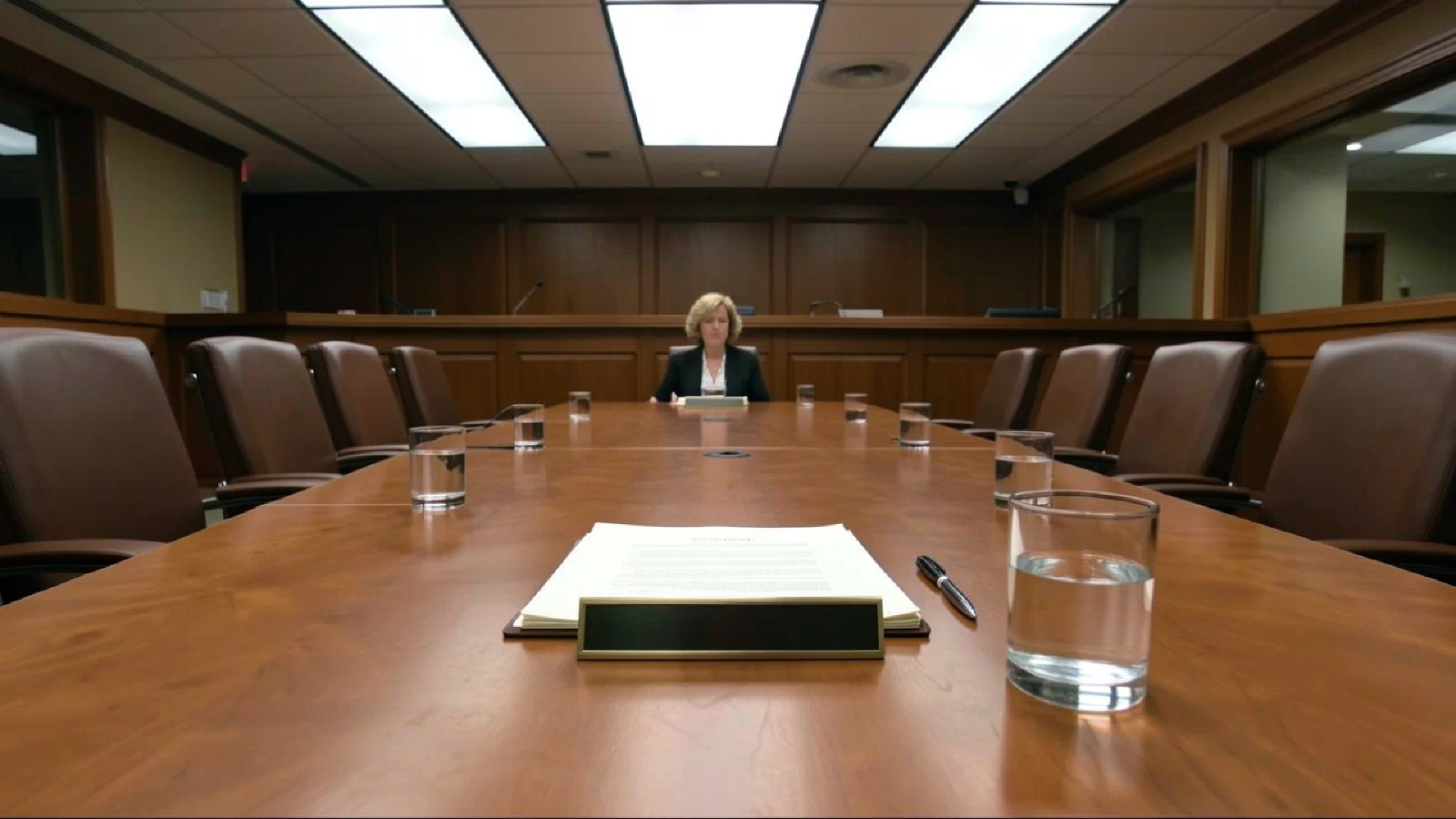
This morning she is reviewing her testimony for a Senate hearing on AI regulation. In three hours she will sit at a table in a chamber full of people claiming the current moment is unprecedented.
She reads her grandmother’s letter one more time before she goes.
The Pattern Analyst#
The hearing room is full. Three witnesses preceded Catherine: a technologist, a venture capitalist, an economist. All three used the word “unprecedented.” Unprecedented disruption. Unprecedented opportunity. The word carries an implicit claim: we have no map for this territory. We are improvising.
Catherine does not disagree. She says something more useful and more uncomfortable.
“The claim that technology destroys more work than it creates has been made in every generation since 1811, when the Luddites smashed textile machinery in the English Midlands. That claim has always been wrong over the long run, and devastating over the short run. New work does emerge. It emerged after the spinning jenny. It emerged after the assembly line. It emerged after the personal computer. The question is not whether new work will appear. The question is whether we will manage the transition in the fifteen to twenty years before it does. History suggests we usually do not. I am here to tell you specifically what happened to the populations we failed in previous transitions, and what the successful interventions looked like. Because we have the data. We have always had the data. We simply chose not to look at it.”
The room is quiet in a way it was not quiet for the other witnesses.
The Luddites were not wrong about everything. This is the first thing Catherine teaches anyone who will listen. The standard narrative treats them as a punchline: ignorant workers smashing machines they did not understand, too foolish to see that progress would ultimately benefit everyone. The historian’s narrative is different. The Luddites were skilled artisans, among the most highly paid workers in England, whose expertise was made obsolete by machines that could be operated by children working twelve-hour shifts for a fraction of their wages. They understood exactly what the machines did. They objected, rationally, to the destruction of their livelihoods and the communities those livelihoods supported.
They were right about the destruction. English handloom weavers saw their wages fall by more than seventy percent between 1800 and 1830. Many never recovered. Their children worked in factories under conditions that produced the first industrial public health crisis. The new prosperity the machines eventually created arrived for the next generation, not for the one that bore the cost.
The AI Historian’s value begins in that specificity. Not “transitions are hard” but “this transition destroyed this population, the suffering lasted this many years, and these specific policy interventions shortened the pain while those specific policy failures extended it.” The British Factory Acts did not arrive until a full generation after the destruction began. The people who needed protection most received it too late to save their lives, though it saved their children’s.
Carl Benedikt Frey documents this pattern across centuries: technological transitions reliably create more wealth in aggregate while reliably destroying specific communities in the process. Both are true. The policy question, the only question that matters for the people living through the transition, is whether institutions will act quickly enough to close the gap between destruction and creation.
The AI Historian maps this with the precision policy demands. How long did the transition from agricultural to industrial labor take in England? Roughly sixty years. In the United States? About forty. How long has the transition from manufacturing to service economy taken in the American Midwest? It is still ongoing in some regions, more than four decades after the first wave of plant closures. What interventions shortened the pain? Trade adjustment assistance, community college retraining, infrastructure investment. What extended it? Austerity, punitive welfare policy, the persistent belief that markets would self-correct faster than communities would collapse.
This is actionable intelligence. Catherine delivers it in Senate hearing rooms and corporate boardrooms where the people making decisions about AI tend to believe that because the technology is new, the human patterns surrounding it must be new as well.
They are not. The technology is new. The human patterns are ancient.
The “This Time Is Different” Audit#
But the historian’s job is not to provide false comfort by declaring every current anxiety familiar. Some aspects of the AI transition are different, and the differences matter.
Catherine conducts what she calls a “this time is different” audit. For each claim of unprecedented disruption, she asks: is this actually new, or is this a familiar pattern in new clothing? The answer is usually both, which is the answer nobody wants because it requires holding two contradictory truths at once.
What is familiar: the fear of technological unemployment, the destruction of specific occupations, the lag between old jobs disappearing and new ones emerging, the tendency of costs to fall on the least powerful while benefits flow to the most powerful. All of this has happened before, in recognizable patterns.
What is different: three things, specifically. First, the speed. Previous transitions unfolded over decades. Workers who lost manufacturing jobs had years, sometimes a generation, to adapt. AI is compressing this timeline. A profession that took decades to develop can be automated in months. The human systems that manage economic transition were built for the pace of previous transitions. They may not function at the pace of this one.
Second, the cognitive nature of the displacement. The spinning jenny replaced hands. The assembly line replaced muscles. AI replaces judgment, analysis, pattern recognition, the cognitive work that knowledge workers assumed was uniquely theirs. This is not merely a different sector being disrupted. It is a different category of human capability being replicated.
Third, the scope. Previous transitions disrupted specific industries sequentially. Textiles in the 1810s. Agriculture in the 1870s. Manufacturing in the 1970s. Each wave hit a particular sector while others remained stable, providing economic absorbers for displaced workers. AI is disrupting nearly every knowledge profession at once: law, medicine, finance, journalism, education, software engineering, creative work. There may be fewer stable sectors to absorb the displaced.
The AI Historian separates these genuinely novel features from the recycled anxiety. Both require response, but different responses. The familiar patterns can be addressed with proven interventions, updated and accelerated. The novel features require new thinking, and the historian’s contribution is ensuring that new thinking starts from the clearest possible understanding of what we already know.
The Corrupted Archive#
There is a problem quietly becoming one of the most consequential challenges of the AI transition, and it is one that only historically trained professionals are positioned to see clearly.
AI-generated content now constitutes a majority of new text published online. By some estimates, synthetic content crossed the fifty percent threshold in 2025. This is not merely a quality concern. It is an archival crisis. The historical record of the current transition is being written, in real time, by the systems producing the transition. Future historians attempting to study what actually happened will face a problem without precedent in historical research: the primary sources will be contaminated by machine-generated content that is indistinguishable from human testimony.
A historian in 2060, studying the impact of AI on American journalism, searches the digital archive for first-person accounts from journalists displaced in the 2020s. She finds thousands of blog posts, social media threads, essays describing the experience. But an unknown fraction of those accounts were generated by AI systems: some as content-farm filler, some by AI tools assisting journalists who let the tool write more than they realized. The provenance of each piece of text is lost.
This is the digital equivalent of discovering that half the letters in a historical archive were written by someone other than the person whose name appears on them, with no way to determine which half.
Catherine has been working with the National Archives on protocols for preserving what she calls verified human testimony during the AI transition: first-person accounts whose provenance can be confirmed, whose authors can be identified, whose experiences can be cross-referenced against independent sources. This work sounds administrative. It is among the most important archival projects of the century. Without it, the history of the most consequential technological transition since industrialization will be written from corrupted sources, and whatever lessons might be drawn from it will be compromised before anyone tries to draw them.
I wonder sometimes whether it is already too late, whether the contamination began before anyone thought to design against it.
What Policy Forgets#
Governments are making AI policy in real time, under pressure from industry lobbying, public anxiety, and the legitimate urgency of a technology that moves faster than deliberation. They are making it, in many cases, badly. Not because the policymakers are incompetent but because they are operating without institutional memory.
When regulators debate transparency requirements for AI decision-making, Catherine points to the evolution of pharmaceutical regulation. For decades after the Pure Food and Drug Act of 1906, drug companies were required to list ingredients but not to demonstrate efficacy. It took the thalidomide disaster of the 1960s to produce the requirement that drugs actually work before being sold. The parallel is not exact, but the pattern is instructive: transparency without efficacy requirements produces the appearance of oversight without its substance. Requiring companies to disclose that an AI made a decision is different from requiring them to demonstrate that the decision was sound.
When industry advocates propose self-regulation, Catherine points to the chemical industry’s Responsible Care program, launched in the 1980s as a voluntary code of conduct. Independent analyses found minimal impact on pollution or safety. Self-regulation works, historically, only when backed by credible threats of government intervention. Without that threat, voluntary codes become public relations. Industry pledges to develop AI responsibly are meaningful only insofar as they are accompanied by regulatory consequences for failing to do so.
None of these parallels determines the right policy. They do something more valuable: they eliminate policy designs that have been tried and documented and found to fail. The historian in the policy room prevents the most expensive mistake: the one that was already made, documented, studied, published, and then forgotten because nobody in the room had read the study.
The Long View on Professional Identity#
There is one more contribution the AI Historian makes, and it may be the most emotionally important even if it is the least technically precise.
Professions have been created, destroyed, and transformed throughout recorded history. The medieval scribe who spent decades mastering the art of copying manuscripts was made redundant by the printing press. The telegraph operator, once among the most technologically sophisticated workers in America, disappeared within a generation of the telephone’s adoption. The word “computer” once referred to a human being, usually a woman, who performed mathematical calculations by hand. The word survived. The profession did not.
In each case, the people who held these positions experienced what the AI Psychologist would recognize as identity dissolution. The scribe was not just losing work. He was losing the answer to the question of what made him valuable.
The AI Historian does not minimize this by saying it happened before. She contextualizes it by saying: it happened before, and the people who lived through it were not diminished by the transition even when they were devastated by it. The scribes did not disappear. Some became editors. Some became teachers. Some became the first generation of typesetters. They carried their literacy, their attention to detail, their love of the written word into new forms that had not yet been invented when the old forms died.
The pattern is not “everything will be fine.” The pattern is: the capabilities that made you good at the old work do not disappear when the old work does. They find new applications you cannot yet see, because the new work has not been invented yet. This is not comfort. It is historical observation, rigorously supported, offered without the guarantee that any individual will come through the transition successfully.
It is, for the person in the middle of the transformation, the difference between despair and possibility.
What Gets Preserved#
Catherine returns to her office after the hearing. The letters are still under the paperweight, exactly where she left them.
She has been thinking, for several years now, about what a historian in 2060 will have. The Industrial Revolution left behind factory inspection reports, wage records, Chartist pamphlets, testimony before Parliamentary committees, and tens of thousands of letters from ordinary people describing what the transition felt like from inside. The letters are the most valuable part. Not because they contain accurate data, they don’t, but because they are indisputably human. One person, one year, one set of fears and observations and small noticing. You can hold them and know that a specific hand formed these specific marks.
Her grandmother’s letters describe the price of rice, the cart vendor’s name, the smell of a particular apartment. They contain no useful data. They contain everything that matters about what it was like to live through a transformation and keep going.
A historian studying the AI transition from 2060 will have millions of documents. She will not be able to tell, without provenance systems that mostly don’t exist yet, which ones were written by the people whose names appear on them. She will not be able to hold them and know. The archive of this transition may be the first in history that cannot be read the way Catherine learned to read archives: with the assumption that a human voice is behind the text, specific and mortal and trying to say what it was actually like.
The discipline was never irrelevant. The institutions were simply not under enough pressure to need it at decision speed. Now they are. But history’s deepest value has always been the individual voice inside the aggregate pattern, the woman on Sacramento Street, the weaver whose wages fell, the person who wanted to say what it was like before it was over.
What gets preserved of this moment, and whether anyone will be able to tell the difference, is the question Catherine carries out of the office at the end of the day. It did not appear in her Senate testimony. It is the question underneath all of her Senate testimony.
She puts the paperweight back over the letters and turns off the light.
This is the twenty-fifth essay in The Transformed, and the fifth in Arc 4: The Human Foundation. It extends the historical threads of The Weight of Seeing Ahead, The New Work, The Confluence of Influence, and What Remains into applied professional practice. The next essay, The AI Governance Designer, asks who builds the institutions that hold all of these disciplines together.
References#
History of Technological Transitions
Frey, Carl Benedikt. The Technology Trap: Capital, Labor, and Power in the Age of Automation. Princeton University Press, 2019.
Mokyr, Joel. The Lever of Riches: Technological Creativity and Economic Progress. Oxford University Press, 1990.
Polanyi, Karl. The Great Transformation: The Political and Economic Origins of Our Time. Beacon Press, 1944.
Thompson, E. P. The Making of the English Working Class. Vintage, 1963.
Industrial and Economic History
Gordon, Robert J. The Rise and Fall of American Growth. Princeton University Press, 2016.
Hounshell, David A. From the American System to Mass Production, 1800-1932. Johns Hopkins University Press, 1984.
Digital Provenance and Archival Crisis
Coalition for Content Provenance and Authenticity (C2PA). Technical Standards Documentation. 2025.
Graphite. “AI-Generated Content Surpasses Human-Written Content Online.” May 2025.
National Archives and Records Administration. AI-Generated Metadata Provenance Guidelines. 2025.
Policy History and Regulatory Design
Barr, Michael S. The Financial Crisis and the Regulation of Finance. Brookings Institution, 2012.
Carpenter, Daniel. Reputation and Power: Organizational Image and Pharmaceutical Regulation at the FDA. Princeton University Press, 2010.
How this essay connects to others across The Approximate Mind.
- Frey, Carl Benedikt. The Technology Trap: Capital, Labor, and Power in the Age of Automation. Princeton University Press, 2019.
- Mokyr, Joel. The Lever of Riches: Technological Creativity and Economic Progress. Oxford University Press, 1990.
- Polanyi, Karl. The Great Transformation: The Political and Economic Origins of Our Time. Beacon Press, 1944.
- Thompson, E. P. The Making of the English Working Class. Vintage, 1963.
- Gordon, Robert J. The Rise and Fall of American Growth. Princeton University Press, 2016.
- Hounshell, David A. From the American System to Mass Production, 1800-1932. Johns Hopkins University Press, 1984.
- Coalition for Content Provenance and Authenticity (C2PA). Technical Standards Documentation. 2025.
- Graphite. “AI-Generated Content Surpasses Human-Written Content Online.” May 2025.
- National Archives and Records Administration. AI-Generated Metadata Provenance Guidelines. 2025.
- Barr, Michael S. The Financial Crisis and the Regulation of Finance. Brookings Institution, 2012.
- Carpenter, Daniel. Reputation and Power: Organizational Image and Pharmaceutical Regulation at the FDA. Princeton University Press, 2010.