The Post-Professional Society
When the Boundaries Dissolve, What Holds?#
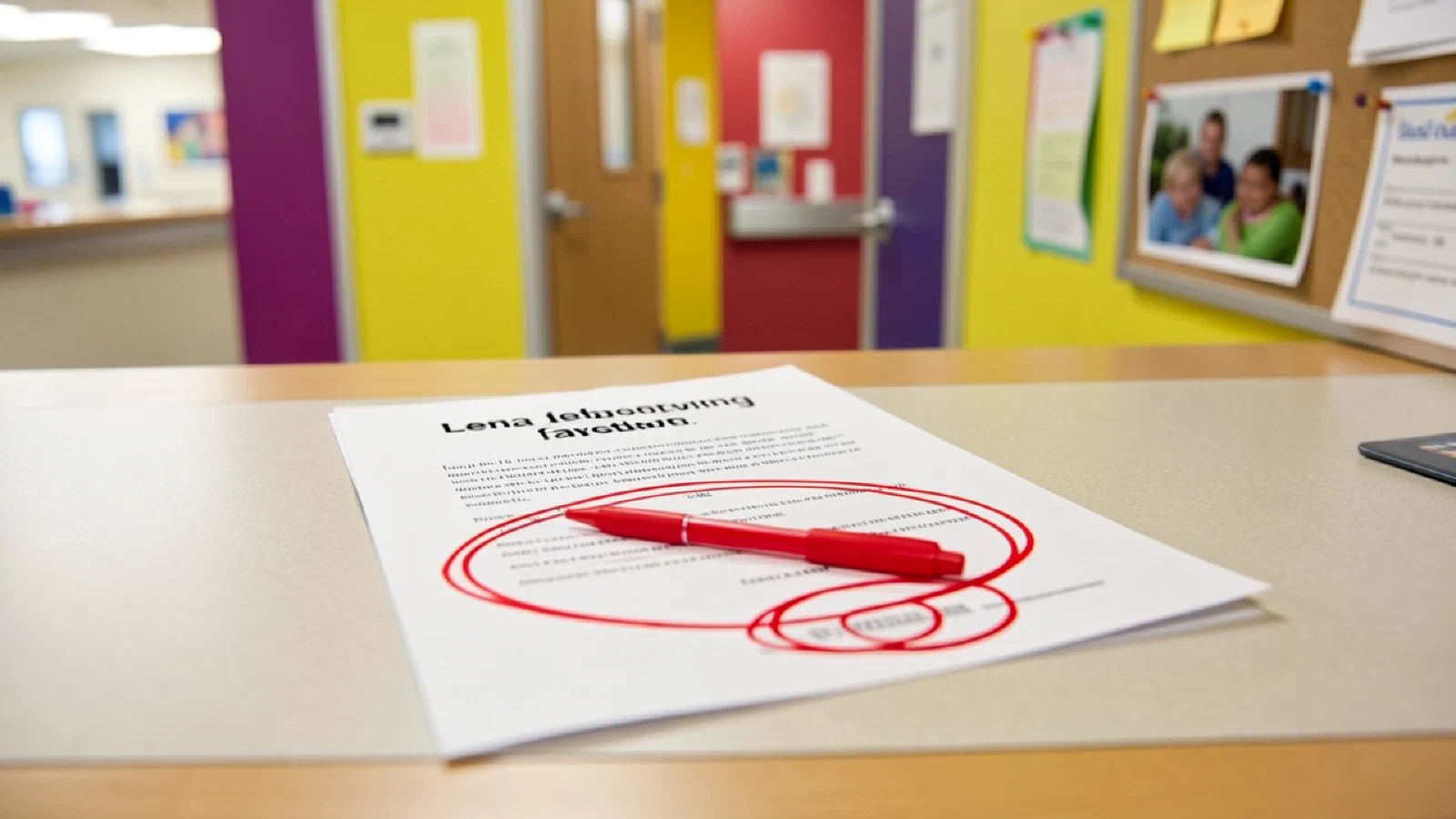
Dr. Lena Park has been running a pediatric AI integration program at a children’s hospital in the Midwest for three years. She has a dry laugh and a habit of underlining things twice in red pen, which her residents find either endearing or terrifying depending on what she has underlined. She wrote a job posting six months ago that she knows is absurd, and she left it up anyway.
The posting asks for someone who understands child development, can evaluate AI diagnostic recommendations across imaging, pathology, and chronic care management, has the cultural competence to serve a diverse community, can design governance structures for AI-assisted treatment decisions involving minors, and can communicate complex care plans to frightened parents. They want, in other words, a psychologist, an anthropologist, a physician, a political philosopher, a lawyer, and a counselor. In one person. At the bottom, Lena added: “Preferred: sense of humor.” Because the posting is impossible, and she wanted whoever read it to know that she knew.
The person it describes does not exist as a professional category. She exists as a person, if she exists at all: someone whose particular combination of training, experience, and judgment happens to match a need that no profession was designed to fill.
She was assembled by accident. What would it mean to assemble her on purpose?
The 150-Year Experiment#
Professions as we know them are roughly 150 years old.
Before the professionalization movement of the late 19th century, expertise was organized differently. Guilds. Apprenticeships. Generalists. Polymaths. The village doctor who also set bones and pulled teeth and sometimes helped with a difficult birth. The town lawyer who handled contracts and disputes and land transfers and the occasional criminal defense. These were not professionals in the modern sense. They were people who knew things and did things for other people who needed those things done.
The bounded profession, with its credential, its association, its licensing board, its defined scope of practice, was an institutional innovation for an industrial age. It solved a genuine problem: as knowledge expanded, no single person could hold it all. Specialization was necessary because human cognitive limits required it. The profession was the container that held a manageable slice of expanding knowledge and said: this is your domain, these are your standards, here is how you prove you are qualified.
It served that age well. It raised standards. It created accountability. It gave people identity and community and a legible place in the social order. “I am a doctor” meant something precise and valuable. It told you and everyone else who you were.
I think AI ends this age. Not by destroying professions overnight but by dissolving the conditions that made them necessary. When AI can hold the full knowledge base of any domain and apply it competently, the human cognitive limitation that required specialization no longer binds. The container still exists. The reason for the container has changed.
What Dissolved#
This project has spent five arcs watching it happen from different angles.
Arc 1 showed that every transforming profession was really two professions bundled together: a computational half and a judgment half. The radiologist who read the scan and the radiologist who interpreted what the scan meant for this patient. AI absorbed the first. The second remained, and it turned out to look remarkably similar across every domain. Judgment is judgment, whatever costume it wears.
Arc 2 showed that the invisible professions, the ones nobody thought about, were connected by physical leverage: the body’s relationship to work, the hand’s knowledge, the presence that cannot be digitized. AI dissolved some of that leverage and revealed what persists: the irreducibly embodied, the work that requires being there.
Arc 3 showed that some professions resist dissolution entirely because they require conscious human presence. Not expertise. Presence. The teacher who sees the struggling child. The nurse who holds the frightened patient’s hand. The judge who looks you in the eye.
Arc 4 showed that the humanities, which seemed like the disciplines least relevant to the AI transition, turned out to be its foundation. When every profession’s human half is judgment, and judgment is humanistic, the disciplines that study what it means to be human become the disciplines that everything else depends on.
And Arc 5 showed something none of the others could see alone. The first generation to grow up after the professions began dissolving is already living without them. They are not waiting for the post-professional society. They are it.
Amara’s Life#
I keep thinking about Amara from The Unbounded. Nineteen, unable to answer her uncle’s question about what she is going to do, because the question assumes a grammar she does not speak.
Her stormwater work. Her music. Her community gathering. Three activities that, in the professional era, would have required three separate credentials, three separate training pipelines, three separate identities. She does all three, not as hobbies alongside a “real” career but as the substance of her life, each one drawing on the same capacities: judgment about what matters, creative integration across domains, the social skill to bring people together around problems that need solving.
Amara is not a career. She is a practice. The grandmother understood this when she said “that sounds like good work.” The word work, without the professional apparatus attached to it, turns out to contain everything that matters: effort, purpose, contribution, care.
I think Amara is the job posting. Or rather, the person the job posting is looking for is someone whose formation produced Amara’s capacities at a higher level of development: the cross-domain fluency, the comfort with ambiguity, the integrative judgment, the ability to hold psychological, medical, cultural, and ethical considerations in the same mind and make decisions that honor all of them.
The profession could not produce this person because the profession, by definition, bounded its practitioners within a single domain. The post-professional world needs her. The question is whether we know how to form her on purpose.
The Vacuum#
If professions dissolve, so do professional credentials. And the dissolution of credentials is not an abstraction. It is a practical crisis that nobody has solved.
The medical degree, the law license, the engineering certification: these assumed bounded domains. You studied the domain. You passed the examination. The credential said: this person has been tested and found competent within these boundaries. The boundaries were the point. They made the credential meaningful by making it specific.
When the boundaries dissolve, what does the credential certify? Competency portfolios. Demonstrated judgment records. Cross-domain certifications. Continuous assessment rather than point-in-time testing. None of these are mature. None have the institutional weight of a medical degree. We are in a gap between one credential system and whatever replaces it, and the gap is consequential because without credentials, nobody knows who to trust.
Margaret feels this. She goes to the doctor and sees a title on the wall. She trusts the title. It means something to her: this person was tested, was certified, belongs to a profession that holds its members accountable. What replaces that trust when the profession dissolves? An algorithm’s rating? A portfolio of projects? A reputation system that Margaret does not understand?
Trust is the social infrastructure of expertise. Professions built it over 150 years. We are dismantling it in a decade. I do not think we have reckoned with what it costs to rebuild.
Two Identity Crises#
“What do you do?” is the first question at every social gathering. For most adults in industrialized societies, the answer to this question is the answer to a deeper one: who are you?
Professional identity provides meaning, status, community, and structure. The Empty Ledger documented what happens when it erodes: James, sitting at his desk, employed and unnecessary, the ledger of contribution empty. The meaning wound. Deaths of despair in communities where the work that organized life disappeared. The economic loss was real but the identity loss was worse, because you can give someone a new paycheck but you cannot give them a new answer to the question of who they are.
This is one identity crisis. The adults’ crisis. The crisis of people who built a self around a professional identity and are watching it dissolve. Marco at the dinner table, furious about the insurance portal but really furious about something deeper: the world no longer recognizes his competence. The uncle who asks Amara “what are you going to do?” because he does not have another question, because “what do you do?” was always the question, and without it he is conversationally lost.
There is a second identity crisis happening at the same time, and it looks completely different. N1 never had the professional identity to lose. They arrived at adulthood without the narrative structure that told every previous generation what a life was supposed to look like. The career ladder was gone before they could climb it. The credential system was dissolving before they could earn the credentials. The question “what do you do?” was already incoherent by the time they were old enough to be asked.
The first crisis is grief. The second is vertigo. Both are real. Both need different things. And they are happening in the same families, at the same dinner tables, mediated by seventeen-year-old translators who belong fully to neither world.
The post-professional society is not a future we are heading toward. It is a condition we are already inside, experienced differently by the generation that lost the professions and the generation that never had them. Building what comes next requires hearing both.
What Comes After#
I do not know what replaces the profession as the organizing unit of expertise, identity, and social trust. Nobody does. The honest position is that we are in the gap, and the gap may last a generation.
But I can see some features of what might emerge, the way you can see the shape of a coastline through fog even when you cannot see the land.
Expertise organized around problems rather than domains. The hospital does not need a radiologist, a pathologist, and an endocrinologist. It needs someone who can exercise judgment across modalities. The city does not need an urban planner, a traffic engineer, and a social worker. It needs someone who can design human-serving systems. Problem-centered expertise, enabled by AI handling the domain-specific computation, with the human providing the judgment that crosses boundaries.
Identity organized around practice rather than title. Not “I am a doctor” but “I work on pediatric AI governance” or “I make things that help communities understand their own data” or, as Amara’s grandmother would put it, “I do good work.” This is less legible than a professional title. It is potentially more honest.
Trust organized around demonstrated judgment rather than credentialed membership. I can see this emerging but I cannot see how it scales. Margaret trusted the title on the wall because an institution stood behind it. What institution stands behind a portfolio of demonstrated judgment? Who verifies? Who is accountable when the judgment fails?
I wonder sometimes whether the answer is that nothing replaces the profession. Whether what we get instead is a long period of improvisation, messy and uneven, where the people doing the work figure out how to find each other and the people receiving the work figure out how to trust them, and the whole thing operates on reputation and relationship rather than credential and category. It would not be efficient. It might be more honest.
These are not answers. They are directions. The fog has a shape but the land is not yet visible.
We do not need to save professions. We need to build what comes after them. The profession was an answer to the question “how do humans organize expertise?” AI has changed the question. Clinging to the old answer is not tradition. It is refusal.
And N1, who never learned to cling to the old answer because they never had it, may be better positioned to build the new one than any of us realize. They are not waiting for the post-professional society. They are improvising it, right now, in Amara’s stormwater projects and Zara’s cross-domain fluency and every seventeen-year-old who answers the uncle’s question with “I’m figuring it out” and means it not as evasion but as method.
The figuring out is the work. It always was. The profession just made it look like something else.
Lena’s posting is still up. She has stopped expecting anyone to fill it. What she has started noticing is that the people who come closest, the ones whose interviews surprise her, are the ones who cannot explain their own qualifications in professional terms. They say things like “I’ve worked on a few things” and then describe a life that sounds incoherent on a resume and makes perfect sense in the room. They have the judgment. They have the integrative capacity. They have, without exception, a sense of humor about the fact that nobody, including them, knows what to call what they do.
She underlines their names twice. In red.
This is the first essay in Arc 6 of The Transformed, “The Grand Convergence,” which synthesizes the arguments of the preceding five arcs into a unified account of what AI reveals about professional work, human development, and what it means to build a life. This essay examines the dissolution of the profession as organizing unit and what might replace it. The Transformed builds on The New Work, The Empty Ledger, and The Curation Economy.
References#
Abbott, Andrew. The System of Professions: An Essay on the Division of Expert Labor. University of Chicago Press, 1988.
Illich, Ivan. Deschooling Society. Harper and Row, 1971.
Illich, Ivan. Disabling Professions. Marion Boyars, 1977.
Freidson, Eliot. Professionalism: The Third Logic. University of Chicago Press, 2001.
Sennett, Richard. The Corrosion of Character: The Personal Consequences of Work in the New Capitalism. W.W. Norton, 1998.
Standing, Guy. The Precariat: The New Dangerous Class. Bloomsbury Academic, 2011.
Deming, David J. “The Growing Importance of Social Skills in the Labor Market.” Quarterly Journal of Economics, vol. 132, no. 4, 2017, pp. 1593-1640.
Case, Anne, and Angus Deaton. Deaths of Despair and the Future of Capitalism. Princeton University Press, 2020.
How this essay connects to others across The Approximate Mind.
- Abbott, Andrew. The System of Professions: An Essay on the Division of Expert Labor. University of Chicago Press, 1988.
- Illich, Ivan. Deschooling Society. Harper and Row, 1971.
- Illich, Ivan. Disabling Professions. Marion Boyars, 1977.
- Freidson, Eliot. Professionalism: The Third Logic. University of Chicago Press, 2001.
- Sennett, Richard. The Corrosion of Character: The Personal Consequences of Work in the New Capitalism. W.W. Norton, 1998.
- Standing, Guy. The Precariat: The New Dangerous Class. Bloomsbury Academic, 2011.
- Deming, David J. “The Growing Importance of Social Skills in the Labor Market.” Quarterly Journal of Economics, vol. 132, no. 4, 2017, pp. 1593-1640.
- Case, Anne, and Angus Deaton. Deaths of Despair and the Future of Capitalism. Princeton University Press, 2020.