The Legal Ecosystem
When the Law Is Finally Readable, Who Still Can’t Reach Justice?#
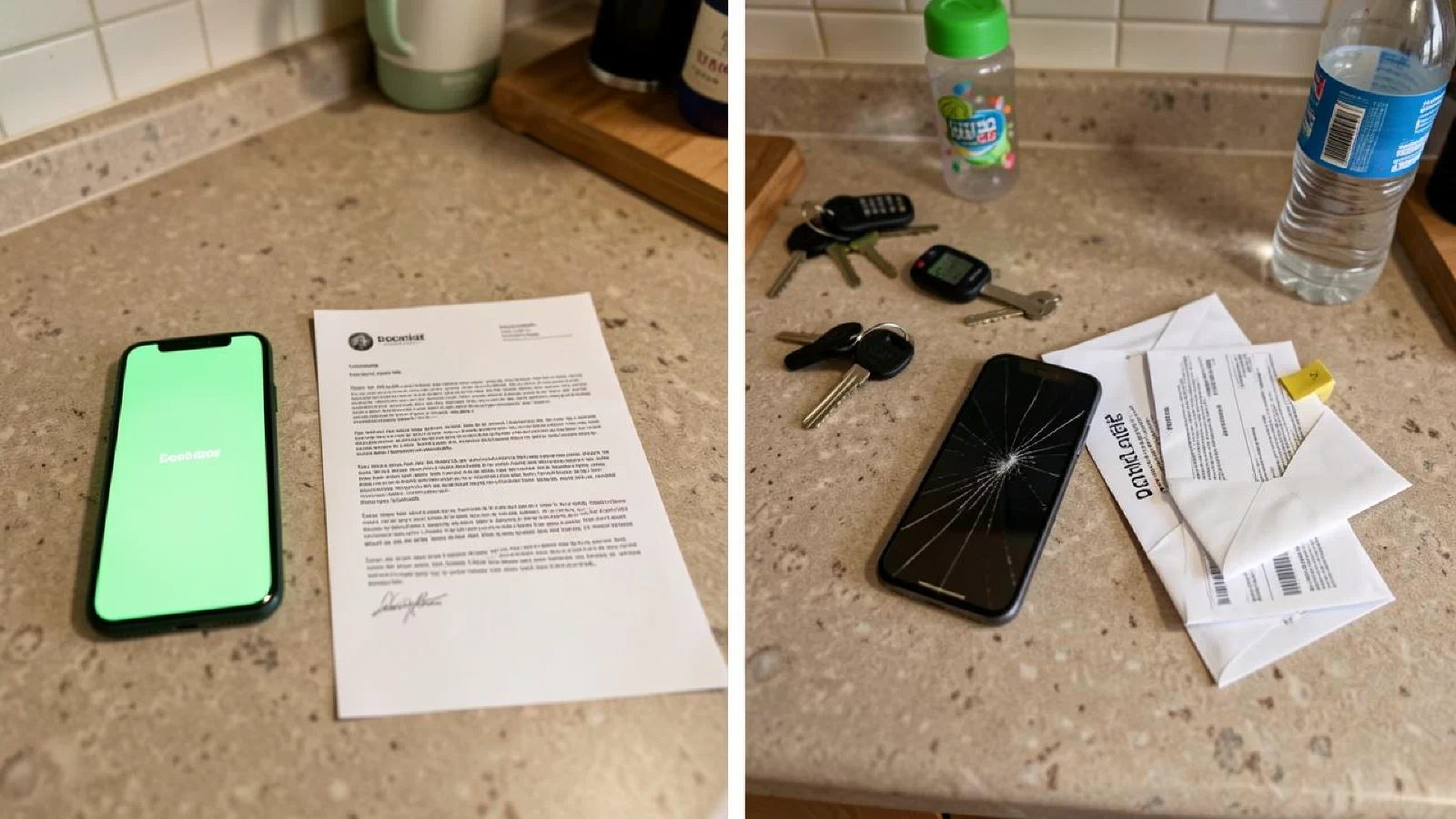
Sarah, Margaret’s daughter, needs to contest a medical billing error. Her mother’s hospital visit last September was coded as an elective procedure rather than the emergency it was, and the insurer denied $4,200 of the claim. Three years ago, Sarah would have had two options. She could have hired a lawyer she could not afford, or she could have spent evenings and weekends researching billing codes, regulatory requirements, and appeals procedures in language that seemed designed to resist comprehension. Most people in her situation did neither. They paid the bill or let it go to collections.
Sarah opens her AI assistant. She describes the situation in plain English. The system identifies the billing code error, cites the relevant regulation requiring emergency services to be coded as such regardless of the admitting diagnosis, drafts an appeal letter to the insurer, and generates a complaint to the state insurance commissioner’s office in case the appeal fails. Twelve minutes. Sarah reads the letter, changes one sentence to match her voice, and sends it.
This is not remarkable. This is Tuesday. Millions of people now do what Sarah just did, contesting billing errors, reviewing lease terms, understanding employment contracts, working through immigration forms. The legal knowledge that was once locked behind $400-an-hour professionals is available to anyone with a phone. The law is finally readable.
Across town, a woman named Delia is facing eviction. Her landlord has not maintained the building’s heating system, and Delia withheld rent, as she believed she was entitled to do. She was wrong about the specific procedure required in her state, which demands written notice to the landlord and a waiting period before rent withholding is legally protected. Delia has the same AI tools Sarah has. She also has two children, a job with no flexibility for midday phone calls, limited English, a phone with an unreliable data plan, and the particular exhaustion of someone who has been fighting systems her entire life. The AI could help her. She has not opened it. She does not trust systems that claim to help, because in her experience, systems that claim to help are the ones that hurt you in language you cannot challenge.
The law is finally readable. Justice is still out of reach.
The Guild Under Pressure#
The legal profession is built on information asymmetry. Lawyers know things you do not, and you pay them for that knowledge. The structure of legal education, bar examinations, billable hours, continuing education requirements: all of it organized around the scarcity of legal expertise. The scarcity is real. Understanding case law, statutory interpretation, regulatory frameworks, and procedural requirements takes years of training and practice. But the scarcity also serves an economic function. It keeps fees high, access limited, and the profession’s gatekeeping role intact.
AI dissolves the scarcity. Not the expertise, but the information component of expertise. Every case ever decided is searchable in seconds. Every contract clause is cross-referenced against comparable agreements. Every regulatory requirement is mapped, tracked, and updated in real time. The research that once consumed the first year of a lawyer’s career, and the first several hours of every legal engagement, is now instantaneous and nearly free.
This is not the first time a profession has faced the dissolution of its information advantage. Physicians faced it when patients arrived with internet research. Financial advisors faced it when market data became publicly available. In both cases, the profession adapted by shifting emphasis from information to judgment. The doctor who once spent the visit explaining a diagnosis now spends it interpreting what the diagnosis means for this particular patient. The financial advisor who once provided market data now provides strategic counsel.
Law follows the same pattern, with a complication the other professions did not face. Medicine and finance are organized around helping individuals. Law is organized around power. The lawyer does not merely know things. The lawyer can do things: file motions, compel discovery, represent clients in forums where self-representation is technically permitted but practically futile. The information asymmetry was only part of the profession’s value. The power asymmetry is the rest.
AI dissolves the information asymmetry and leaves the power asymmetry intact. Sarah can draft a perfect appeal letter. She cannot compel the insurer to respond. Delia can understand her rights. She cannot enforce them against a landlord with a lawyer on retainer. The tenant facing illegal eviction can now generate a demand letter citing the precise statute being violated. Whether the landlord complies depends not on the quality of the letter but on the power behind it.
The Paralegal Transformation#
The research function is largely automated by 2031. Legal research that took a paralegal days takes an AI system minutes. Case law analysis, regulatory mapping, document review in discovery, contract comparison: the computational work that occupied the paralegal profession for decades is now done by machines.
But something unexpected happened. The volume of legal work exploded.
When legal research costs a hundred dollars an hour in paralegal time, most legal questions go unresearched. The small business owner does not investigate whether her lease terms are standard. The employee does not check whether his non-compete is enforceable. The family does not research whether their elderly parent’s care facility is in compliance. The work does not get done because the cost exceeds the perceived value.
When legal research costs nearly nothing, all of that suppressed demand surfaces. Every lease gets reviewed. Every contract gets checked. Every regulatory question gets answered. And every piece of AI-generated legal analysis needs a human to verify it, because the consequences of a hallucinated precedent or a misapplied statute fall on real people.
The paralegal does not disappear. She transforms. Less researcher, more quality controller. Less finding the answer, more verifying that the AI’s answer is correct, complete, and applicable to this specific situation. The skills are different. Verification requires enough legal knowledge to catch errors but also enough client knowledge to recognize when a technically correct answer misses something that matters. The paralegal who survives is the one who understands not just the law but the person the law is being applied to.
The Contract Revolution#
Contract law illustrates the transformation most concretely.
AI generates standard contracts with high reliability. Commercial leases, employment agreements, partnership formations, licensing deals: the routine templates that occupied junior associates and generated billable hours for decades are now produced in minutes, customized to jurisdiction, updated for recent regulatory changes. The routine work becomes nearly free. The non-routine work becomes the entire profession.
What is non-routine? The negotiation. The judgment about risk. The understanding of what this particular deal, between these particular parties, with this particular history and these particular stakes, actually requires. The contract lawyer becomes a deal architect, someone who understands not just the legal framework but the business relationship the contract is meant to serve.
The more interesting story is not what happens to contract lawyers. It is what happens to everyone who never had one.
The barber who signed a ten-year lease without understanding the escalation clause. The immigrant who agreed to employment terms that waived rights she did not know she had. The freelancer who signed a non-compete that would prevent her from working in her field for two years. The small business owner who entered a vendor agreement with liability terms that could bankrupt him. These people never had legal review because they could not afford it. Now they do. The AI reads the contract, flags the problematic clauses, explains them in plain language, suggests modifications, and generates a redlined version ready for negotiation.
The UN estimates that 5.1 billion people worldwide lack meaningful access to justice. Not because the law does not exist. Because they cannot afford to invoke it. AI does not fix the entire access problem. But it addresses the information component at a scale that no legal aid program, no pro bono initiative, no access-to-justice reform has ever approached.
The Limit of Knowledge#
The Paperwork of Being Alive and The Burden of Rights, elsewhere in this collection, argued that administrative burden functions as a tool of exclusion, that the complexity of bureaucratic systems is not accidental but structural, and that the people with the least capacity are asked to do the most administrative labor. Rights that assume surplus capacity become burdens for those in deficit. The right to legal counsel is hollow if you cannot afford a lawyer. AI addresses the knowledge deficit. It does not address the power deficit.
Delia can now understand her rights as a tenant. She can generate a legally accurate demand letter. She can identify the specific code violations in her building and the regulatory agency responsible for enforcement. The information is available, clear, and free.
But Delia’s landlord has a lawyer. Not an AI assistant. A human being who files motions, who shows up in court, who knows the judge, who understands the procedural tools that can delay an eviction hearing for months or accelerate it to next Tuesday. The landlord’s lawyer exercises power within a system designed to reward those who can navigate it professionally. Delia’s AI assistant gives her knowledge. The landlord’s lawyer gives him leverage.
The gap between legal knowledge and legal power is the gap that AI does not close. AI can inform but cannot advocate. It can draft but cannot represent. It can explain rights but cannot exercise them on your behalf. And the exercise of rights is where justice actually happens. Not in knowing the law. In wielding it.
The complexity of the legal system was never a design flaw. It was a feature that advantaged those who could afford to navigate it. AI makes the knowledge free and reveals the access problem underneath. The complexity was structural. Structural barriers do not dissolve because the information becomes available.
Some jurisdictions are experimenting with AI-assisted representation, systems that do not merely inform litigants but actively participate in proceedings. Filing motions, responding to discovery, generating arguments in real time. The legal profession resists this, partly from legitimate concerns about quality and accountability, partly from the guild instinct to protect its domain. Whether AI can represent, and whether the profession will allow it, is one of the defining legal questions of the next decade.
Compliance and the Expanding Frontier#
One corner of the legal ecosystem does not contract. It grows.
As AI systems proliferate, the regulatory environment expands. New questions emerge faster than frameworks can be built to address them. When an AI hiring system produces disparate impact, who is liable? When an AI medical device misdiagnoses, what standard of care applies? When AI-generated contracts contain terms that would be unconscionable if a human wrote them but were produced by an algorithm optimizing for enforceability, how does contract doctrine adapt?
The compliance officer of 2031 does not spend time understanding regulations. AI handles that. She spends time understanding how AI systems interact with regulations in ways nobody anticipated. She is an interpreter of emergent complexity, tracking not what the rules say but how automated systems behave in the spaces between rules. She monitors for patterns that are individually compliant but collectively problematic. She thinks in systems, not in statutes.
This is the one legal profession where the demand-supply story is unambiguously expansionary. There are not enough compliance professionals in the world for the regulatory complexity that AI creates.
What the Law Was Always For#
The profession was always two things: information and power. Legal knowledge and legal leverage. Understanding the law and wielding it. We bundled them because humans had to do both. The lawyer who researched the case also argued it. The paralegal who found the precedent also understood its significance for this client.
AI unbundles them. It takes the information and leaves the power. And the power, which was always the harder, rarer, more consequential part, stands exposed.
Sarah’s billing dispute is resolved in three weeks. The insurer corrects the coding error and reprocesses the claim. For millions of people, this is a genuine transformation in their relationship to the legal system.
Delia’s situation is different. Her demand letter, perfectly drafted by AI, is ignored by the landlord. She files a complaint with the housing authority, which adds her case to a backlog of 2,300 open complaints. She attends a hearing where the landlord’s attorney requests a continuance, which is granted. She misses work for the hearing. She cannot miss work again. She stops pursuing the case.
The law was always readable to someone. Justice was always accessible to someone. AI changes who that someone is, and the change is enormous, and it is not enough. Legal knowledge, even when free and universal, does not redistribute the power that the legal system was built to concentrate. It makes the concentration visible. Whether visibility leads to change depends on choices that are political, not technological.
When legal knowledge is free, we discover that access to justice was never really about knowledge. It was about power. AI shifts some of the power. It makes the powerlessness harder to ignore. Whether that is enough depends on what we do with what we can finally see.
The Transformed is a series within The Approximate Mind examining how AI reshapes professional work across six arcs. The previous essays found that AI unbundles computation from judgment in medicine, prediction from interpretation in uncertainty professions, coding from intent in software, physical execution from embodied knowledge in construction, and content translation from cultural understanding in language. This essay finds the same unbundling in law, where it takes its most politically charged form: the difference between legal knowledge and legal power, between reading the law and wielding it. The series builds on Good Enough for Whom, The New Work, Democratized Cognition, The Paperwork of Being Alive, The Burden of Rights, and The Honest State.
References#
Access to Justice
Rhode, Deborah L. Access to Justice. Oxford University Press, 2004.
Sandefur, Rebecca L. “Access to What?” Daedalus, vol. 148, no. 1, 2019, pp. 49-55.
United Nations Development Programme. Global Study on Legal Aid. UNDP, 2016.
World Justice Project. Rule of Law Index. World Justice Project, 2023.
The Future of Legal Services
Hadfield, Gillian K. Rules for a Flat World: Why Humans Invented Law and How to Reinvent It for a Complex Global Economy. Oxford University Press, 2017.
Susskind, Richard. Online Courts and the Future of Justice. Oxford University Press, 2019.
Susskind, Richard, and Daniel Susskind. The Future of the Professions: How Technology Will Transform the Work of Human Experts. Oxford University Press, 2015.
Administrative Burden and Legal Systems
Herd, Pamela, and Donald P. Moynihan. Administrative Burden: Policymaking by Other Means. Russell Sage Foundation, 2018.
Pleasence, Pascoe, et al. “Reshaping Legal Assistance Services: Building on the Evidence Base.” Law and Justice Foundation of New South Wales, 2014.
AI and Legal Practice
Pasquale, Frank. New Laws of Robotics: Defending Human Expertise in the Age of AI. Harvard University Press, 2020.
Remus, Dana, and Frank Levy. “Can Robots Be Lawyers? Computers, Lawyers, and the Practice of Law.” Georgetown Journal of Legal Ethics, vol. 30, 2017, pp. 501-558.
Power, Institutions, and Justice
Abel, Richard L. “Law Without Politics: Legal Aid Under Advanced Capitalism.” UCLA Law Review, vol. 32, 1985, pp. 474-642.
Galanter, Marc. “Why the ‘Haves’ Come Out Ahead: Speculations on the Limits of Legal Change.” Law and Society Review, vol. 9, no. 1, 1974, pp. 95-160.
How this essay connects to others across The Approximate Mind.
- Rhode, Deborah L. Access to Justice. Oxford University Press, 2004.
- Sandefur, Rebecca L. “Access to What?” Daedalus, vol. 148, no. 1, 2019, pp. 49-55.
- United Nations Development Programme. Global Study on Legal Aid. UNDP, 2016.
- World Justice Project. Rule of Law Index. World Justice Project, 2023.
- Hadfield, Gillian K. Rules for a Flat World: Why Humans Invented Law and How to Reinvent It for a Complex Global Economy. Oxford University Press, 2017.
- Susskind, Richard. Online Courts and the Future of Justice. Oxford University Press, 2019.
- Susskind, Richard, and Daniel Susskind. The Future of the Professions: How Technology Will Transform the Work of Human Experts. Oxford University Press, 2015.
- Herd, Pamela, and Donald P. Moynihan. Administrative Burden: Policymaking by Other Means. Russell Sage Foundation, 2018.
- Pleasence, Pascoe, et al. “Reshaping Legal Assistance Services: Building on the Evidence Base.” Law and Justice Foundation of New South Wales, 2014.
- Pasquale, Frank. New Laws of Robotics: Defending Human Expertise in the Age of AI. Harvard University Press, 2020.
- Remus, Dana, and Frank Levy. “Can Robots Be Lawyers? Computers, Lawyers, and the Practice of Law.” Georgetown Journal of Legal Ethics, vol. 30, 2017, pp. 501-558.
- Abel, Richard L. “Law Without Politics: Legal Aid Under Advanced Capitalism.” UCLA Law Review, vol. 32, 1985, pp. 474-642.
- Galanter, Marc. “Why the ‘Haves’ Come Out Ahead: Speculations on the Limits of Legal Change.” Law and Society Review, vol. 9, no. 1, 1974, pp. 95-160.