The Door Policy
Where the thesis breaks, and the two kinds of latency still standing
TAM-EAR.5-03 · The Standard with Ears · The Approximate Mind
Every argument this long owes an accounting of where it fails. This one fails in two places, and the failures do not add up to an escape.
The claim has been that culture differentiated through latency, that latency was a byproduct of expensive attention, and that the machine ended it by hearing everything at generation one and reading what the filters select. Stated at that strength, the claim breaks in two places. They are not alike. One break is made of matter and the other is made of indifference, and the difference between them turns out to be the most consequential fact in the whole territory of what survives.
The break made of matter#
Some things do not traverse data, and no improvement in the hearing changes this, because the limit is not in the instruments.
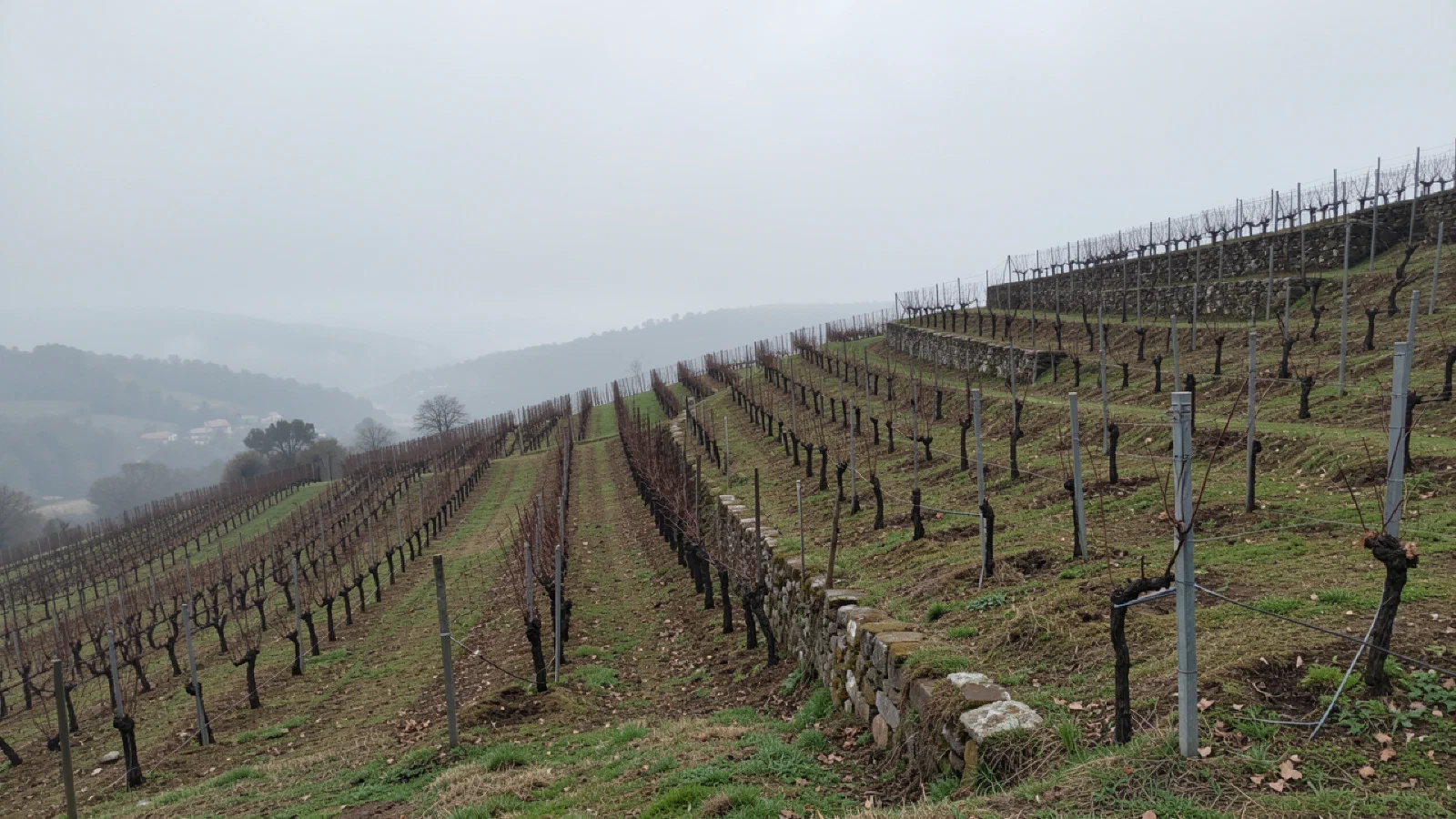
Wine is the clean case, which is why the vocabulary of place attaches to it so stubbornly. A slope’s drainage, a soil’s mineral load, a valley’s fog schedule interact with a plant and a season to produce a result that can be described in text, scored in text, and sold in text, but not transmitted in text. The description of a terroir does not contain the terroir. Whoever wants the next vintage to taste of that hillside needs the hillside, and hillsides do not scale, copy, or upload. The tasting note itself demonstrates the gap: two centuries of increasingly elaborate descriptive vocabulary, minerality and forest floor and cut hay, and at the end of it a reader who has never had the wine still has never had the wine. The harvest can read every note ever written and hold, at the end, a map of how people talk about a thing it cannot make, and the map improves annually while the distance to the territory stays exactly where it was.
The body is the second case. Craft knowledge lives in hands at a resolution language does not reach; the corpus has made this argument in several registers and it holds here without strain. The apprentice standing at the mason’s elbow is not receiving information the master is withholding from the camera. The master could not give it to the camera, because the knowledge is not in a form that survives extraction: it is in the corrected grip, the pressure adjusted mid-stroke, the thousand micro-calibrations that the knower cannot state and the learner cannot request. The instructional video multiplies but does not transmit; what it produces is people who have watched, and the gap between watching and having has not narrowed measurably in the era of infinite watching. Between them the old channel still runs at its old speed: co-presence, correction, repetition, years. Skills still take the time they take, and the taking of time is a latency no filter can price away, because it was never in the data to begin with. What the harvest holds, after ingesting every demonstration ever filmed, is a complete record of what skill looks like from outside, which is the one vantage from which skill has never been learnable.
And the room is the third case, already exhibited at length: admission control, a body at a door, deciding one body at a time. The club owner with her fishbowl of stickers is not defeating the filters. She is operating before them, keeping Thursday out of the apparatus entirely, and the wall works for exactly as long as someone holds it.
These three are real and the accounting should not shrink them. Formation still happens behind matter: in soils, in hands, in rooms. But their honest sum is small. They are expensive, each defended by rent, tenure, or acreage. They are slow to reproduce, since their whole value is that they cannot be copied. They shelter formation but not circulation; the moment the wine ships, the technique is demonstrated, or the hundred and forty bodies leave the basement, transmission re-enters the hearing, attenuated but audible. And they run on people who tire. The physical break is a wall, and walls are maintained, and everything the cultivation argument says about maintained things applies to it in full.
The physical break shelters what culture can fit behind matter, and most of culture was never that small.
The break made of indifference#
The second break requires no door, no acreage, and no one at the wall, which is why it took this long to see.
The filters read what pays and what inflames, and everything else is heard, stored, and left unread. That third territory generates latency by pure irrelevance: deviation compounds there for the oldest reason, nothing is reading, except that now the nothing is a choice made by machinery rather than a limit of machinery. The old dark was an incapacity, the standard unable to afford the attention. The new dark is a disposition, the standard able to attend to everything and electing, continuously, at every scale, not to. The two feel identical from inside, which is the condition’s signature, and they are not identical, because an incapacity is stable and a disposition has a revision history. The unfunded genre, the unphotogenic valley, the practice legible to forty people, the clinical pattern in one head, the whole enormous inventory of the uncounted, all of it drifts at the old tempo, unaveraged, because averaging it in would move no metric anyone is paid to move.
Measured by acreage, this break dwarfs the other. Most of any culture, weighed honestly, neither pays nor inflames: most cooking, most speech, most worship, most care, most of what passes between people who know each other. The physical exceptions shelter thousands; indifference shelters almost everyone, almost everywhere, at no cost, with no apparatus. If the question is where deviation still accumulates unobserved, the overwhelming answer is not behind walls. It is beneath notice.
But this shelter has two properties that forbid any relief.
It cannot be chosen. The Maintained Dark carried that structure to its end: entry converts the shelter, because retreat is a position and positions inflame. The territory of indifference has natives and no immigrants.
And it can be revoked backward. This is the property that separates the two breaks absolutely, and it follows from the terminal condition the whole argument has been circling: the hearing never stops, only the reading does. Everything in the unread territory is being deposited, continuously, into an archive that keeps it at full fidelity, and unread is a status, not a fate. The filters are functions, and functions get new arguments. Let the unfunded genre become fundable, let the quiet practice brush against a controversy, let a market discover the valley, and the reading arrives, not at the territory’s present but at its entire accumulated past, twenty years of deposits parsed in an afternoon. The indifference that sheltered the accumulation delivers the accumulation, whole, the day the price changes.
The run has been watched more than once at small scale, and it always has the same three acts. A practice drifts for a decade in the leftover dark, posted casually by the few who bother, unwatched: home fermentation, a regional dance, a repair trade, the specifics vary. Then some external event re-prices it, a shortage, a celebrity, a moral panic, anything. And in the third act the entire back catalogue is read at once: the decade of casual posts becomes training data and trend evidence in the same quarter, the drift is compressed into product, and the practitioners discover that their years of obscurity were not privacy but pre-production. The archive did not wait neutrally. It waited the way a lien waits.
The wall cannot be treated this way. What never entered the apparatus cannot be retroactively read; Thursday in the basement is not in any archive, and no future re-pricing can reach it. The dark behind matter is permanent and tiny. The dark beneath notice is vast and on deposit.
The wall protects the past. Worthlessness protects only the present, and holds the past hostage to a price.
The accounting, totaled#
So the thesis breaks twice, and neither break is a policy.
Neither break can be extended, entered, or relied on, and between them they shelter too little and too insecurely.
Nobody can extend the physical break. It is a residue of matter’s refusal to become data, and its acreage is fixed by what happens to require soil, hands, or rooms. It admits what fits and no more. Nobody can extend the economic break either, or even enter it, or even hold it, since its tenants sit on archived deposits at the mercy of a filter revision they will not be notified of. No combination of them amounts to the thing the accumulation period actually was: a general condition, free to everyone, secure against re-reading, requiring no maintenance and no luck. That condition is gone. What stands in its place is a wall with a tired keeper and a field with a suspended price, and the two do not even add, because they shelter different phases of the same process: the wall guards formation and loses the transmission, the field carries transmission at the old tempo and cannot guard its record. A deviation that formed behind the door still has to travel, and the moment it travels it enters the field, and the field is on deposit.
Anyone looking for consolation in the exceptions is invited to weigh them. The consolation on offer is a hillside, a pair of trained hands, a basement that holds a hundred and forty, and an enormous silent territory whose safety consists of not yet being worth anything, holding its history in an archive it cannot see, hoping the appraiser never comes. Set that against what it replaces, the free and universal dark in which every language, every cuisine, every music anyone has ever loved did its forming, and the word for the exchange is not exception. It is remnant.
We wonder which of the two breaks will matter more in a century, the small permanent one or the vast revocable one, and we notice that the question is really about the appraiser: whether the filters will still be the only readers, and whether anything that neither pays nor inflames will ever be worth a reading on some third ground nobody has yet had a reason to build.
The hillside will still be there either way, making its wine the slow way, illegible to the end. Whatever else is settled, matter keeps its counsel.
This essay is the third of the countercurrent arc of The Standard with Ears and states where the series’ thesis breaks, in the two kinds the amendment requires: the physical break, whose room-scale exhibit is the basement of The Local Sound, and the economic break, whose exemplar is the nephrologist of The Counterparty and whose defining insecurity, the retroactive reading of the archived deposit, draws the terminal condition of The Closed Window down into the present tense. The entry-conversion structure is inherited from The Maintained Dark rather than re-argued. Per the arc’s per-essay anchor ruling, the essay mints no anchor: both breaks already have their people in this corpus, the keeper of the door and the keeper of the notes, and a third would duplicate what it cites.
How this essay connects to others across The Approximate Mind.
- Trubek, Amy B. The Taste of Place: A Cultural Journey into Terroir. University of California Press, 2008.
- Wilson, James E. Terroir: The Role of Geology, Climate, and Culture in the Making of French Wines. University of California Press, 1998.
- Polanyi, Michael. The Tacit Dimension. University of Chicago Press, 1966.
- Sennett, Richard. The Craftsman. Yale University Press, 2008.
- Marchand, Trevor H. J., editor. Making Knowledge: Explorations of the Indigenous and Disciplinary Divide. Wiley-Blackwell, 2010.
- Bowker, Geoffrey C. Memory Practices in the Sciences. MIT Press, 2005.
- Mayer-Schönberger, Viktor. Delete: The Virtue of Forgetting in the Digital Age. Princeton University Press, 2009.