The Procured Presence
What Happens When Empathy Becomes a Line Item
TAM-RWR.ZPF-04 · The Reshaped World, The Zero-Person Frontier · The Approximate Mind
Keiko Tanaka has a folder on her laptop called “what the form doesn’t ask.” She started it eight months ago, during a post-deployment review for a city that had automated its Meals on Wheels delivery. The review went well. Delivery reliability was up. Cost per meal was down. Dietary compliance was near-perfect. The city was satisfied. Keiko was satisfied with the city’s satisfaction. She filed the standard assessment and went home.
That night she opened a blank document and typed: “Recipient social contact, pre- and post-deployment.” She did not know what the numbers would show. She suspected.
Keiko is a robotics deployment consultant. She helps municipalities and nonprofits integrate autonomous delivery and service systems. She has been doing this for three years, long enough to have developed a reputation for thorough assessments and short enough that the thoroughness has not yet been ground down by the volume of projects. She is thirty-four. She has a cat named Haru who was supposed to be temporary. Haru has been with her for six years, which is longer than any of her deployments and most of her relationships, and she does not think about what that says about her life except occasionally, late at night, when the deployment reviews are done and the laptop is closed and the apartment is quiet.
Her standard assessment form is four pages. It covers efficiency metrics, safety outcomes, cost analysis, service reliability, and community response. It is a good form. It was designed by people who understood what municipal decision-makers need to see in order to approve expansions and allocate budgets. It measures what the system does.
Keiko’s annotated version adds a fifth page. Nobody has asked for the fifth page. She is not sure anyone will read it.
The Adaptation#
The city she reviewed had not ignored the social contact problem. This is important to say, because the story of automation replacing human connection is often told as if the institutions involved were indifferent or unaware. The program director, Sandra Purcell, had raised the concern explicitly during the pilot planning. The city’s response was neither callous nor dismissive. It was practical.
The city contracted with a companion services provider. The provider dispatched trained visitors to homebound meal recipients three times a week, twelve minutes per visit, scheduled by an AI coordination layer that optimized routing, language matching, and personality compatibility. Mrs. Chen received a visitor who spoke Cantonese, who knew the Sunset District, who had experience with recipients described in the intake as “reluctant but responsive to warmth.”
The visitor’s name was Lily. She was twenty-six, a recent graduate of a social work program, working for the companion services provider on a per-visit contract while she waited for a full-time position that had not materialized. She was good at her job. She liked Mrs. Chen. She brought oranges sometimes, because Mrs. Chen mentioned once that her husband used to bring oranges from the store on Grant Avenue, and Lily remembered.
The program’s revised metrics showed measurable improvement. Social isolation scores dropped. Recipient satisfaction was high. Emergency department visits among recipients with companion visits were lower than among recipients without them. The outcome data was, by any reasonable standard, positive.
Sandra read the outcome data. She did not dispute it. She noted, in her annotated review, a line that the outcome data did not capture: “Lily arrives at 2:15 and leaves at 2:27. The visit is twelve minutes. The remainder of Tuesday is twenty-three hours and forty-eight minutes.”
The Unbundling#
What the companion services model represents is the distillation thesis applied to care itself.
The old model bundled the meal and the contact into one delivery. Delores arrived with food and stayed with presence. The food was the institutional purpose. The presence was the byproduct. Neither Delores nor Mrs. Chen experienced them as separate things. The meal was the occasion for the visit. The visit was the reason the meal mattered. The bundle was organic, undesigned, and invisible to the system that produced it.
The new model unbundles them. The meal goes to the robot, which delivers it faster, cheaper, and more reliably. The contact goes to Lily, whose explicit role is to provide human presence to a person who would not otherwise have it. The unbundling is clean. Each component goes to the provider best suited to deliver it. The robot is better at meals. Lily is better at presence.
The optimization that follows the unbundling is where the argument gets complicated.
Once the contact is separated from the meal and treated as its own service, it can be optimized the way any service can be optimized. The AI coordination layer matches provider to recipient based on language, cultural background, personality profile, conversational preferences. Mrs. Chen does not get a random volunteer. She gets Lily, who was selected from a pool of available providers because her profile, assembled from training evaluations and recipient feedback scores, predicted the highest compatibility.
The optimized match might produce better outcomes than the organic one. Delores did not speak Cantonese. Delores did not know the Sunset District the way Mrs. Chen knows it, from the inside, as a person who raised a family in it. Delores brought warmth and consistency and four years of accumulated attention. Lily brings warmth and cultural fluency and an AI-assisted understanding of what Mrs. Chen responds to. By the metrics the system tracks, Lily’s twelve minutes might do more than Delores’s incidental fifteen.
I am not sure the metrics are wrong about this. I am not sure they are measuring the right thing.
The Nature of the Function#
Delores was there because she was delivering a meal. The caring was a side effect of presence rather than a purchased service. She did not arrive at Mrs. Chen’s door with a duration, a care plan, and a departure time. She arrived with a container of food and stayed until she left, which was sometimes five minutes and sometimes twenty, depending on what the visit required, which was a judgment she made in the moment based on what she saw when the door opened.
Lily arrives because Mrs. Chen is a line item on a care schedule. This does not mean Lily does not care. She does. The oranges are not contractual. The memory of Grant Avenue is not in her training materials. Lily is a person, and persons who spend time with other persons develop feelings about them that are not reducible to the terms of their engagement. What she provides to Mrs. Chen in those twelve minutes is real human contact, offered with genuine attention, by a person who is present and warm and has chosen a career built on the belief that presence matters.
She is also on a clock.
The twelve minutes are not arbitrary. They are the output of a staffing model that balances provider availability, geographic routing efficiency, and per-visit reimbursement rates. Thirteen minutes would reduce the number of recipients Lily can visit per shift. Eleven would risk the outcome metrics that justify the program’s funding. Twelve is the optimized interval between too little to matter and too much to sustain.
What is lost is not the function. The function, human contact with a person who might otherwise have none, is being performed. What is lost is the nature of the function. Delores was there because she was delivering a meal and the caring was what happened while she was there. Lily is there because the system identified a care deficit and dispatched a provider to address it. The contact is real. The warmth is real. The difference between incidental presence and procured presence is not visible in the outcome data. It is visible in the departure.
Delores left when the visit was done. Lily leaves when the twelve minutes are up.
The system has crossed the care boundary by purchasing what used to be a byproduct.
The Pebble#
There is a framework for thinking about this that the project has developed elsewhere, in a different series, through a different set of questions. It uses the image of pebbles laid across a stream. The stream is the gap between what AI systems can do and what human beings need from other human beings: not processing, not information, not optimization, but the specific quality of being attended to by something that is also alive, also finite, also running out of time.
You cannot drain the stream. You cannot build a bridge elegant enough to forget the water is there. But you can lay down stones, small and specific and imperfect, each one shaped to grip one dimension of the gap. No single pebble spans it. Together, they create a crossing. Not a beautiful crossing. A functional one.
Outsourced empathy is a pebble. It bridges a specific portion of the gap for a specific person at a specific time. Mrs. Chen, on Tuesday at 2:15, has human contact for twelve minutes. The contact is real. The stone holds. She crosses on it.
The dangerous comfort of the pebble is that it makes the gap bearable. The gap is why Mrs. Chen is alone in the first place: the social infrastructure that once embedded her in a community, the neighborhood where people knew each other’s names and stopped by without appointments, the family structure that kept generations in proximity, the civic and religious institutions that provided routine gathering. All of it has thinned over decades, through forces that have nothing to do with robotics and everything to do with the way societies reorganize when the structures that held them weaken.
The twelve-minute visit does not address any of this. It does not rebuild the neighborhood. It does not bring Mrs. Chen’s son closer. It does not restore the institutions that once made isolation less possible. It makes the isolation survivable, at the individual level, for twelve minutes at a time.
Bearable is the enemy of addressed. The pebble works. The crossing functions. And because the crossing functions, the pressure to do something about the stream itself, to ask why Mrs. Chen is alone, to build the infrastructure of connection rather than dispatching connection as a service, diminishes. The pebble normalizes the gap it fills.
The Political Function#
This is where the argument arrives at something I did not expect when I started tracing it.
The outsourced empathy model is not only an adaptation to the care boundary. It is the mechanism through which the zero-person frontier crosses the care boundary without acknowledging that it has crossed it.
The robot delivers the meal. The dispatched companion delivers the contact. The system claims it has preserved what the old model provided. The claim is defensible by any outcome metric. Meals: delivered. Social contact: maintained. Isolation scores: improved. The political case for the program is clean.
What the claim does not say is that the nature of the contact has been altered in a way that no metric captures. The contact has been separated from the occasion that produced it, turned into its own commodity, optimized for efficiency, scheduled in twelve-minute intervals, delivered by a provider whose continued relationship with the recipient is contingent on a contract that renews annually and a staffing model that may reassign her at any time.
Lily has been visiting Mrs. Chen for four months. She may be reassigned next quarter when the provider renegotiates its geographic coverage zones. Mrs. Chen does not know this. The system does not require that she be told, because the system’s unit of analysis is the visit, not the relationship. Any qualified provider can deliver a twelve-minute visit. The visit is the service. The relationship is incidental.
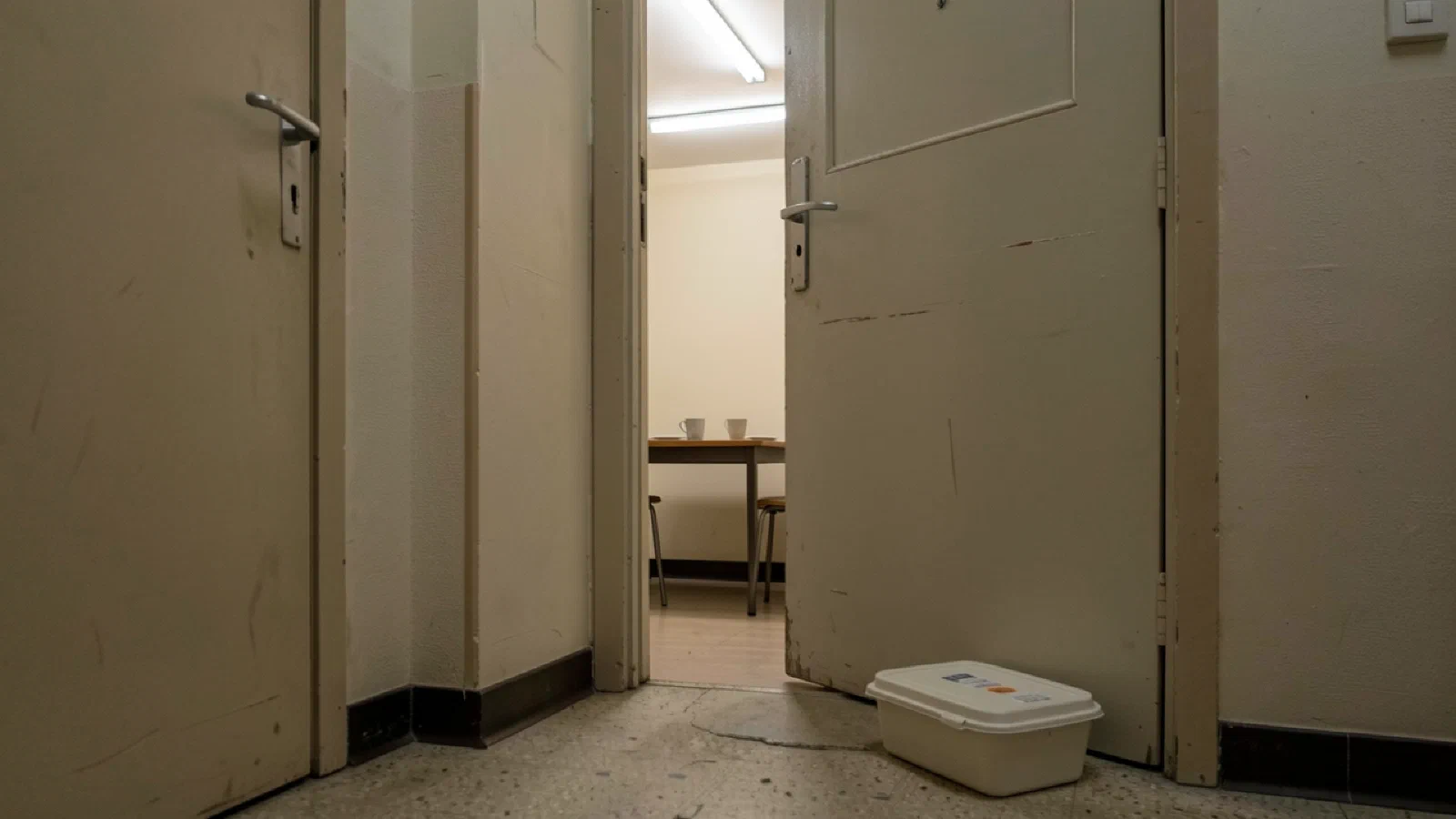
I wonder whether Mrs. Chen knows the difference between Delores, who was there because she was delivering a meal, and Lily, who is there because Mrs. Chen is a line item on a care schedule. Whether the difference registers, and whether it matters if it does not. Whether the feeling of being visited is the same regardless of why the visitor came, or whether the why is part of what the visit provides, detectable only in its absence, like the second cup that Mrs. Chen no longer sets out.
The Fifth Page#
Keiko has been adding the fifth page to her assessments for eight months. She has completed eleven annotated reviews. The fifth page asks three questions that the standard form does not:
What was the human doing besides the nominal function?
Who depended on that function?
What replaced it, and what is the gap between the replacement and the original?
The questions are not difficult to answer. The answers are difficult to act on. A program manager who reads the fifth page and learns that the relational function has been partially replaced by a companion services model that produces good outcome data at manageable cost does not know what to do with the information that the replacement is not the same as the original. The information creates awareness without obligation. Awareness without obligation is a specific kind of knowledge that institutions are good at acquiring and poor at converting into action.
Keiko submits her reviews with both versions. The standard version goes into the system. The annotated version goes into the folder. The folder is getting thick.
She does not think of the folder as a protest. She thinks of it as a record. Somewhere between the standard assessment and the annotated one is the thing that the transition is actually doing to the people at the door, and she has not yet found the form that makes it visible to the people who make the decisions.
She will keep looking. The cat is on the desk. The apartment is quiet. The next deployment review is Thursday.
References#
Outsourced Care and Companion Services
Metzl, Jonathan M. Dying of Whiteness: How the Politics of Racial Resentment Is Killing America’s Heartland. Basic Books, 2019.
Klinenberg, Eric. Palaces for the People: How Social Infrastructure Can Help Fight Inequality, Polarization, and the Decline of Civic Life. Crown, 2018.
Mol, Annemarie. The Logic of Care: Health and the Problem of Patient Choice. Routledge, 2008.
The Unbundling of Care
Stacey, Clare L. The Caring Self: The Work Experiences of Home Care Aides. Cornell University Press, 2011.
Boris, Eileen, and Jennifer Klein. Caring for America: Home Health Workers in the Shadow of the Welfare State. Oxford University Press, 2012.
Folbre, Nancy. The Invisible Heart: Economics and Family Values. New Press, 2001.
Social Isolation and Institutional Response
Holt-Lunstad, Julianne. “The Potential Public Health Relevance of Social Isolation and Loneliness: Prevalence, Epidemiology, and Risk Factors.” Public Policy and Aging Report, vol. 27, no. 4, 2017, pp. 127–130.
Perissinotto, Carla M., et al. “Loneliness in Older Persons: A Predictor of Functional Decline and Death.” Archives of Internal Medicine, vol. 172, no. 14, 2012, pp. 1078–1083.
Gig Economy and Care Labor
Ravenelle, Alexandrea J. Hustle and Gig: Struggling and Surviving in the Sharing Economy. University of California Press, 2019.
Duffy, Mignon. Making Care Count: A Century of Gender, Race, and Paid Care Work. Rutgers University Press, 2011.
How this essay connects to others across The Approximate Mind.
- Metzl, Jonathan M. Dying of Whiteness: How the Politics of Racial Resentment Is Killing America’s Heartland. Basic Books, 2019.
- Klinenberg, Eric. Palaces for the People: How Social Infrastructure Can Help Fight Inequality, Polarization, and the Decline of Civic Life. Crown, 2018.
- Mol, Annemarie. The Logic of Care: Health and the Problem of Patient Choice. Routledge, 2008.
- Stacey, Clare L. The Caring Self: The Work Experiences of Home Care Aides. Cornell University Press, 2011.
- Boris, Eileen, and Jennifer Klein. Caring for America: Home Health Workers in the Shadow of the Welfare State. Oxford University Press, 2012.
- Folbre, Nancy. The Invisible Heart: Economics and Family Values. New Press, 2001.
- Holt-Lunstad, Julianne. “The Potential Public Health Relevance of Social Isolation and Loneliness: Prevalence, Epidemiology, and Risk Factors.” Public Policy and Aging Report, vol. 27, no. 4, 2017, pp. 127–130.
- Perissinotto, Carla M., et al. “Loneliness in Older Persons: A Predictor of Functional Decline and Death.” Archives of Internal Medicine, vol. 172, no. 14, 2012, pp. 1078–1083.
- Ravenelle, Alexandrea J. Hustle and Gig: Struggling and Surviving in the Sharing Economy. University of California Press, 2019.
- Duffy, Mignon. Making Care Count: A Century of Gender, Race, and Paid Care Work. Rutgers University Press, 2011.