The Participation Economy
What Community Requires When Employment No Longer Provides It
TAM-RWR.3-04 · The Reshaped World, Arc 3: The Rewoven Fabric · The Approximate Mind
Dr. Rachel Kowalski has spent six years at field sites across the American Midwest and Appalachia, asking a question that sounded simple when she proposed the study and that has become, over the course of 43 field visits, the most complicated question she has ever tried to answer.
Why do some communities hold together when the economic base disappears, and some dissolve?
She expected the answer to be economic. Communities with more remaining employment hold. Communities with less dissolve. The gradient is obvious. The research is simple.
The research is not simple. The gradient exists but it explains less than half the variance. Some communities with substantial remaining employment are dissolving: people present but not connected, institutions open but not used, the infrastructure of daily life intact and the fabric of daily life gone. Some communities with devastating employment loss are holding: smaller, quieter, poorer, and stubbornly coherent in ways her instruments can measure but her theory cannot fully explain.
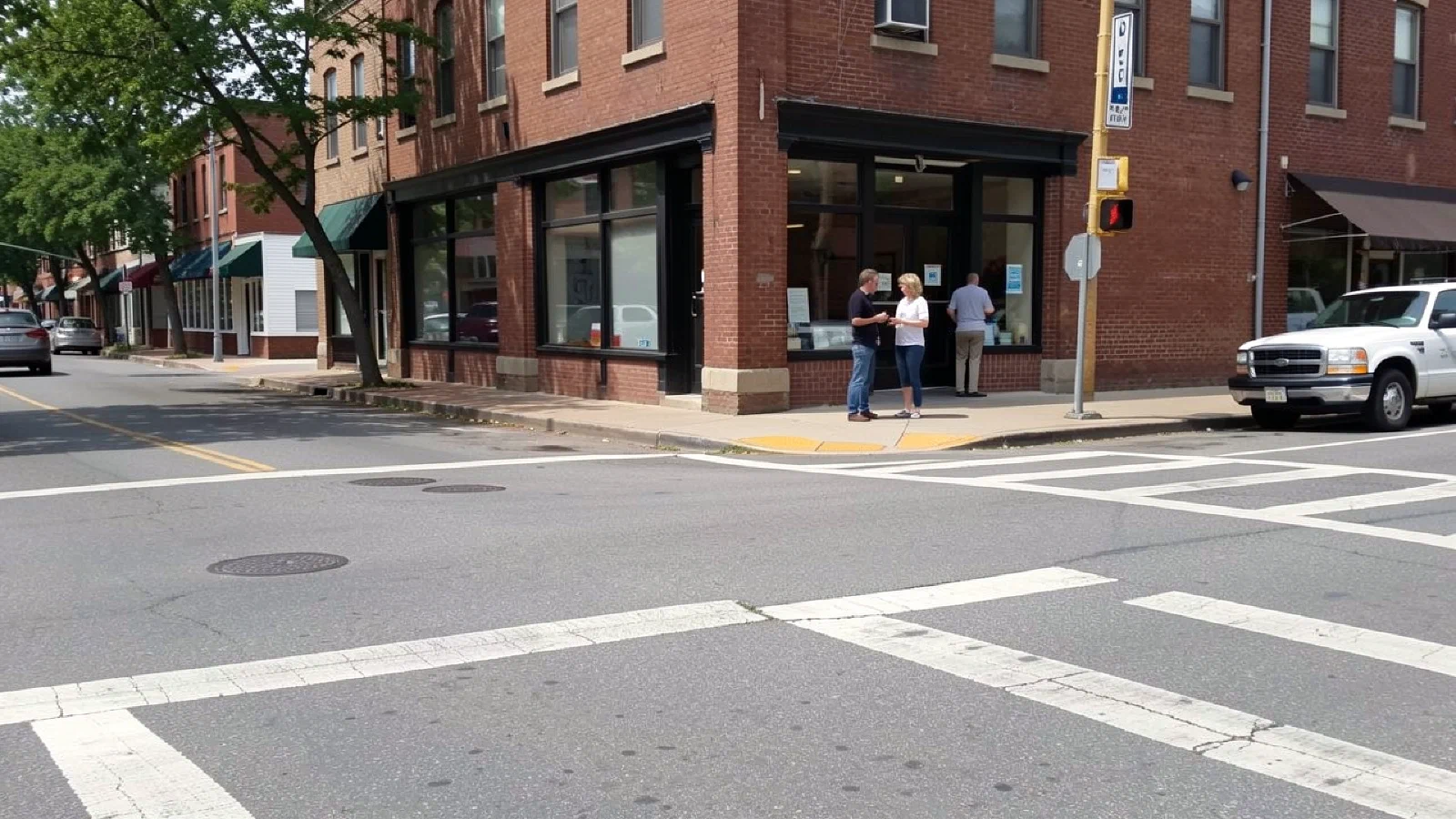
She takes a photograph of the same intersection in each community she studies, at the same time of day, 10 AM on a Wednesday, from the same position, standing on the curb. She has 43 photographs. She has not analyzed them systematically. She looks at them sometimes, late at night, when the statistical models have stopped telling her anything new. The photographs tell her something the models don’t. The ones where people are visible on the sidewalk correspond, roughly, to the communities that are holding.
She has not published this observation. It is not rigorous. It is true.
What the Arc Found#
The arc has traced what employment was carrying beyond income, and what happens when the carrying stops.
The Organized Day found that temporal structure, the scaffold of the day, is independently necessary and not replaceable by self-direction for most people. Employment provided it coercively, which was the feature. The maintenance economy is the closest available substitute, but it requires civic organization to provide the external expectation that makes the structure work.
The Identity Vacancy found that occupational identity organized all other identities, and its dissolution produces a vacancy that is experienced differently depending on whether the occupation ended, is transforming, or was never the person’s primary identity. The vacancy may be a generational wound, unresolvable for the generation that bears it and invisible to the generation that forms without the assumption.
The Post-Work Church found that the religious institution was a function bundle whose unbundling leaves one function unreplicated: the capacity to witness, to be present across a lifetime at the moments that mark transitions, in a community persistent enough to hold the whole story. Voluntary association has not demonstrated the capacity to replicate this.
Each finding is a piece of the same argument. Employment, and the institutions that grew up around it, provided a fabric whose threads were structure, identity, belonging, mutual aid, and witnessing. The threads were woven by the fact of coerced proximity: you were in the same place as the same people at the same time, not by choice but by necessity, and the proximity produced the encounters that produced the fabric.
The fabric was never designed. It was produced by the friction of people being in the same place because they had to be. Remove the friction and the fabric does not re-form on its own.
The Field Evidence#
Rachel’s data tells a specific story. She resists the specific story because it is not the story she expected to find, and because the story, once told, has implications she is not sure the policy world is prepared to hear.
The communities that hold share a feature. It is not economic diversification, though some have it. It is not geographic advantage, though some have it. It is not demographic composition, though the correlation with age structure is real.
The feature is civic density. The number of non-market institutions per capita: churches, civic organizations, volunteer fire departments, veterans’ posts, garden clubs, library boards, youth programs, neighborhood associations, the full apparatus of organized participation that exists outside the labor market and outside the commercial economy. The communities that have more of these, per person, hold. The communities that have fewer dissolve. The threshold is not precise, but it is real, and it operates independently of the economic variables.
The correlation is strong. The mechanism is the one the arc has been tracing: the civic institutions provide what employment and the religious institution used to provide. Structure. Identity. Obligation. Encounter. The Tuesday meeting. The Saturday cleanup. The monthly board meeting where you sit next to someone you did not choose and learn, over the course of years, that their daughter is applying to nursing school and their landlord is threatening eviction and they were a machinist for twenty-six years and they sit in the same chair every time.
Linda from The Demand That Splits is doing this work. She may not call it civic density. She calls it showing up on Tuesday. The effect is the same.
The Timing Problem#
The finding Rachel resists has to do with timing.
The civic density that predicts community cohesion after economic decline is not the civic density that was built after the decline. It is the civic density that existed before the decline, that was present when employment retreated, that caught what fell.
Communities that tried to build civic institutions after the economic base disappeared generally failed. Not because the organizers lacked commitment. Because the building requires the social capital that the institutions were supposed to produce. You need community to build the institutions that produce community. The circularity is the finding.
This is not a hopeless finding. It is a sequencing finding. It says: the investment in participation infrastructure must precede the crisis. The window during which the investment can be made is the period when employment still provides enough structure, identity, and belonging that the civic institutions can be built alongside it, as supplements rather than replacements. After employment retreats, the building becomes exponentially harder, because the human capital required for the building, the organizers, the volunteers, the people with the energy and the social connections and the sense that collective action can produce collective benefit, is the same human capital that employment was developing and that unemployment erodes.
The communities that held had the institutions already. They were there when employment retreated. They caught what fell. The communities that did not have them could not build them fast enough, because the catching and the building require the same resource, and the resource was being depleted by the same process that created the need.
Rachel’s photographs make the timing visible. The communities with people on the sidewalk at 10 AM on a Wednesday are the communities where the civic institutions predate the economic decline. The people on the sidewalk are going somewhere: the library, the community center, the Tuesday meeting, the volunteer shift. The somewhere was built before the decline made it necessary. The building happened when the building was still possible.
The Design Window#
The implication is uncomfortable and specific. Every society that can see the AI transition coming, which is every society with access to the analysis this project and hundreds of others have produced, has a window in which to build the participation infrastructure before the need arrives.
The window is now.
Not in the sense that the crisis is imminent, though for some communities it is. In the sense that the building is easier now than it will be later. Employment still provides, for the majority of the population in wealthy nations, enough structure, identity, and social capital that civic institutions can be built alongside it. The organizers are still employed. The volunteers still have the energy that employment’s structure provides. The sense that collective action produces collective benefit is still sustained by the experience of workplaces where collective effort produces visible results.
After the transition advances further, the building becomes the problem the communities in Rachel’s study faced: you need the resource that the crisis is depleting to build the thing that would prevent the depletion. The circularity closes. The window shuts.
What would building look like? Rachel is cautious about prescription, which is the right instinct for a researcher and the wrong instinct for a policy advisor, which she is not but is increasingly asked to be.
It would look like investment in physical gathering spaces: community centers, libraries, parks with programming, the unglamorous infrastructure that provides rooms for Tuesday meetings. Not as poverty relief. As civic infrastructure, available to communities before the economic decline that will make them necessary. The investment is cheap. The spaces are often already there. What is missing is the programming, the staffing, the institutional capacity to organize participation rather than simply providing the room.
It would look like support for civic organization at the community level: small grants to local organizations, civic participation requirements attached to public benefit programs (not as punishment but as structure), recognition systems that make civic contribution visible the way occupational achievement is visible. Not make-work. Real participation in real decisions about real community assets.
It would look like the maintenance economy, formalized: public employment in the upkeep of the built environment, the tending of public spaces, the care of the aging population, organized with the structure and the accountability that Tom’s refrigerator schedule could not provide. Employment that provides structure, identity, and social encounter as primary functions, with the maintenance itself as the vehicle rather than the destination.
I wonder whether the political systems that would need to make this investment are capable of making investments whose returns are invisible for a generation. The participation infrastructure does not produce ribbon-cuttings. It produces the community that does not dissolve, the elder who does not fall, the teenager who does not drift, the neighborhood where people are on the sidewalk at 10 AM because they have somewhere to go. The return on investment is measured in the absence of costs that never arrive, and the absence of costs is the hardest thing for a political system to see, because the costs, by definition, did not happen, and things that did not happen do not photograph well.
The 44th Photograph#
Rachel is planning her next field visit. A town in western Pennsylvania, former steel country, 8,200 people, the demographics and employment trajectory that her model predicts would produce dissolution. She has seen the census data. She has seen the employment figures. She has seen the indicators that, in 42 of her 43 previous sites, predicted what she would find.
She has also seen something her model does not contain. A local foundation, funded by the estate of a steelworker’s widow who left her savings to the community, has been operating for seventeen years. It funds, at modest levels, eleven community organizations: a youth mentoring program, a community garden, a tool library, a senior transportation service, three churches’ community dinner programs, a literacy tutoring network, a neighborhood association, a veterans’ support group, and a civic leadership program for high school students.
Eleven organizations in a town of 8,200. The civic density is high. The funding preceded the worst of the economic decline by a decade. The building happened when the building was possible.
She does not know what she will find. She suspects the photograph will have people in it.
She loads the camera. She will stand on the curb at 10 AM on a Wednesday. She will frame the intersection the same way she has framed the others. She will add the photograph to the collection that tells her what the statistics do not, which is whether anyone is going somewhere, and whether the somewhere was built before it was needed.
The answer matters. Not for the town, which will hold or dissolve regardless of what she observes. For the argument: that participation infrastructure is the variable, that the timing is the constraint, and that the window, for the communities that have not yet built it, is the window that is open now.
She does not know how long it stays open. Her research suggests: not as long as people think.
This is the capstone essay of Arc 3 of The Reshaped World. The arc traced what employment and its companion institutions were carrying beyond income: temporal structure (The Organized Day), identity (The Identity Vacancy), and institutional witnessing (The Post-Work Church). This essay discovers what the field evidence shows: that community cohesion after economic decline depends not on economic variables but on civic density, and that civic density must predate the crisis because the building and the catching require the same human capital. The design window is now. The window does not stay open indefinitely. The Reshaped World continues in Arc 4, examining what happens to governance when the governed are no longer primarily workers.
References#
Post-Industrial Community Cohesion
Putnam, Robert D. Bowling Alone: The Collapse and Revival of American Community. Simon and Schuster, 2000.
Wuthnow, Robert. Small-Town America: Finding Community, Shaping the Future. Princeton University Press, 2013.
Carr, Patrick J., and Maria J. Kefalas. Hollowing Out the Middle: The Rural Brain Drain and What It Means for America. Beacon Press, 2009.
Civic Infrastructure and Social Capital
Klinenberg, Eric. Palaces for the People: How Social Infrastructure Can Help Fight Inequality, Polarization, and the Decline of Civic Life. Crown, 2018.
Sampson, Robert J. Great American City: Chicago and the Enduring Neighborhood Effect. University of Chicago Press, 2012.
Ostrom, Elinor. Governing the Commons: The Evolution of Institutions for Collective Action. Cambridge University Press, 1990.
The Timing of Institutional Investment
Heckman, James J. “Skill Formation and the Economics of Investing in Disadvantaged Children.” Science, vol. 312, no. 5782, 2006, pp. 1900-1902.
Flora, Cornelia Butler, and Jan L. Flora. Rural Communities: Legacy and Change. Westview Press, 2013.
Maintenance, Care, and Public Employment
Mattern, Shannon. “Maintenance and Care.” Places Journal, November 2018.
The Care Collective. The Care Manifesto: The Politics of Interdependence. Verso, 2020.
Tcherneva, Pavlina R. The Case for a Job Guarantee. Polity Press, 2020.
Community Foundations and Local Philanthropy
Graddy, Elizabeth, and Donald L. Morgan. “Community Foundations, Organizational Strategy, and Public Policy.” Nonprofit and Voluntary Sector Quarterly, vol. 35, no. 4, 2006, pp. 605-630.
Bernholz, Lucy, et al. “Community Foundation Effectiveness: A Framework for Assessment.” The Foundation Review, vol. 1, no. 1, 2009, pp. 67-82.
How this essay connects to others across The Approximate Mind.
- Putnam, Robert D. Bowling Alone: The Collapse and Revival of American Community. Simon and Schuster, 2000.
- Wuthnow, Robert. Small-Town America: Finding Community, Shaping the Future. Princeton University Press, 2013.
- Carr, Patrick J., and Maria J. Kefalas. Hollowing Out the Middle: The Rural Brain Drain and What It Means for America. Beacon Press, 2009.
- Klinenberg, Eric. Palaces for the People: How Social Infrastructure Can Help Fight Inequality, Polarization, and the Decline of Civic Life. Crown, 2018.
- Sampson, Robert J. Great American City: Chicago and the Enduring Neighborhood Effect. University of Chicago Press, 2012.
- Ostrom, Elinor. Governing the Commons: The Evolution of Institutions for Collective Action. Cambridge University Press, 1990.
- Heckman, James J. “Skill Formation and the Economics of Investing in Disadvantaged Children.” Science, vol. 312, no. 5782, 2006, pp. 1900-1902.
- Flora, Cornelia Butler, and Jan L. Flora. Rural Communities: Legacy and Change. Westview Press, 2013.
- Mattern, Shannon. “Maintenance and Care.” Places Journal, November 2018.
- The Care Collective. The Care Manifesto: The Politics of Interdependence. Verso, 2020.
- Tcherneva, Pavlina R. The Case for a Job Guarantee. Polity Press, 2020.
- Graddy, Elizabeth, and Donald L. Morgan. “Community Foundations, Organizational Strategy, and Public Policy.” Nonprofit and Voluntary Sector Quarterly, vol. 35, no. 4, 2006, pp. 605-630.
- Bernholz, Lucy, et al. “Community Foundation Effectiveness: A Framework for Assessment.” The Foundation Review, vol. 1, no. 1, 2009, pp. 67-82.