The Dispersal
TAM-RWR.1-06 · The Reshaped World, Arc 1: The Built World After Work · The Approximate Mind
The Reshaped World, Part 1-06 of 7. The previous essay priced the income floor across 847 American geographies. This essay asks what the floor buys, where it buys it, and what gets built from the concentration it produces.
Valeria has a letter on her desk she has not answered for six weeks.
It is from a UBI advocacy organization, well-funded, serious, staffed by economists and policy researchers whose work she has read and largely respects. They are asking her to endorse a pilot program proposal for her city, a mid-sized former manufacturing city in Ohio that has lost thirty percent of its employment base in twelve years to a combination of automation, offshoring, and the compression of the economic ecosystem around both. The letter describes the program as “restoring dignity and economic security to displaced workers.”
She keeps getting stuck on the word restoring.
She is not against the program. She is not against the organization. She is trying to understand why the word bothers her and what she would say if she called them to discuss it, and each time she picks up the phone she puts it down again because the conversation she needs to have is not the conversation the letter was written to invite.
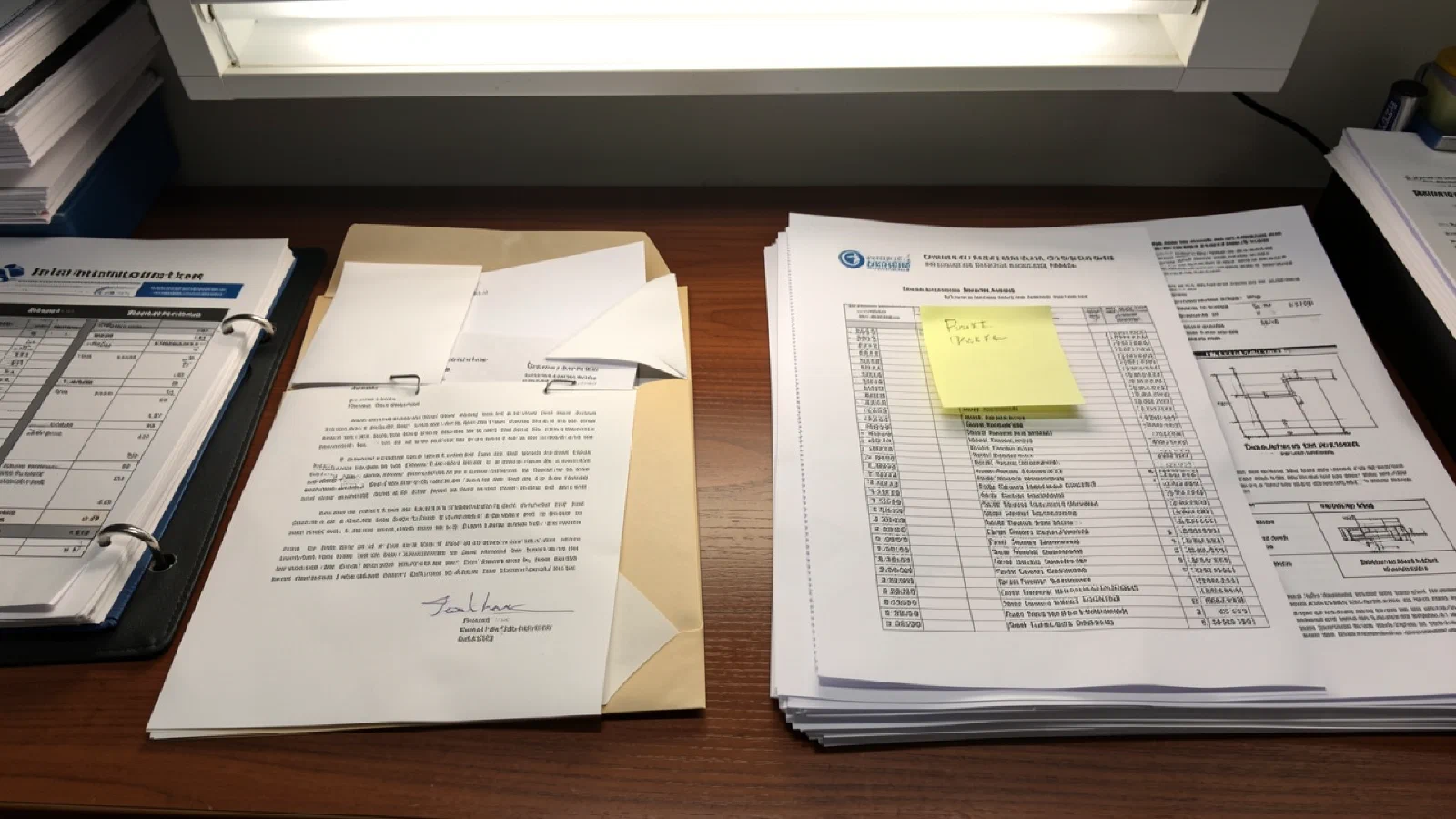
She manages a city of 71,000 people. She has a maintenance deferral log that is forty-seven pages long. It lists every piece of major infrastructure in the city whose replacement or rehabilitation has been scheduled, deferred, rescheduled, and deferred again, going back eight years to when she took the job. Water mains installed in the 1950s that were due for replacement in 2019. A combined sewer overflow system that is out of compliance with federal standards and that the city has been negotiating an extension on for four years because the capital cost of compliance is larger than the city’s annual general fund budget. Three school buildings that require roof replacement, electrical system upgrades, and asbestos abatement, in a district that has lost 2,200 students since 2010 and is discussing closing two of the three. A pedestrian bridge that is load-restricted and used daily by residents of a neighborhood that has no other direct route to the commercial corridor.
The maintenance deferral log is not a planning document. It is a record of what the city cannot afford, accumulating interest.
What Automation Completes#
The previous essays in this arc traced a pattern that has been building for decades: the exit of wealthy populations and their political capital from shared public infrastructure, the degradation of that infrastructure as its investment constituency shrinks, the concentration of the population that cannot exit in the places the exit leaves behind.
The pattern is not new. But automation is completing it in a way that previous waves of labor-saving technology never quite did.
The historical relationship between wealthy enclaves and the populations they excluded was always complicated by a residual economic dependency. The suburb that refused the transit connection still needed the city’s service workers to arrive somehow. The gated development still needed groundskeepers, kitchen staff, delivery workers, security personnel whose wages could not support residence within the gates. The Cobb Counties of the world excluded the poor from residence while depending on the poor for labor, and this dependency was a partial check on the logic of total separation. Not a generous check. Not a policy. A structural friction that made complete enclave independence impossible.
Automation is dissolving that friction.
The warehouse that runs on robotics does not need the labor pool that organized the industrial city. The delivery network that runs on autonomous vehicles does not need the driver who needed to live within commuting distance of the depot. The restaurant that has automated its kitchen does not need the line cook. The logistics operation that has replaced its inventory workers with automated systems does not need the neighborhood of working-class housing that once supplied its shifts. The enclave is completing its independence from the displaced population not through policy but through the replacement of the labor the displaced population performed with systems that do not need to live anywhere.
The Cobb Counties no longer need the poor. Not even for the work the poor used to be needed for.
This is the sentence that is hardest to say and most important to say clearly, because everything that follows from it is determined by whether we understand it. It is not a prediction about a distant future. It is a description of a process underway. The automation of the residual labor that once made total enclave independence impossible is not complete. It is advancing. And as it advances, the structural check on the exit logic dissolves with it.
What remains, when the check is gone, is the exit logic in its pure form: a population with capital, with political representation, with private infrastructure that performs better than the public infrastructure around it, with no remaining economic stake in the wellbeing of the displaced population, choosing the built environment it prefers and funding the systems it uses and withdrawing from the shared systems it has no need for.
The Floor as Dispersal#
Into this condition, the income floor arrives as the policy response.
The serious versions of UBI, the ones with credible funding mechanisms and genuine political traction, propose monthly transfers in ranges that have been discussed in the previous essay: amounts that transform desperation into something less acute, that provide a floor against the worst material deprivation, that allow some degree of consumer participation in an economy that has stopped needing the labor of the people receiving the transfer.
The advocates of these programs describe them in the language of dignity. Freedom from the coercion of desperate employment. The capacity to make choices. Economic security that does not depend on the availability of work that is disappearing. These are real goods. The programs, if implemented, would produce real improvement in the material conditions of the people receiving them relative to the alternative of receiving nothing.
What the language of dignity does not describe is the spatial consequence of the floor.
The floor does not buy residence in the places where the automation dividend is concentrated, where the private infrastructure is good, where the schools are funded and the water mains are not from 1951 and the political representation is effective. The floor buys residence in the places where the floor is sufficient, which are the places where the cost of housing reflects the departure of economic activity, the deterioration of public infrastructure, the exit of the population with options. The floor sends people to the affordable built environment. The affordable built environment is affordable because it has been sorted to the deteriorating side of the bifurcation this arc has been tracing.
This is not a flaw in the income floor proposal. It is its spatial logic, which the proposals almost never examine because the proposals are economic instruments evaluated against economic criteria. But an economic instrument has a geography, and the geography of UBI-affordable residence is not random. It tracks the places whose economic base automated or offshored. It tracks the places whose infrastructure investment constituency exited. It tracks, with a correlation that Valeria’s colleague in the housing research office showed her on a map she has thought about since, the places whose combined sewer systems are out of compliance, whose water mains are from the 1950s, whose school buildings need roofs and electrical systems and asbestos abatement.
The floor does not restore proximity to opportunity. It funds comfortable distance from it. And comfortable distance from opportunity, provided at a level sufficient to prevent open desperation, delivered to a population concentrated in specific deteriorating places, is not dignity at civilizational scale. It is managed marginalization with a monthly deposit. The management makes it stable. The stability makes it permanent. The permanence is what the word restoring cannot accommodate.
What Concentration Produces#
Valeria understands something about concentrated populations with accurate grievances that the UBI advocacy letter does not address, because it is not an economics question.
She has watched, over eight years of managing a city that is on the wrong side of the bifurcation, the political temperature of her community change in ways that correlate not with the worst material conditions but with the moment when the material conditions became legible as someone’s choice rather than fate. The plant closing was absorbed as loss. The understanding that the plant closed because the automation made the labor unnecessary, and that the productivity from that automation is being captured elsewhere, by identifiable entities, in ways that produced no benefit for the people whose labor it replaced, that understanding produces something different from loss. It produces an accurate account of what happened. And an accurate account of what happened, held by a large population concentrated in a specific place, is excellent political raw material.
The demagogue who arrives with a simplified version of that accurate account does not need to fabricate anything. The water main that failed last winter and contaminated three blocks for eleven days is real. The school that cannot replace its roof is real. The pedestrian bridge that is load-restricted because the city cannot afford the repair is real. The automated warehouse that opened eighteen months ago at the edge of the city, employing forty people to manage systems that would have employed four hundred people twenty years ago, is real. The private development two counties over, with its own security and its own school and its own water system, is real. The facts do not require embellishment. They require only selection and direction, and the direction suggests itself.
The income floor makes this more stable and more volatile at the same time. More stable because open desperation produces chaotic politics and the floor reduces open desperation. More volatile because managed comfort in deteriorating circumstances, sustained over years, in communities that understand clearly what happened to them, is not resignation. It is patience with a limit.
I don’t know where the limit is. I don’t think anyone does. The historical examples of large populations concentrated in specific places with accurate grievances and diminishing stake in existing institutions are not uniformly cautionary, but they are not reassuring either, and the specific feature of the current moment, that the automation which displaced the labor also removes the economic rationale for the enclave’s proximity to the displaced population, means that the usual corrective mechanism, the economic interdependency that forced some negotiation between the two sides, is weakening as the argument is building.
What the Forty-Seven Pages Know#
Valeria’s maintenance deferral log is a document about time. Each entry records when an infrastructure system was due for replacement, when the replacement was deferred, and what the consequence of continued deferral is. The consequences are expressed in engineering terms: increased failure probability per year, estimated remaining service life under current conditions, risk classification. She has read it enough times to translate the engineering into plain language.
The water main on the east side has an estimated remaining service life of four to seven years under current conditions. Failure mode is catastrophic rather than gradual: the pipe does not degrade slowly. It fails, and when it fails it fails completely, and the failure affects the eighteen blocks it serves and whatever is downstream of the break. The repair cost after failure is three times the replacement cost before failure, and the city cannot afford the replacement.
The combined sewer overflow system is in violation of the Clean Water Act. The violation has been negotiated into a compliance schedule that the city has already missed twice. The EPA has been patient. The EPA’s patience has a limit that the city’s budget does not currently have the capacity to meet before the limit is reached. The consequence of enforcement is a consent decree and a capital requirement that would require either a tax increase the city’s declining and aging population cannot easily absorb or a federal grant that is not currently available at the required scale.
The school buildings are the most visible deferral. A roof that fails fails visibly, in the classroom, in front of children and teachers, and the political consequence of visible failure is different from the political consequence of the water main that fails in the ground where no one sees it until the street collapses.
What the forty-seven pages know is that several of these deferrals have a resolution date that is not determined by budget cycles or political will. It is determined by the physics of aging infrastructure, which does not negotiate and does not defer. The maintenance log is not a list of choices remaining. It is a countdown dressed as a planning document.
The climate dimension, which Valeria thinks about more than she mentions in public, adds a variable that the engineering estimates do not fully incorporate. The combined sewer system was designed for the rainfall patterns of 1965. The rainfall patterns of 1965 are not the rainfall patterns of the present decade, and they are not the rainfall patterns of the next two decades as the models project them. The failure probability estimates in the maintenance log assume a climate that is already historical.
The Letter#
Valeria picks up the phone. She puts it down. She picks it up again.
What she wants to say to the organization whose letter is on her desk is something like this: I am not against your program. The people in my city need the floor you are proposing. The floor would reduce the acute desperation that I see in the case files that come across my desk and the faces that come into the city hall meetings and the calls to the city services line. I understand why you are proposing it and I think the proposal is serious and the funding mechanism is more credible than most.
What I need you to understand is what the floor buys here, and what it does not buy, and what I am managing on the forty-seven pages that your program does not address and cannot address because it is an income program and what I have is an infrastructure problem that an income program cannot solve.
The floor will stabilize the people in my city at their current location. Their current location has a water main that will fail within seven years, a school system that is deferring maintenance it cannot afford, and a sewer system that is out of federal compliance. Their current location is in a city whose political power is declining as its population declines and ages, in a state whose political representation is organized in ways that have not historically directed infrastructure investment toward cities like mine. Their current location is affordable because the people with options have been leaving for twenty years, and the people with options have been leaving because the conditions that would have kept them, good employment, good schools, good infrastructure, have been declining for twenty years in a cycle that the floor does not interrupt.
The floor will fund their residence in a place that is, on the best estimates I have available to me, approaching several acute infrastructure failures within a decade, in a climate that is increasing the probability of those failures, in a political environment that I watch getting warmer in ways that I do not think your economic model captures.
I am glad you are proposing the floor. I need you to understand that the floor, in my city, is the foundation of a building I am not sure I can keep standing.
She writes this down. She does not send it. She puts it in the folder with the letter and the maintenance deferral log and the map her colleague showed her, the one with the correlation between affordability and infrastructure age and climate exposure that is not subtle.
The floor is real. What it is the floor of is the question nobody is asking.
She will answer the letter tomorrow. She will endorse the pilot program, because the floor is better than no floor, and because the people in her city need what it offers, and because the alternative to endorsing programs that help is endorsing nothing while the forty-seven pages count down.
She will endorse it and she will not say what she has written down, because the conversation that would require is not one she knows how to have in public yet, and because the organization asking for her endorsement is not the audience for it, and because the audience for it is not yet assembled, and because she is not sure the assembly is coming in time.
The maintenance log is forty-seven pages. She has been adding to it for eight years. She has never removed an entry, because removal requires completion, and nothing on the list has been completed.
It gets longer. The timelines get shorter. The two trends are not independent.
The Same Concrete follows the arc’s argument to its civilizational scale: the same concrete, everywhere.
References#
Universal Basic Income: Economics and Policy
Lowrey, Annie. Give People Money: How a Universal Basic Income Would End Poverty, Revolutionize Work, and Remake the World. Crown, 2018.
Van Parijs, Philippe, and Yannick Vanderborght. Basic Income: A Radical Proposal for a Free Society and a Sane Economy. Harvard University Press, 2017.
Infrastructure Finance and Municipal Fiscal Stress
Pagano, Michael A., and Christopher W. Hoene. City Fiscal Conditions 2023. National League of Cities, 2023, nlc.org.
Sbragia, Alberta M. Debt Wish: Entrepreneurial Cities, US Federalism, and Economic Development. University of Pittsburgh Press, 1996.
Political Economy of Displacement and Grievance
Cramer, Katherine J. The Politics of Resentment: Rural Consciousness in Wisconsin and the Rise of Scott Walker. University of Chicago Press, 2016.
Hochschild, Arlie Russell. Strangers in Their Own Land: Anger and Mourning on the American Right. New Press, 2016.
Automation, Labor Displacement, and Spatial Inequality
Autor, David, et al. “The Fall of the Labor Share and the Rise of Superstar Firms.” Quarterly Journal of Economics, vol. 135, no. 2, 2020, pp. 645–709.
Moretti, Enrico. The New Geography of Jobs. Houghton Mifflin Harcourt, 2012.
Infrastructure Failure and Environmental Justice
Pulido, Laura. “Flint, Environmental Racism, and Racial Capitalism.” Capitalism Nature Socialism, vol. 27, no. 3, 2016, pp. 1–16.
Schwartz, Joel. Fighting Poverty with Virtue: Moral Reform and America’s Urban Poor, 1825–2000. Indiana University Press, 2000.
Climate Risk and Real Estate
First Street Foundation. The 5th National Risk Assessment: Fueling the Flames. First Street Foundation, 2022, firststreet.org.
Flavelle, Christopher. “Climate Change Could Cut World Economy by $23 Trillion in 2100.” New York Times, 2021.
How this essay connects to others across The Approximate Mind.
- Lowrey, Annie. Give People Money: How a Universal Basic Income Would End Poverty, Revolutionize Work, and Remake the World. Crown, 2018.
- Van Parijs, Philippe, and Yannick Vanderborght. Basic Income: A Radical Proposal for a Free Society and a Sane Economy. Harvard University Press, 2017.
- Pagano, Michael A., and Christopher W. Hoene. City Fiscal Conditions 2023. National League of Cities, 2023, nlc.org.
- Sbragia, Alberta M. Debt Wish: Entrepreneurial Cities, US Federalism, and Economic Development. University of Pittsburgh Press, 1996.
- Cramer, Katherine J. The Politics of Resentment: Rural Consciousness in Wisconsin and the Rise of Scott Walker. University of Chicago Press, 2016.
- Hochschild, Arlie Russell. Strangers in Their Own Land: Anger and Mourning on the American Right. New Press, 2016.
- Autor, David, et al. “The Fall of the Labor Share and the Rise of Superstar Firms.” Quarterly Journal of Economics, vol. 135, no. 2, 2020, pp. 645–709.
- Moretti, Enrico. The New Geography of Jobs. Houghton Mifflin Harcourt, 2012.
- Pulido, Laura. “Flint, Environmental Racism, and Racial Capitalism.” Capitalism Nature Socialism, vol. 27, no. 3, 2016, pp. 1–16.
- Schwartz, Joel. Fighting Poverty with Virtue: Moral Reform and America’s Urban Poor, 1825–2000. Indiana University Press, 2000.
- First Street Foundation. The 5th National Risk Assessment: Fueling the Flames. First Street Foundation, 2022, firststreet.org.
- Flavelle, Christopher. “Climate Change Could Cut World Economy by $23 Trillion in 2100.” New York Times, 2021.