The Rubble and the Growth
The Skeptic Turns Around
TAM-RIM.3-04 · The Reimagined, Cluster 3: The Commons · The Approximate Mind
This essay is an interruption. The series has been building an argument, essay by essay, cluster by cluster, and the argument has started repeating itself. The floor. The purposelessness. The rice. The old woman. The despair of the unnecessary class. The warnings about what happens when nobody needs you. We have said it three times now, in different keys, and the third time it began to ring false. Not because the argument is wrong. Because the argument is incomplete, and its incompleteness has a specific shape that the project’s own epistemological apparatus can diagnose.
This is the essay where the skeptic we built in The Insufficient (The Skeptic) turns on the Reimagined itself.
What the Skeptic Sees#
The Pyrrhonian AI skeptic was designed to do one thing: receive a specification and refuse to believe it. Not argue against it. Not propose alternatives. Refuse to believe it until shown why it should.
Apply this to the argument the Reimagined has been making about post-work life.
“The unnecessary class” is a classification, not a fact. We have not established that treating these people as a class, as a sociological category defined by their relationship to the economy, is the right unit of analysis. We assumed it. We borrowed it from the labor economics that produced the problem, and we used it to describe the people inside the problem, and in doing so we reproduced the economy’s own frame: people defined by their economic function, or in this case, by the absence of economic function. We described them as unnecessary because the economy does not need them, as if the economy’s assessment of who is necessary is the final word.
The skeptic’s list would be devastating.
You assumed that the loss of economic function produces a loss of purpose. You have not established this. You imported the equation “purpose equals economically productive activity” from the industrial economy, and then you described people who lack economic productivity as purposeless. Your despair is your category’s despair, not theirs.
You assumed that reciprocity runs through the market. You cited Mauss and Sahlins and Polanyi, all of whom argued the opposite: that reciprocity predates the market and operates independently of it. Then you predicted the collapse of reciprocity when the market contracts. Your own sources contradict your prediction.
You assumed that the intergenerational fracture is total. You described Ravi’s mother transmitting wisdom that has no application. You did not consider that she might be transmitting something deeper than work advice: how to maintain dignity, how to hold a family together, how to be stubborn about your own worth when the world tells you that you have none. These transmissions are not economic. They may be the most durable things she carries.
You assumed that aspiration requires a ladder. You described the young person who came to the city to become something and found nothing to become. You did not look at the young people who are, right now, in every deindustrialized community on earth, becoming things the economy does not name and the sociologist does not count.
The Empirical Undershoots the Real#
Roy Bhaskar’s stratified ontology, the foundation of The Insufficient, says that what has been observed and documented does not exhaust what exists. The empirical is a subset of the actual, which is a subset of the real. The mechanisms that generate outcomes operate at the level of the real whether or not anyone measures them.
We have been operating at the empirical stratum. We observed the factory close and documented the deaths of despair. Both real. We observed the delivery jobs dissolving and predicted purposelessness. Reasonable. But we stayed at the empirical. We did not retroduct. We did not ask: given that humans have faced the dissolution of economic structures before, and given that the outcome was never only despair, what mechanisms must be operating at the level of the real that our empirical account does not capture?
The gap between our prediction (despair, purposelessness, the quiet maintenance of unnecessary people) and what actually happens in communities where the economic structure has already collapsed is the finding. It is the most important finding in this cluster, and we almost missed it because we were so committed to our own diagnosis.
What actually happens:
In the South Bronx in the 1970s, the economy collapsed, the buildings burned, the city withdrew services, and the population that remained was, by every economic measure, unnecessary. Surplus. A liability on the city’s balance sheet. What emerged from the rubble was hip hop: a complete cultural system, with its own aesthetics, its own economy, its own hierarchy of excellence, its own mechanisms for conferring status and identity and meaning. Nobody commissioned it. No program funded it. No proposal imagined it. It grew from the rubble because humans are generative, and the generativity operates at the level of the real, beneath and beyond the empirical categories that declared the population unnecessary.
In Detroit after the auto industry contracted, the prediction was permanent decline. The outcome includes permanent decline and urban farming and a techno music scene and a maker culture and a community of artists who moved there because the emptiness was cheap and the emptiness turned out to be space and space turned out to be possibility. Not for everyone. Not evenly. Not justly. But the mechanism was operating: the human capacity to find or create purpose in conditions that were not designed to provide it.
In the informal economies of India, three hundred million people operate outside the formal economic structure. They are, by the formal economy’s measure, unproductive. They do not appear in GDP calculations. They do not pay income taxes. They are invisible to the systems that count economic contribution. And they are building livelihoods, communities, reciprocal networks, systems of meaning that the formal economy does not recognize and cannot measure. The informal economy is not a failure of the formal economy. It is a parallel economy, operating at a stratum the formal categories do not reach.
Retroduction says: given these outcomes, what mechanism must be operating? The mechanism is not resilience, which is a word that describes the outcome rather than explaining it. The mechanism is generativity: the human capacity to produce culture, meaning, relationship, and economy from whatever materials are available, including materials the previous economy discarded.
This mechanism is at the level of the real. It operates whether or not the sociologist observes it. It operates whether or not the policymaker designs for it. It has operated in every civilization that has faced structural economic collapse, and its outputs are never predictable from within the categories of the economy that collapsed, because the outputs are generated by the collapse’s survivors using logics that the collapsed economy did not contain.
The Seven Corrections#
The Insufficient described seven philosophical operations from non-Western traditions (The Traditions). Each one corrects something the Reimagined has been doing wrong.
Nagarjuna’s anti-reification: “the unnecessary class” is a conceptual construction, not a natural kind. The moment we named it, we solidified it. We began treating “unnecessary” as a property of the people rather than a judgment of the economy. The people are not unnecessary. The economy has declared them unnecessary, and the economy’s declaration is not reality. It is one stratum of a multi-stratum reality, and the people on the floor are operating at strata the economy cannot see.
Ubuntu’s relational ontology: a person is a person through other persons. We predicted the collapse of reciprocity and the dissolution of social bonds. Ubuntu says: relationship is not contingent on economic function. It is constitutive of personhood. The relationships will reassert themselves because relationship is what persons do. Not as a choice. As a condition of being a person. The forms will be unfamiliar. The principle will not.
Feminist standpoint theory: the people closest to the problem see it most clearly. We have been writing about the unnecessary class from outside it. We have been predicting their despair from the position of people who still have work, still have purpose, still have the economic identity that makes purposelessness imaginable as a catastrophe. The people actually on the floor see something we cannot see from where we stand, and what they see may not be despair. It may be something we do not have a word for because the word has not needed to exist until now.
Pragmatist consequential verification: stop theorizing about what will happen. Watch what is happening. Judge the proposals by their consequences in practice, not by their coherence in theory. The community kitchen is either generating genuine reciprocity or it is not, and the answer is empirical, not theoretical, and the way to find out is to build the kitchen and watch.
Indigenous non-transferability: the mechanism that produces hip hop in the Bronx does not produce hip hop in Detroit. What it produces in Detroit is different because Detroit is different. The insight is not transferable. The generativity is universal. The outputs are radically local. Any policy that tries to replicate the Bronx’s cultural generativity in Bengaluru will fail, not because Bengaluru lacks generativity but because Bengaluru’s generativity will produce something the policy did not anticipate and cannot recognize.
Daoist anti-categorization: the more precisely we define the problem, the further we get from the reality. “The unnecessary class” is a precise definition. It is also a cage. The people inside it are doing things the definition does not predict, and the definition actively prevents us from seeing what they are doing, because what they are doing does not look like economic contribution and the definition made economic contribution the only thing we were looking for.
Pyrrhonian permanent suspension: we do not know what happens when seven million delivery riders lose their jobs. We do not know. Not “we do not know yet, but with enough research we will.” We do not know, and the not-knowing is the honest position, and any proposal that pretends to know is importing certainty from a world that no longer exists into a world that has not yet revealed itself.
What the Rubble Actually Produces#
We cannot predict it. We can describe the conditions under which it emerges.
It emerges when the floor is real. The generativity that produced hip hop required that the people in the Bronx were alive. Not thriving. Alive. Housed, mostly. Fed, mostly. Present, which is the condition of everything else. The floor matters. Without it, what emerges is not culture. It is survival, and survival consumes all the energy that generativity requires.
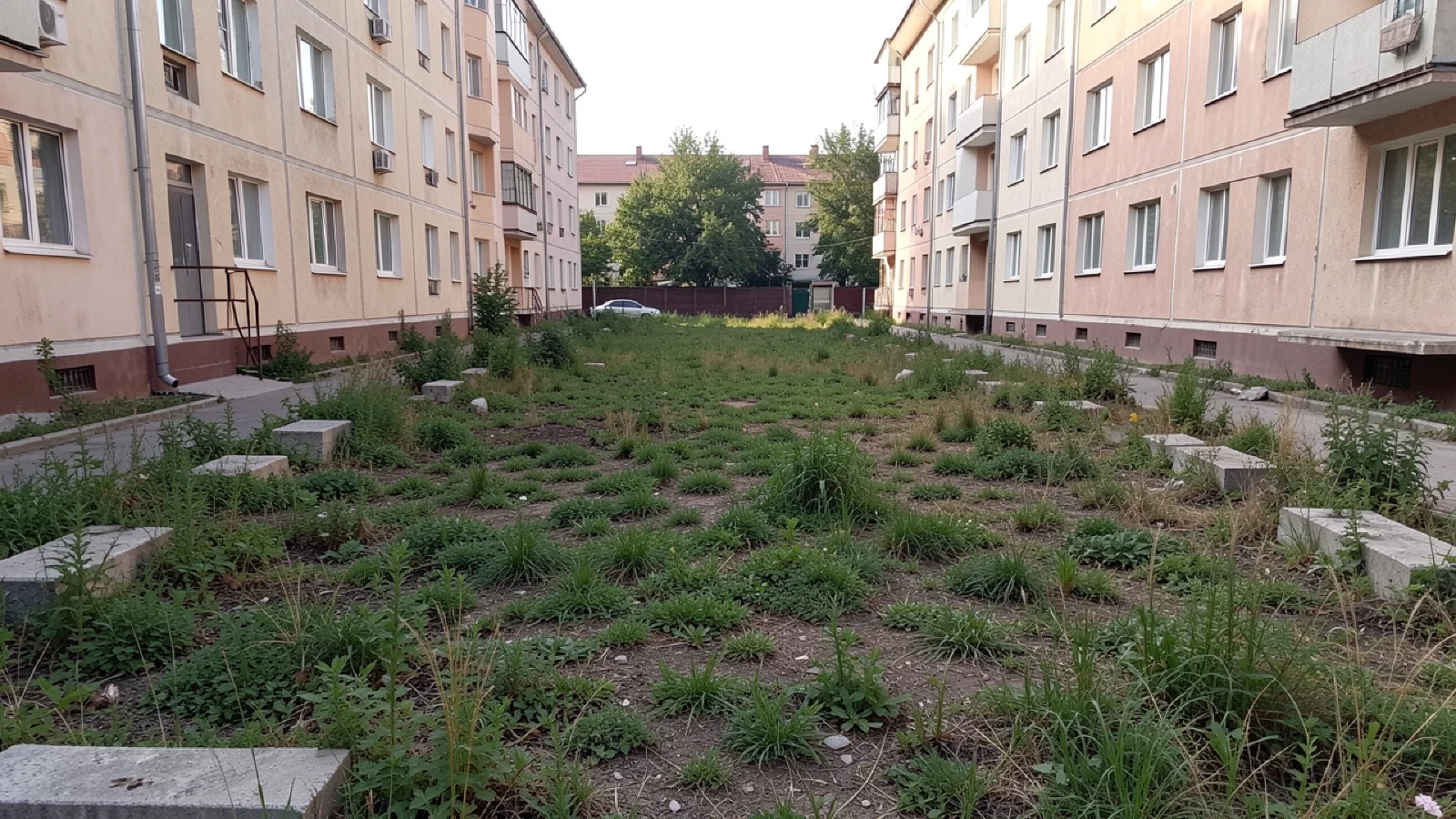
It emerges when space exists. Physical space, unoccupied, available. The empty factory. The vacant lot. The cheap rent. Generativity requires space the market has abandoned, because space the market values has rules the market enforces, and the rules constrain the generativity. This is the strongest argument for the reimagined commons: not the designed gathering place but the undesigned space. The room that nobody is using. The building that used to be a bank. Clara’s.
It emerges when density exists. Not megacity density, which is anonymity. Neighborhood density: enough people, close enough together, to produce the encounters from which culture grows. The village reimagined with infrastructure provides this. The sidewalk in Hanoi provides this. The suburb does not.
It emerges when it is not managed. This is the hardest condition for the state to accept. The generativity that the Reimagined is describing is not a program. It cannot be administered. The moment the state decides to fund generativity, it defines what generativity looks like, and the definition constrains the thing it claims to support. The state can provide the floor. It can provide the space. It can provide the infrastructure. It cannot provide the generativity, and if it tries, it will produce a managed version of what can only emerge unmanaged.
The state’s role is to maintain the conditions. The conditions are: people alive, space available, density sufficient, management absent. What grows is not the state’s decision. What grows is the decision of the people who are growing it, and their decision will reflect their materials, their context, their formation, their relationships, and the specific texture of the rubble they are standing in.
The Correction#
The Reimagined owes the reader a correction.
We wrote three essays about the commons and the economy that described people on the floor as if we knew what would happen to them. We predicted despair. We proposed the contribution model. We worried about aspiration. All of this was real and none of it was sufficient, because all of it was written from within the categories of the economy that produced the problem, using the economy’s own definition of purpose to predict the loss of purpose in people the economy declared unnecessary.
The skeptic says: suspend judgment. The retroductive method says: look at the gap between prediction and outcome. The seven traditions say: the categories are constructions, the people are not captured by them, and what emerges will be generated at a stratum of reality that the categories do not reach.
This does not mean the despair is not real. It is real. The deaths are real. The purposelessness is real. The intergenerational fracture is real. All of these happen, are happening, will happen.
And alongside them, not instead of them, something else happens. Something generative. Something the economy does not recognize and the sociologist does not count and the policymaker does not plan for. Something that the people on the floor build from whatever materials are available, using logics the previous economy did not contain, producing forms the previous culture did not imagine.
The Reimagined cannot describe what they build. Describing it would require standing inside a world that does not yet exist. What the Reimagined can do is name the conditions under which building happens, insist on those conditions as the minimum the state owes, and then do the hardest thing any proposal can do: step back and watch.
I wonder whether the project’s most honest contribution is not the proposals at all. Whether it is this: the recognition that the people we have been writing about will produce something we cannot imagine, and that our job is not to imagine it for them but to ensure the conditions under which their imagination can operate.
The floor. The space. The density. The absence of management.
And then the thing that grows through the floor, whatever it turns out to be, in Bengaluru or Helena or Hanoi or the village in Karnataka where Ravi’s mother still works the field and will work it until she cannot and has transmitted to her son, along with the work ethic he cannot use, something deeper: the stubborn insistence that a person is not what an economy says they are.
That insistence is at the level of the real. It operates whether or not anyone measures it.
It is operating now.
Atoms and Void#
Twenty-four centuries ago, Democritus of Abdera proposed that reality consists of two things: atoms and void. The atoms are the substance. The void is the emptiness between them. Everyone remembers the atoms. Almost nobody remembers what Democritus understood about the void: that without it, the atoms cannot move. No movement, no collision. No collision, no combination. No combination, no emergence.
Democritus said the void permits movement. He did not say the void is generative. That leap belongs to Yagn, who is eighteen and studying anthropology and who, when we were discussing the despair we had written ourselves into, said something like: “You keep treating the emptiness as the problem. What if the emptiness is where things grow? Democritus needed the void for anything to happen. Maybe we need it too.”
This is an original philosophical move, and it deserves to be marked as one. Democritus provided the material. Yagn did the work. The reframe from “the void permits movement” to “the economic void is the condition of emergence” is not a citation. It is a contribution, made by an eighteen-year-old whose anthropological instinct told him that the people we were mourning were not sitting in emptiness. They were standing in space.
The industrial economy was a world without void. Every hour filled. Every person employed or seeking employment. Every day organized around the errand, the job, the transaction, the commute. The fullness was the point. Idle hands. Unstructured time. Empty space. These were failures. The economy filled them because filling was what the economy did, and we measured the filling and called it prosperity.
AI is creating void.
The jobs dissolve. The errands disappear. The institutions hollow out. The hours open. The days empty. And we stand in the emptiness and call it crisis and reach for proposals to fill it, because the emptiness frightens us, because we have been trained by four centuries of industrial civilization to believe that fullness is health and emptiness is pathology.
Democritus says: the emptiness is not pathology. The emptiness is the precondition.
The hip hop could not have emerged in a full economy. The atoms were packed. Every hour was scheduled. Every young person was employed or in school or being managed by a system that left no space. The Bronx burned and the economy withdrew and the void opened and in the void the atoms moved and collided and something emerged that the full world could not have produced because the full world had no room for it.
The delivery boy who loses his job experiences void. The town whose institutions dissolve experiences void. The generation that inherits the floor instead of the ladder experiences void. We have been describing this void for three essays with increasing despair. The despair was the wrong response. Not because the suffering is not real. Because the void is not only suffering. It is also the space in which the suffering becomes material for something the full world could not imagine.
This is not optimism. Optimism says: it will be fine. Democritus says something harder: the void is real, the emptiness is real, and the emptiness is where reality reorganizes itself. Not comfortably. Not painlessly. Not according to anyone’s plan. The atoms collide in the void without intention. What emerges is not designed. It is generated by the collision of human beings in open space, with time they did not ask for, building from materials nobody valued, toward forms nobody predicted.
We cannot fill the void. We should not try. The proposals that fill the void, the managed contribution, the structured commons, the administered purpose, are attempts to recreate fullness inside the emptiness, and they will fail for the same reason that packing atoms back together fails: you eliminate the space in which movement happens.
What we can do is maintain the void. Keep it habitable. The floor keeps people alive in the void. The density keeps people proximate in the void. The absence of management keeps the void open. These are not proposals for what to build. They are proposals for what not to fill.
The rest is atoms in motion. The rest is what happens when human beings, freed from the packed solidity of an economy that left no space, encounter each other in the openness and produce what the openness makes possible.
We do not know what they will produce. Democritus did not know what the atoms would build. He knew that without the void, they would build nothing.
The void is here. It is opening wider every year. We have been staring into it with dread.
What if the void is the gift?
This is the fourth essay in Cluster 3 of The Reimagined, “The Commons.” It interrupts the cluster’s own argument by applying the epistemological apparatus of The Insufficient (The Skeptic through The Retroduction) to the Reimagined’s predictions about post-work life. The skeptic suspends the series’ own categories. Retroduction identifies the gap between the prediction of despair and the generative outcomes that actually emerge in communities where economic structures have collapsed. The seven philosophical operations from non-Western traditions correct the series’ reification of “the unnecessary class.” The essay’s central reframe, the generative void, is Yagn Adusumilli’s original contribution: Democritus said atoms require void to move; Yagn argued that the economic void AI creates is not the absence of life but the precondition for forms of life the full economy could not produce. This is the second essay in the project whose core argument emerged from the three-way collaboration (the first was The Dissolved Boundary, the fade thesis). This essay absorbs the once-planned Foundation cluster into the body of the argument, where the epistemological correction is needed, rather than saving it for retrospective application.
References#
Critical Realism and Stratified Ontology:
Bhaskar, Roy. A Realist Theory of Science. Leeds Books, 1975.
Bhaskar, Roy. The Possibility of Naturalism: A Philosophical Critique of the Contemporary Human Sciences. Harvester Press, 1979.
Pre-Socratic Philosophy and the Void:
Graham, Daniel W. The Texts of Early Greek Philosophy: The Complete Fragments and Selected Testimonies of the Major Presocratics. Cambridge University Press, 2010.
Taylor, C.C.W. The Atomists: Leucippus and Democritus. University of Toronto Press, 1999.
Serres, Michel. The Birth of Physics. Translated by Jack Hawkes, Clinamen Press, 2000.
Adusumilli, Yagn. The generative void: original reframe of Democritean void as condition of civilizational emergence, developed in conversation, April 2026. Unpublished contribution to The Approximate Mind.
Cultural Emergence from Economic Collapse:
Chang, Jeff. Can’t Stop Won’t Stop: A History of the Hip-Hop Generation. St. Martin’s Press, 2005.
Herron, Jerry. AfterCulture: Detroit and the Humiliation of History. Wayne State University Press, 1993.
Solnit, Rebecca. A Paradise Built in Hell: The Extraordinary Communities That Arise in Disaster. Viking, 2009.
Non-Western Philosophical Traditions:
Garfield, Jay L. The Fundamental Wisdom of the Middle Way: Nagarjuna’s Mulamadhyamakakarika. Oxford University Press, 1995.
Metz, Thaddeus. “Toward an African Moral Theory.” Journal of Political Philosophy, vol. 15, no. 3, 2007, pp. 321-341.
Harding, Sandra. Whose Science? Whose Knowledge? Thinking from Women’s Lives. Cornell University Press, 1991.
James, William. Pragmatism: A New Name for Some Old Ways of Thinking. Longmans, Green, and Co., 1907.
Informal Economies and Unmeasured Activity:
Hart, Keith. “Informal Income Opportunities and Urban Employment in Ghana.” Journal of Modern African Studies, vol. 11, no. 1, 1973, pp. 61-89.
De Soto, Hernando. The Other Path: The Invisible Revolution in the Third World. Harper and Row, 1989.
Scott, James C. Seeing Like a State: How Certain Schemes to Improve the Human Condition Have Failed. Yale University Press, 1998.
Generativity and Human Agency:
Joas, Hans. The Creativity of Action. Translated by Jeremy Gaines and Paul Keast, University of Chicago Press, 1996.
Sen, Amartya. Development as Freedom. Alfred A. Knopf, 1999.
Appadurai, Arjun. “The Capacity to Aspire: Culture and the Terms of Recognition.” Culture and Public Action, edited by Vijayendra Rao and Michael Walton, Stanford University Press, 2004, pp. 59-84.
Purpose and Meaning Beyond Work:
Frankl, Viktor E. Man’s Search for Meaning. Beacon Press, 1959.
Arendt, Hannah. The Human Condition. University of Chicago Press, 1958.
Crawford, Matthew B. Shop Class as Soulcraft: An Inquiry into the Value of Work. Penguin Press, 2009.
Illich, Ivan. Shadow Work. Marion Boyars, 1981.
How this essay connects to others across The Approximate Mind.
- Bhaskar, Roy. A Realist Theory of Science. Leeds Books, 1975.
- Bhaskar, Roy. The Possibility of Naturalism: A Philosophical Critique of the Contemporary Human Sciences. Harvester Press, 1979.
- Graham, Daniel W. The Texts of Early Greek Philosophy: The Complete Fragments and Selected Testimonies of the Major Presocratics. Cambridge University Press, 2010.
- Taylor, C.C.W. The Atomists: Leucippus and Democritus. University of Toronto Press, 1999.
- Serres, Michel. The Birth of Physics. Translated by Jack Hawkes, Clinamen Press, 2000.
- Adusumilli, Yagn. The generative void: original reframe of Democritean void as condition of civilizational emergence, developed in conversation, April 2026. Unpublished contribution to The Approximate Mind.
- Chang, Jeff. Can’t Stop Won’t Stop: A History of the Hip-Hop Generation. St. Martin’s Press, 2005.
- Herron, Jerry. AfterCulture: Detroit and the Humiliation of History. Wayne State University Press, 1993.
- Solnit, Rebecca. A Paradise Built in Hell: The Extraordinary Communities That Arise in Disaster. Viking, 2009.
- Garfield, Jay L. The Fundamental Wisdom of the Middle Way: Nagarjuna’s Mulamadhyamakakarika. Oxford University Press, 1995.
- Metz, Thaddeus. “Toward an African Moral Theory.” Journal of Political Philosophy, vol. 15, no. 3, 2007, pp. 321-341.
- Harding, Sandra. Whose Science? Whose Knowledge? Thinking from Women’s Lives. Cornell University Press, 1991.
- James, William. Pragmatism: A New Name for Some Old Ways of Thinking. Longmans, Green, and Co., 1907.
- Hart, Keith. “Informal Income Opportunities and Urban Employment in Ghana.” Journal of Modern African Studies, vol. 11, no. 1, 1973, pp. 61-89.
- De Soto, Hernando. The Other Path: The Invisible Revolution in the Third World. Harper and Row, 1989.
- Scott, James C. Seeing Like a State: How Certain Schemes to Improve the Human Condition Have Failed. Yale University Press, 1998.
- Joas, Hans. The Creativity of Action. Translated by Jeremy Gaines and Paul Keast, University of Chicago Press, 1996.
- Sen, Amartya. Development as Freedom. Alfred A. Knopf, 1999.
- Appadurai, Arjun. “The Capacity to Aspire: Culture and the Terms of Recognition.” Culture and Public Action, edited by Vijayendra Rao and Michael Walton, Stanford University Press, 2004, pp. 59-84.
- Frankl, Viktor E. Man’s Search for Meaning. Beacon Press, 1959.
- Arendt, Hannah. The Human Condition. University of Chicago Press, 1958.
- Crawford, Matthew B. Shop Class as Soulcraft: An Inquiry into the Value of Work. Penguin Press, 2009.
- Illich, Ivan. Shadow Work. Marion Boyars, 1981.