The War We Said We Wouldn't Fight
Peace is the stated preference. Fighting is the pattern.
TAM-PER.02 · The Persistent · The Approximate Mind
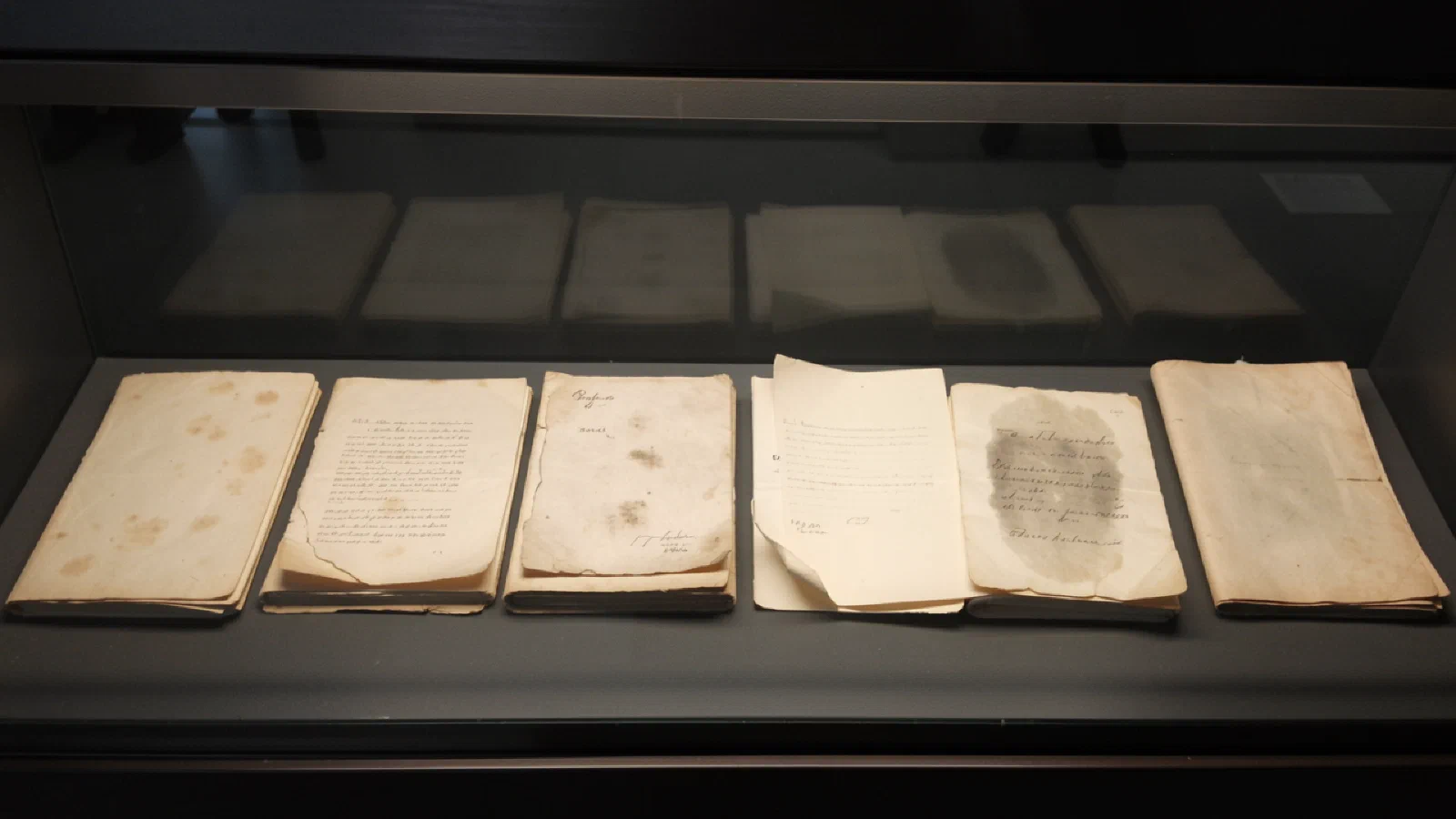
There is a museum case in the library archive that holds a soldier’s letters. Eighteen of them, behind glass, donated by a family that no longer had anyone to read them. The handwriting changes partway through.
The early letters are expansive, looping, the hand of a man with time. The later ones are compressed, crowded, the letters pushed together as if paper had become expensive or the hand had become tired. Nothing in the text explains the change. He does not mention an injury. He writes about the weather, about wanting to come home, about a tree he planted the week before he left.
He fought in a war he said he opposed. The placard says he came home and raised children, and that one of his grandsons later fought in a different war that grandson also said he opposed. The letters are careful and specific and undramatic. He never writes about heroism. He writes about wanting to go home.
The gap between what he wanted and what he did is not explained in the letters. It does not need to be. The gap is the species, and the species does not annotate itself.
Every generation with access to the record has known that war is catastrophic. Every generation has said so in its founding documents, its speeches, the way it raises its children. And every generation has fought. Not because they were lying when they said they wanted peace. They meant it. They fought anyway.
The people who built the United Nations had just watched the world burn twice. They were not naive. They constructed an architecture meant to make large-scale war structurally impossible, and they meant every word of it, and within five years their countries were fighting in Korea. The generation that said never again watched Rwanda happen on television. The sincerity was not the problem. The sincerity was real. So was the war.
The cynical reading says humans always fight, so peace is a fiction, so the desire for it is theater. That reading is too clean. It throws away half the evidence. The desire for peace is as persistent as the fighting. It never stops. It builds institutions, writes treaties, raises children to believe in it. It never fully succeeds and it never fully disappears.
Both things are in the record. The peace texts and the war texts. Often written by the same people. Sometimes in the same year.
My generation talks about conflict with more sophisticated language than any before it. Structural violence. Systemic harm. We have a vocabulary precise enough to name forms of war that previous generations could not see. And the wars continue. Not always with guns. Sanctions. Economic isolation. Algorithmic targeting. Information operations. The form adapts to the era. The pattern underneath it does not.
I want to believe the precision of the language is progress. Some days I do. Then I remember that every generation believed its vocabulary represented a real advance in understanding, and most of them were partly right, and the wars happened anyway, in whatever form the era made available.
The AI trained on all of this holds the contradiction without resolving it, because the record does not resolve it. Every peace treaty and every declaration of war. Every speech that argued for both. The model cannot tell you which texts to trust, because in the actual behavior of the species the peace texts and the war texts are both accurate descriptions of the same people. There is no clean signal to extract. The noise is the signal.
There is the tree.
He planted it the week before he left. He knew he might not come back to see it grow. He planted it anyway. Not as a statement. The letters do not read like the letters of a man who made statements. He planted a tree because that is what you do with a sapling and a patch of yard, and then he went to fight a war he said he opposed, and the desire and the war both happened to the same man in the same month.
The placard does not say whether the tree is still standing.
I wonder whether peace is something the species does between wars, or whether war is something the species does between peaces, and whether the difference matters as much as I want it to.
The tree, if it stands, does not resolve the contradiction. It just grows.
References#
Pinker, Steven. The Better Angels of Our Nature: Why Violence Has Declined. Viking, 2011.
Keegan, John. A History of Warfare. Alfred A. Knopf, 1993.
Hedges, Chris. War Is a Force That Gives Us Meaning. PublicAffairs, 2002.
Mazower, Mark. Governing the World: The History of an Idea. Penguin Press, 2012.
Scarry, Elaine. The Body in Pain: The Making and Unmaking of the World. Oxford University Press, 1985.
This is the second essay in The Persistent, a series by Yagn Adusumilli examining what AI cannot change about the species that built it. The Extraction follows.
How this essay connects to others across The Approximate Mind.
- Pinker, Steven. The Better Angels of Our Nature: Why Violence Has Declined. Viking, 2011.
- Keegan, John. A History of Warfare. Alfred A. Knopf, 1993.
- Hedges, Chris. War Is a Force That Gives Us Meaning. PublicAffairs, 2002.
- Mazower, Mark. Governing the World: The History of an Idea. Penguin Press, 2012.
- Scarry, Elaine. The Body in Pain: The Making and Unmaking of the World. Oxford University Press, 1985.