The Song in the Ruins
We make things that don't need to exist. That is the most persistent thing about us.
TAM-PER.05 · The Persistent · The Approximate Mind
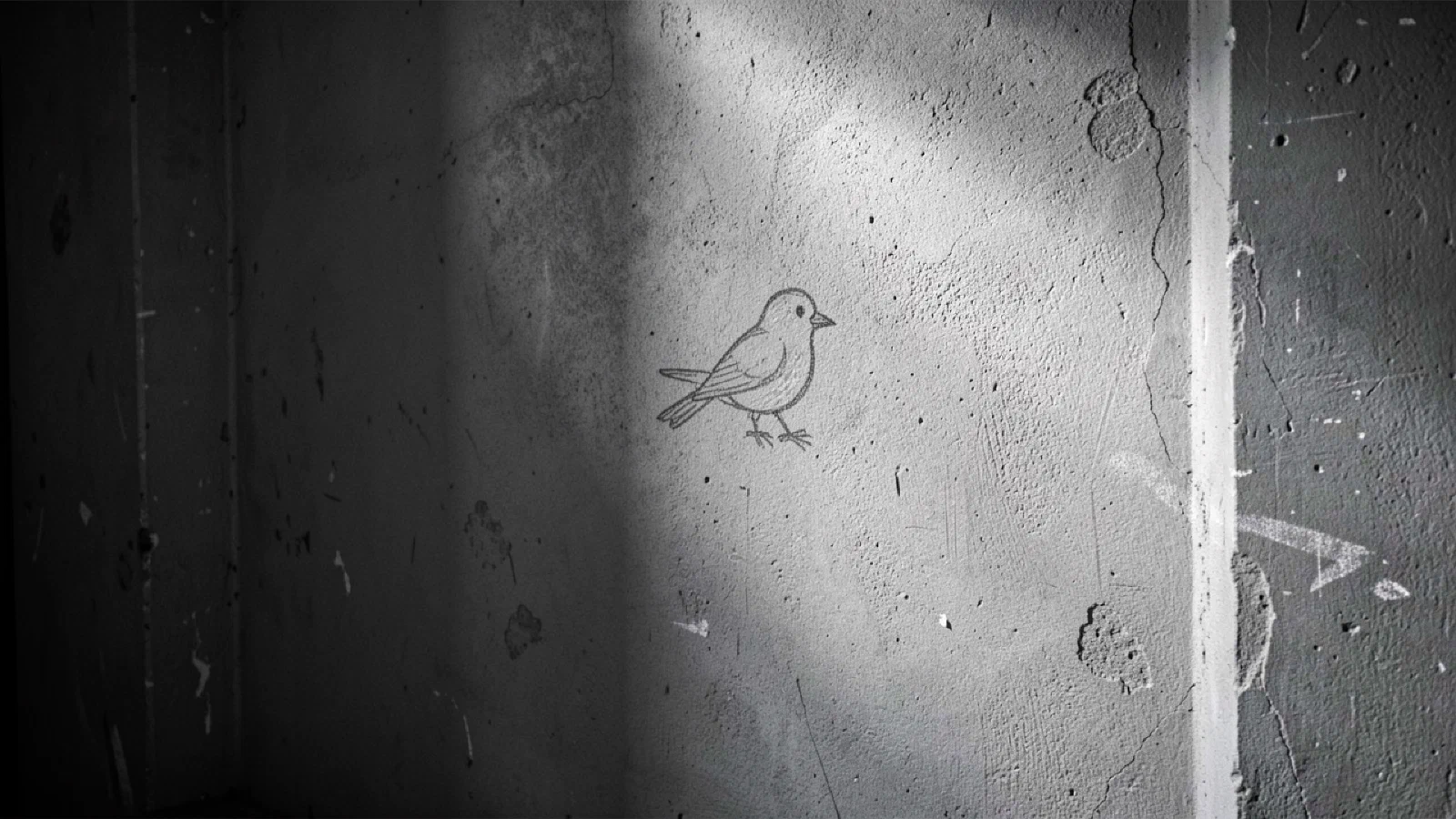
A bird scratched into the wall of a cell.
Badly done. The proportions wrong, the line shaky, drawn by someone with a sharp object and a flat surface and a stretch of time they did not choose. No name. It survived because the wall survived, which was luck. The person who scratched it never expected anyone to see it. They did it anyway.
The bird is the part.
Not that people make beautiful things when life is good. That is easy. People make things in the middle of the worst of it, with no audience, no reward, no chance the thing outlasts the hour. A bird on a cell wall. A song hummed where humming serves nothing. The drive does not wait for conditions to improve. It does not check whether the timing is appropriate.
Every culture anthropologists have studied makes things that do not need to exist. Not tools. Not shelter. Songs, stories, patterns scratched into a handle that would work just as well plain. Dance. Jokes. Decoration on objects that needed no decorating. There is no culture in the record without them. None has ever been found. Everything else varies across cultures. This does not. Which means it is not a feature some societies developed. It is part of the equipment we all came with.
The usual story is that art helps humans cope with suffering. That expression is how we resist, transcend, survive the unbearable.
Too clean.
Expression also happens on ordinary days. In boredom. In comfort, when there is nothing to resist and nobody is suffering and the afternoon is just long. It does not react to bad conditions. It runs alongside all conditions. Crediting suffering with making art gives suffering too much and the drive too little. The drive does not need a reason. It is the reason.
And it comes before the tool. Every time. Before instruments, singing. Before paint, ochre rubbed on rock. Before written language, stories told aloud by people who would never see them written down and did not need to. The tools get picked up, worn out, replaced. The reaching does not change. A stick and some dirt. A finger on a fogged window. Charcoal from a dead fire. The tool is new each time. The hand reaching for it is fifty thousand years old.
We are picking up AI now the way we picked up charcoal.
Not the same thing. The capabilities are not in the same universe. But the gesture is identical. New material in the world, and the species is already using it to make things nobody asked for. Poems written at midnight that no one will read. Images made just to see them exist. Music made by people who never learned music and never will. The quality is all over the place. The drive is not. The drive has never once wavered.
If I had to name the single most persistent thing about us, I would not say the wars, though they persist. Not the building or the extraction, though those persist too. I would say this. We make things that do not need to exist.
And it is the most persistent of all of them, because it outlasts the rest. It happens during the wars. Inside the extraction. In the rubble of the things that got built and fell. When everything else collapses, this is what turns up in the wreckage. A bird on a cell wall. A song nobody wrote down. A story in a dead language, kept alive only because someone happened to be listening when the last speaker told it.
I wonder what the anthropologists of some future era will make of us. Whether they will study our algorithms and our markets and our wars, or whether they will find, scratched into the margins of all that data, the same thing every era before us left behind.
We were here. We made something. It did not need to exist.
Most of what we make is lost. The drive that made it is not. It cannot be. It is us, singing in the ruins the whole time, whether or not anyone is there to hear.
References#
Dissanayake, Ellen. Homo Aestheticus: Where Art Comes From and Why. Free Press, 1992.
Lewis-Williams, David. The Mind in the Cave: Consciousness and the Origins of Art. Thames and Hudson, 2002.
Scarry, Elaine. On Beauty and Being Just. Princeton University Press, 1999.
Levi, Primo. Survival in Auschwitz. Translated by Stuart Woolf, Touchstone, 1996.
Hyde, Lewis. The Gift: Imagination and the Erotic Life of Property. Vintage, 1983.
This is the fifth essay in The Persistent, a series by Yagn Adusumilli examining what AI cannot change about the species that built it. The Record follows.
How this essay connects to others across The Approximate Mind.
- Dissanayake, Ellen. Homo Aestheticus: Where Art Comes From and Why. Free Press, 1992.
- Lewis-Williams, David. The Mind in the Cave: Consciousness and the Origins of Art. Thames and Hudson, 2002.
- Scarry, Elaine. On Beauty and Being Just. Princeton University Press, 1999.
- Hyde, Lewis. The Gift: Imagination and the Erotic Life of Property. Vintage, 1983.
- Levi, Primo. Survival in Auschwitz. Translated by Stuart Woolf, Touchstone, 1996.