The Claim
Every generation believes it stands at the hinge of history. Mine is no different.
TAM-PER.01 · The Persistent · The Approximate Mind
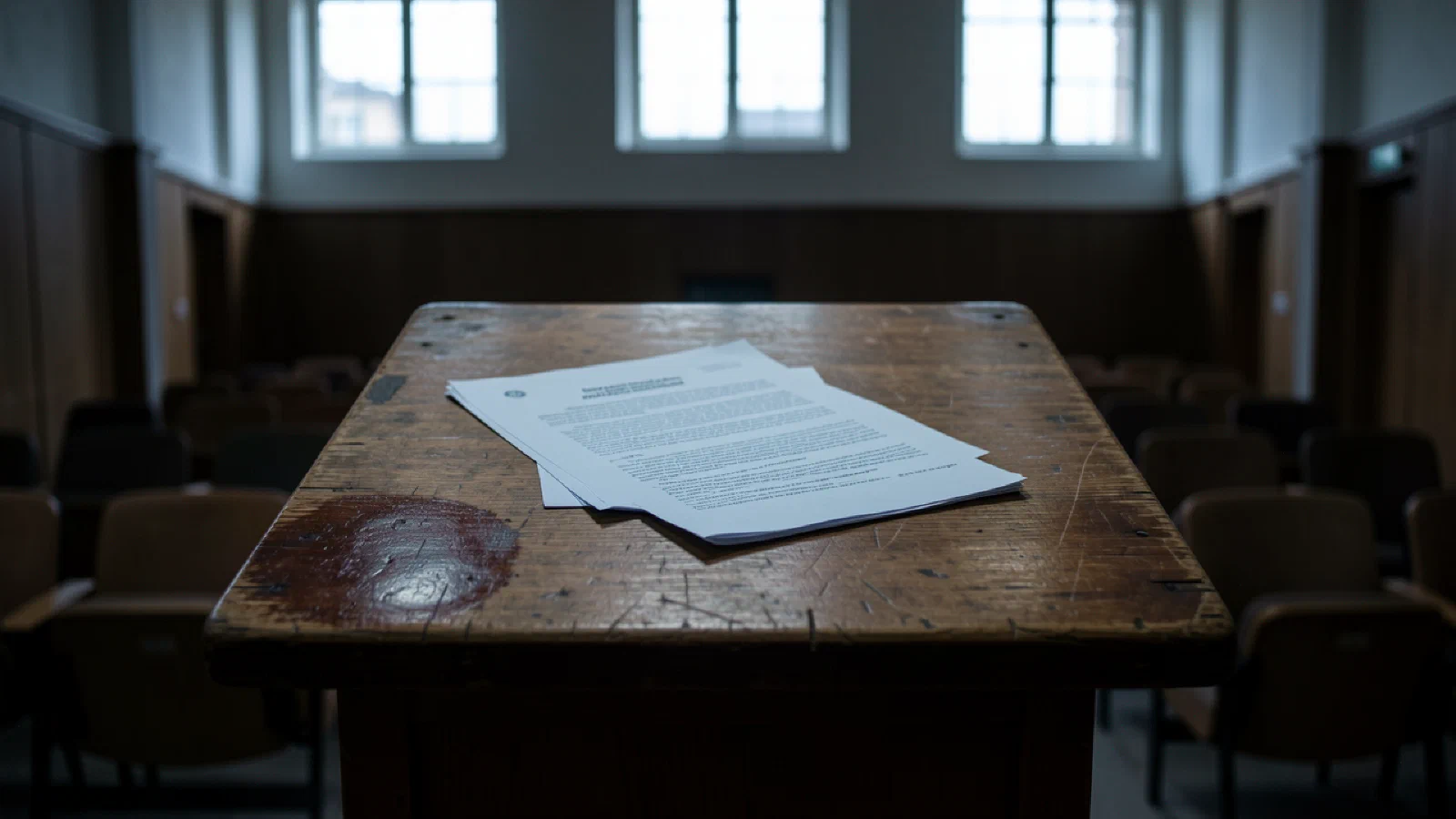
Professor Anand has a habit. Two quick raps on the podium before she makes a point that matters. I noticed it in week two and cannot un-notice it now.
Today she reads us a Victorian address. 1858, the completion of the transatlantic telegraph cable. The speaker argues that the cable will annihilate distance, make misunderstanding between nations impossible, end war as a practical option. This moment, he says, is the inflection point. Everything before it was prologue.
I am looking at my phone under the desk.
On the screen: a newsletter about large language models. The author argues that AI will annihilate the information barrier between experts and ordinary people. This moment, he says, is the inflection point. Everything before it was prologue.
The noun has changed. The cadence has not moved.
Professor Anand taps the podium twice. “I don’t want you to notice that he was wrong,” she says. “I want you to notice that he was repeating something.”
The Victorians made this claim. So did the postwar architects of the United Nations, the space-age optimists, the internet generation. Each one used its defining technology as proof that the old patterns didn’t apply anymore. Each one was partially right. The telegraph did compress Atlantic communication time from weeks to minutes. The internet did flatten certain hierarchies of access. And the species continued being itself.
The tool was new. The species using the tool was not.
My generation knows this. We have the record. We can read the Victorian speech and see exactly what it is. We say AI is categorically different anyway, not just different in degree but in kind, the inflection point that makes previous inflection points look incremental. We say it with the particular intensity of people who have considered the counterargument and dismissed it.
We sound exactly like every generation that dismissed it.
You cannot build institutions for a moment you believe is ordinary. You cannot sacrifice for a future you believe is another cycle. The claim is motivational architecture. It runs on a useful fiction, and the fiction’s usefulness is persistent even as its content expires with each generation.
But the claim also blinds. When you believe your moment is the hinge, you stop looking for the structure underneath. The telegraph speaker could not see he was inside a pattern. Seeing the pattern would have required standing outside his moment, and nobody gets to stand outside their moment.
I can see the Victorian version clearly from a century and a half away. My generation’s version is right in front of me and I can barely see it. I know it has the same structure. I can feel the resemblance. And I am still, underneath the analysis, inside the belief. Still convinced AI is different. Still producing the claim while describing its anatomy.
The pattern continues because the people inside it cannot step outside it. Knowing about it does not grant exemption. You can describe the ritual. You cannot stop performing it.
Walking out after class, the Victorian speech still on the projector behind me, I am not disillusioned. Not detached. Something closer to membership.
The Victorian speaker was not a historical artifact. He was a version of me, differently dressed, claiming a different noun. The pattern runs through me the way it ran through him. The lecture was describing me as much as it was describing 1858.
My phone is in my pocket. The newsletter is still open. I will read the next one tomorrow and feel the familiar pull. And I will hear, underneath it, two taps on a podium, and the cadence of a speech that could have been written last week.
I wonder whether knowing the pattern changes anything, or whether knowing it is just the latest version of believing you’re different, because this time you can see it.
The claim is already forming. It always is.
References#
Standage, Tom. The Victorian Internet: The Remarkable Story of the Telegraph and the Nineteenth Century’s On-line Pioneers. Walker and Company, 1998.
Carey, James W. “Technology and Ideology: The Case of the Telegraph.” Prospects, vol. 8, 1983, pp. 303–325.
Mannheim, Karl. “The Problem of Generations.” Essays on the Sociology of Knowledge. Routledge, 1952.
Acemoglu, Daron, and Simon Johnson. Power and Progress: Our Thousand-Year Struggle Over Technology and Prosperity. PublicAffairs, 2023.
Geertz, Clifford. The Interpretation of Cultures. Basic Books, 1973.
This is the first essay in The Persistent, a series by Yagn Adusumilli examining what AI cannot change about the species that built it. The War We Said We Wouldn’t Fight follows.
How this essay connects to others across The Approximate Mind.
- Standage, Tom. The Victorian Internet: The Remarkable Story of the Telegraph and the Nineteenth Century’s On-line Pioneers. Walker and Company, 1998.
- Carey, James W. “Technology and Ideology: The Case of the Telegraph.” Prospects, vol. 8, 1983, pp. 303-325.
- Mannheim, Karl. “The Problem of Generations.” Essays on the Sociology of Knowledge. Routledge, 1952.
- Acemoglu, Daron, and Simon Johnson. Power and Progress: Our Thousand-Year Struggle Over Technology and Prosperity. PublicAffairs, 2023.
- Geertz, Clifford. The Interpretation of Cultures. Basic Books, 1973.