The Builders
We construct knowing it won't last. That has never stopped us.
TAM-PER.04 · The Persistent · The Approximate Mind
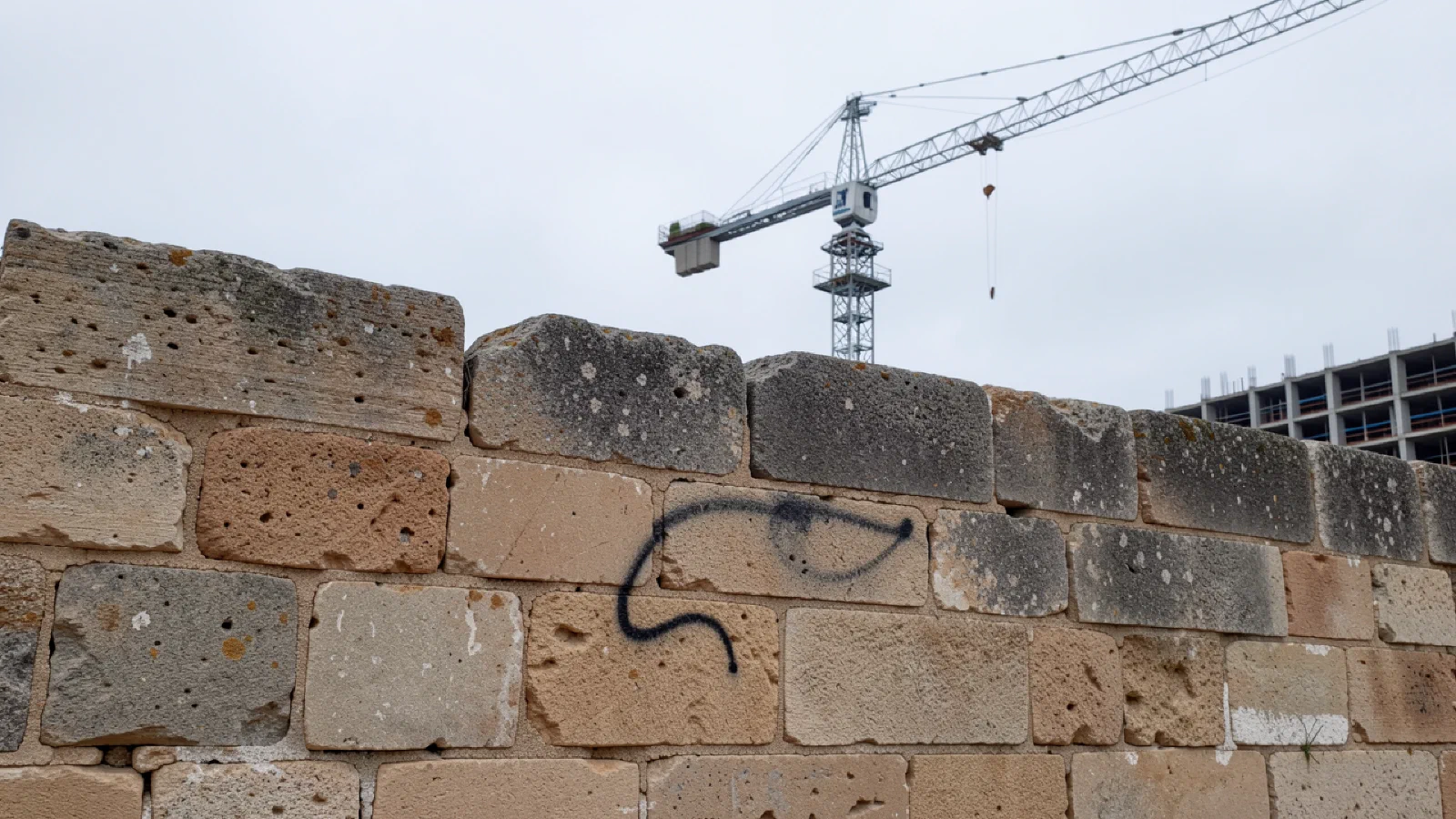
There is graffiti on the old wall. A spray-painted tag, a name I cannot read, somebody’s signature pressed onto stone that has been standing for two thousand years. People have been saying I was here on this wall for longer than most countries have existed. The medium changed. The message did not.
I am standing in a ruin. Interpretive signs explain what stood here: a forum, a market, the center of a city that mattered for centuries and then did not. Tourists take photos. What holds my attention is not the ruin. It is the skyline behind it. A working crane, a building going up, a new city built in full view of the old one’s collapse.
The builders of the new city know about the ruin. It is right there. They are building anyway.
The species builds. Cities, institutions, families, governments, belief systems, bridges. It builds knowing, because the record is unambiguous and every generation can read it, that what it builds will not last. The ruins of every previous civilization are documented. The collapses are dated. None of this stops the next round.
Dig down in Rome, in Istanbul, in Mexico City, and you find the previous versions stacked underneath. Each layer was built by people who knew about the layer beneath them. The knowledge did not stop them. It changed the engineering, thicker walls, deeper foundations, better drainage, and left the behavior untouched. Build. Lose. Build again on the same ground, sometimes on the literal foundations of the thing that fell.
The pattern is not build-and-improve in a clean line. Sometimes the new version is better and sometimes it is worse and sometimes it is just different. The pattern is build-and-rebuild. Learning is optional. Building is not.
It works the same at the scale of institutions. The League of Nations failed and the people who studied that failure built the United Nations on the same premise with adjustments. Democracies collapse and are rebuilt, often by people who read the history of the last collapse. The lesson taken from the ruin is rarely stop building. It is build again, and this time account for what we now know broke.
And it works at the scale of a single life. People build careers that end, relationships that change, homes they will not die in. They know this from experience, not just from history. And they build again at fifty, at sixty, with full knowledge that what they make is temporary. Not out of denial. Out of whatever it is that sits underneath denial and keeps going after denial has been worn through.
AI is the latest thing the species has built. Built by people who know about the ruins of previous technologies, on foundations made of other foundations: the internet on top of computing on top of electronics on top of electricity. The builders know that what they are making may not survive in its current form. They build anyway. Not because they believe it will last. Because building is what the species does with the time it has.
The question is not whether AI endures. Nothing in the record suggests it will, in this form. The question is what gets built on its foundations after it becomes the layer underneath. That is the only thing the species has ever been able to say honestly about the present. It is being built. Whether it stands is a question for whoever visits the ruin later.
There is something in this that is neither tragic nor heroic. If the point were permanence, every collapse would be a defeat and the record would be nothing but defeat. But the species does not seem to build for permanence, whatever it says. It builds because building is the thing. The built object is temporary. The building is constant. Which means nothing is wasted, not even the parts that fall, because the falling was always part of it.
I wonder whether the people who raised this wall knew, not abstractly but specifically, that what they were making would become the rubble under someone else’s foundation, and whether knowing that felt like defeat or like joining something longer than one building.
The crane swings behind the ancient wall. Something is going up. I do not know what it is yet. Nobody does. It is not finished.
References#
Tainter, Joseph A. The Collapse of Complex Societies. Cambridge University Press, 1988.
Diamond, Jared. Collapse: How Societies Choose to Fail or Succeed. Viking, 2005.
Scott, James C. Against the Grain: A Deep History of the Earliest States. Yale University Press, 2017.
Sennett, Richard. The Craftsman. Yale University Press, 2008.
Macaulay, Rose. Pleasure of Ruins. Walker and Company, 1953.
This is the fourth essay in The Persistent, a series by Yagn Adusumilli examining what AI cannot change about the species that built it. The Song in the Ruins follows.
How this essay connects to others across The Approximate Mind.
- Tainter, Joseph A. The Collapse of Complex Societies. Cambridge University Press, 1988.
- Diamond, Jared. Collapse: How Societies Choose to Fail or Succeed. Viking, 2005.
- Scott, James C. Against the Grain: A Deep History of the Earliest States. Yale University Press, 2017.
- Sennett, Richard. The Craftsman. Yale University Press, 2008.
- Macaulay, Rose. Pleasure of Ruins. Walker and Company, 1953.