The Tolerance of Existence
When Subsistence No Longer Means Survival#
Margaret’s neighborhood has not changed much in the years since the allocation began.
The houses are the same houses. Ranch styles from the seventies, a few colonials, the split-level on the corner that someone painted blue a decade ago and everyone has opinions about. The lawns are maintained. The elementary school three blocks over is open. The clinic on Route 9 sees patients. The coffee shop where Margaret sometimes sits on Tuesday mornings still serves the same coffee it served five years ago, which was never great but was never the point.
A visitor from 2024 would see a comfortable community. Cars in driveways. Screens glowing in windows. Children walking to school with backpacks that look like the backpacks children have always carried. The monthly allocation arrives and covers what it covers, which is enough. Nobody here is hungry. Nobody is homeless. The material markers of a functioning American neighborhood are all present and accounted for.
If the visitor stayed a week, they might notice something harder to name. Not absence exactly. Nothing is missing in any way you could photograph. But the community calendar at the library has events on it that nobody attends. The conversations at the coffee shop are pleasant and circular, covering ground that was covered last Tuesday and the Tuesday before that. The house on Elm Street has been for sale for eight months, not because the market is bad but because nobody is arriving. Nobody is leaving either.
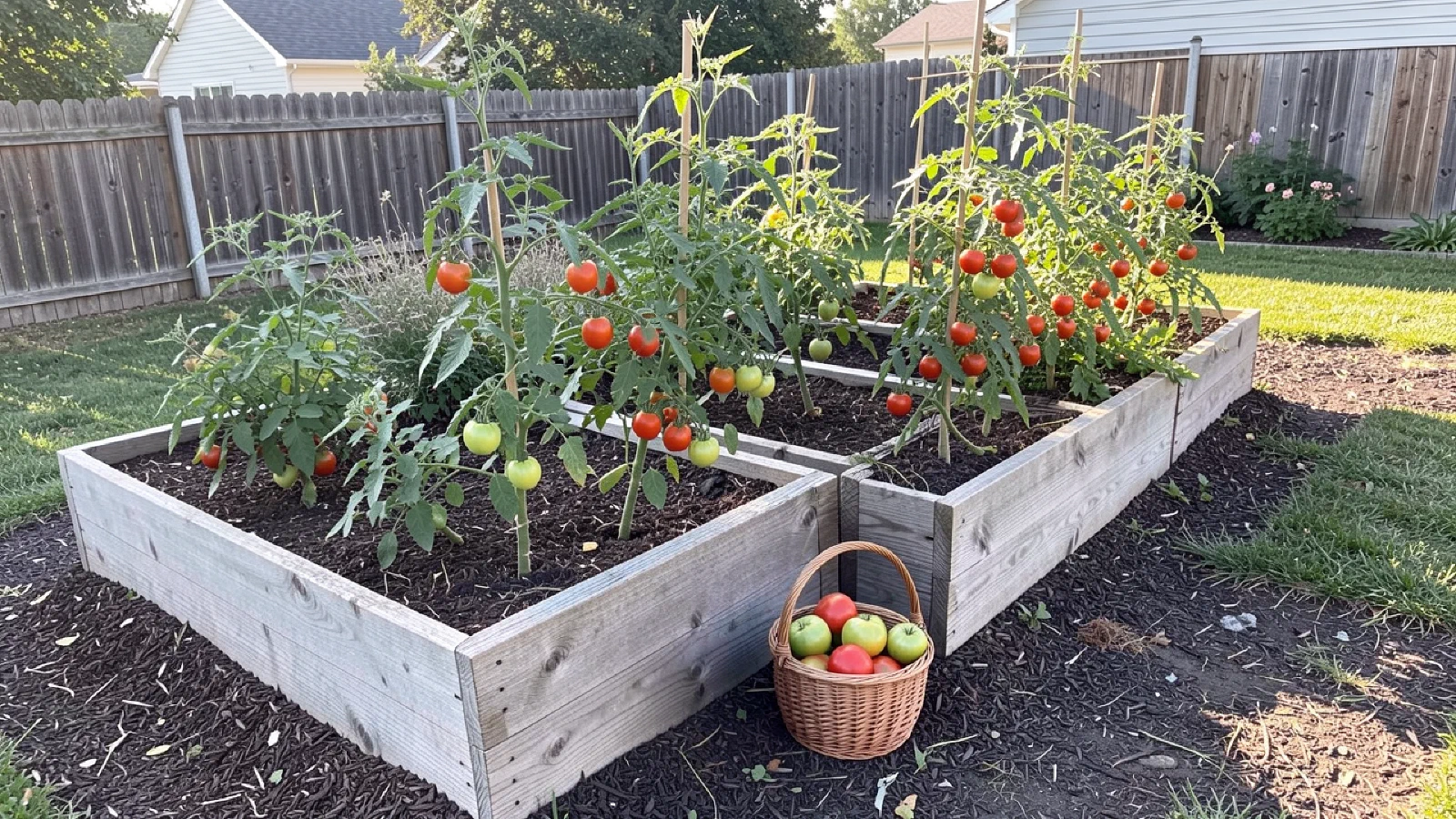
Margaret gardens. She has always gardened. The tomatoes are good this year. She gives them to the neighbors, who are grateful in the way people are grateful for things they did not need and would not have missed.
Something has settled here. I want to understand what it is.
What Tolerance Means#
I keep coming back to the word tolerance. It means more than one thing, and each meaning illuminates something different about what I see in Margaret’s neighborhood.
The first meaning is endurance. How much purposelessness can a person absorb and still function? The answer, it turns out, is quite a lot, as long as the material floor holds. A body can tolerate the absence of meaning for years, for decades, the way it tolerates a low-grade inflammation: not crisis, not health, just the ongoing condition of being alive without being well.
The Gulf States offer the closest existing case at scale. Kuwait, Saudi Arabia, the UAE built citizen income systems decades ago, distributing oil wealth as direct payments, subsidized housing, guaranteed employment in government roles that often carry titles but not tasks. The material provision is generous. The rates of depression, diabetes, obesity, and what researchers carefully call “purposelessness” are among the highest in the world. This is not a population in rebellion. It is a population in subsidence. Comfortable, provided for, sinking slowly into conditions that the comfort itself seems to produce.
The pattern is not new. Rome’s grain dole fed the city’s poor for centuries. The bread was real. So were the circuses, and the word “circus” tells you something about what fills the space when purpose drains out. Soviet full employment guaranteed everyone a job, and the joke that circulated for decades captured the result: “we pretend to work and they pretend to pay us.” Each system decoupled provision from contribution. None collapsed because the provision failed. They degraded from the inside, slowly, through the accumulation of something that adequate provision alone could not prevent.
The second meaning is an engineering specification. In manufacturing, tolerance is the acceptable deviation from the ideal. A part can be slightly off and still function. The question is how far off before the system registers a fault.
We are, I think, quietly establishing tolerances for human existence. How much purpose-loss is acceptable? How much agency can be removed before something breaks? How much cognitive indifference, the condition The Quiet Irrelevance named, can accumulate in a population before someone notices?
The answer appears to be: the system has no sensor for this. GDP does not measure meaning. Employment statistics count the employed, not the purposeful. Health metrics track disease but not the slow depletion of the will to remain well. We built our instruments to detect material deprivation, and they are good at that. They are blind to something else.
The third meaning is permission. Tolerance as in: we have learned to accept this. The normalization that The Quiet Irrelevance described, the emptiness becoming normal, is itself a tolerance. A collective decision, made by no one and arrived at by everyone, that this is simply how things are now. Not through persuasion. Through habituation. The way you stop noticing a sound that has been constant long enough.
Each meaning reveals the same thing: a condition that persists because nothing triggers an alarm.
Margaret does not think in these terms. She thinks about her tomatoes, and about whether Sarah will visit this weekend, and about the book she is reading that she keeps putting down because she cannot quite remember why she picked it up. Her days are not bad. They are pleasant in the way that a waiting room is pleasant: comfortable enough, nothing demanded, nothing at stake.
The New Subsistence#
Subsistence used to mean the minimum for biological survival. Calories, shelter, water. The line below which the body fails.
What if we are watching a new subsistence form?
Not biological but existential. The minimum threshold for social survival. Below it, you cannot function: you are too hungry, too cold, too sick, too exposed. Above it, you function. You persist. You go through the motions of a life that has the shape of a life without the weight of one.
Margaret might recognize this, if you asked her carefully and she trusted you enough to answer honestly. She gardens, she reads, she visits Sarah and the grandchildren. Her days are pleasant. She sometimes catches herself wondering what she did today that she could not have skipped entirely. The answer, on too many days, is nothing.
This is not depression. Margaret has experienced depression, years ago after David died, and she knows what that felt like: heavy, dark, the world drained of color. This is different. The color is fine. The garden is beautiful. She enjoys her tea. She is not in pain.
She is simply not required. By anything. By anyone. In any way that would change what happens tomorrow if she were not here today.
The Empty Ledger called this the meaning wound and traced it through James’s experience of work that no longer needed him. Part 28 (The Belonging Gap) traced it through the belonging gap, the question beneath Margaret’s skipped medications: who am I doing this for? What I want to name now is not the wound itself but what happens when the wound stabilizes. When it stops being a crisis and becomes a condition. When the condition becomes the normal state of a neighborhood, a community, a country.
And here is where I want to be careful, because the conversation about universal basic income matters and I do not want to be glib about it. Whatever mechanism distributes the wealth that automated systems generate, whether we call it UBI or allocation or dividend or something else, is necessary. The alternative, material destitution layered onto existential destitution, is worse. Much worse. The people who fought for guaranteed income were right to fight for it, and the fight is not over.
But we should be honest about what provision produces when it succeeds. A population that is fed, housed, connected, entertained, and purposeless. The UBI debate, in most of its forms, assumes that material provision is the hard problem and that meaning will sort itself out once the survival question is answered. The Empty Ledger argued the opposite. This piece is asking what “the opposite” looks like when it reaches equilibrium.
Not crisis. Not suffering. Something that has no name because every name we have for hardship assumes material deprivation, and the material deprivation is gone.
Amartya Sen argued decades ago that poverty is not merely the absence of income but the absence of capability: the freedom to do and to be. His capabilities framework was designed for material poverty, for the woman who cannot read, the farmer who cannot access markets, the patient who cannot reach a clinic. But the framework bends toward what I am describing. Comfortable poverty is capability without occasion. You can do things. There is nothing that needs doing. The freedom is real. The emptiness inside the freedom is also real.
The Distribution Is the Disguise#
When deindustrialization gutted the American heartland, the damage concentrated. Specific towns, specific counties, specific zip codes. Youngstown, Ohio. Gary, Indiana. The hollowed-out coal communities of West Virginia and eastern Kentucky. The concentration made the damage visible, nameable, photographable. Journalists went there. Politicians visited. Case and Deaton could draw maps showing where the deaths of despair clustered.
Comfortable poverty does not concentrate. It distributes.
James in his apartment, reviewing AI output that does not need his review. Elena at her school, completing assignments for a future she cannot picture. Margaret in her garden, growing tomatoes that are good but unnecessary. The retired teacher three houses down. The young couple across the street who both work from home doing something they find difficult to explain. Every zip code. Every demographic. Every education level.
When a condition is universal, it stops looking like a condition. It looks like reality.
This is the mechanism that makes it invisible. Poverty is recognizable because wealth exists as contrast. You can see deprivation because you can see, next to it or on a screen or in memory, what deprivation is not. But comfortable poverty has no contrast group. There is no neighborhood where people are materially identical but existentially flourishing, where you could point and say, that is what we’re missing. Or if such neighborhoods exist, they are small and anomalous and their residents cannot quite articulate what makes them different.
The Invisible Tiers described invisible inequality: different tiers of AI access that looked identical from the outside. Devin and James, using the same tool, getting systematically different results, with no way to compare. What I am describing is the inverse: invisible uniformity. Not different experiences disguised as the same but the same experience with no frame of reference to reveal what it is.
The distribution is the disguise. When everyone has it, no one can see it.
The Political Silence#
This is the part I find most unsettling, and I want to think through it slowly.
Why can comfortable poverty not become a political issue?
Start with the language of poverty. It requires material deprivation. Hunger, homelessness, medical debt, the check-engine light that Maria could not afford to fix in The Paperwork of Being Alive. Comfortable poverty has none of this. Every basic need is met. No politician can campaign against a condition where food is on the table, the rent is paid, and the clinic is open. “Vote for me, I will give your life meaning” is not a platform. It is a sermon, and we do not elect sermons.
The language of flourishing requires aspiration, the belief that a different state is both achievable and worth wanting. Cognitive indifference, the condition The Quiet Irrelevance named, dissolves both beliefs without drama. You do not decide to stop aspiring. You simply notice, one Tuesday morning, that the question of what you want to become has gone quiet.
The language of rights requires a violator. Someone must be withholding something, imposing something, denying something. Who is violating the rights of the comfortably poor? No one refused them anything. No one imposed a burden. The condition emerged from the removal of deprivation, not the application of harm.
The language of revolution requires suffering. Real suffering, the kind that makes the status quo intolerable. Comfortable poverty is not intolerable. That is precisely the problem. It is tolerable. It is the definition of tolerable: a condition that can be endured indefinitely without producing the kind of pain that demands change.
Every political vocabulary we have assumes the problem is material and the solution is provision. Comfortable poverty is what exists after provision has succeeded.
I wonder if this is why it persists. Not because no one cares. Because no one can say what they would be caring about. The condition has no name, no constituency, no banner. It is not a movement waiting to be organized. It is a quiet that has settled over a neighborhood, a country, a generation, and that nobody has the words to break.
Evening#
Margaret is in her garden, though the light is going. The tomatoes are coming in. She will bring some to the neighbor tomorrow, the one whose name she knows but whose life she does not.
She is not unhappy. She is not suffering. She is tending plants that will be good this year, as they were last year, as they will be next year. The garden asks nothing of her except attention, and she gives it, and in the giving there is something that the rest of her day does not provide. She cannot say what it is exactly. Something about her hands in the soil. Something about the way a living thing responds to care.
The neighborhood settles into evening. Lights come on in every house. Screens glow. Somewhere a dog barks and is quieted. No one is in crisis. No one is in need.
I don’t know what to call this. It is not the future anyone feared and not the future anyone wanted. It is the one that arrived because no other one showed up, and because nothing about it was bad enough, in any way we know how to measure, to make anyone insist on something different.
The most dangerous outcome may not be the one that breaks things. It may be the one that doesn’t.
This is Part 61 of The Approximate Mind, a series exploring how AI reshapes human experience, identity, and society. Part 60 (The Quiet Irrelevance) examined cognitive indifference and connected loneliness as conditions that dissolve engagement without visible suffering. This piece asks a quieter question: what happens when those conditions stabilize into something that persists, that no one chose, and that we have no language to name?
How this essay connects to others across The Approximate Mind.
- Sen, Amartya. Development as Freedom. Anchor Books, 1999.
- Case, Anne, and Angus Deaton. Deaths of Despair and the Future of Capitalism. Princeton University Press, 2020.
- Standing, Guy. The Precariat: The New Dangerous Class. Bloomsbury Academic, 2011.
- Jahoda, Marie. Employment and Unemployment: A Social-Psychological Analysis. Cambridge University Press, 1982.
- Skidelsky, Robert, and Edward Skidelsky. How Much Is Enough? Money and the Good Life. Other Press, 2012.
- Arendt, Hannah. The Human Condition. University of Chicago Press, 1958.
- Graeber, David. Bullshit Jobs: A Theory. Simon and Schuster, 2018.
- Herb, Michael. The Wages of Oil: Parliaments and Economic Development in Kuwait and the UAE. Cornell University Press, 2014.
- Ross, Michael L. The Oil Curse: How Petroleum Wealth Shapes the Development of Nations. Princeton University Press, 2012.
- Veyne, Paul. Bread and Circuses: Historical Sociology and Political Pluralism. Allen Lane, 1990.
- Filtzer, Donald. Soviet Workers and Late Stalinism: Labour and the Restoration of the Stalinist System after World War II. Cambridge University Press, 2002.