The Thread
On the small thing the last essay noticed, and how far it turned out to run
On the small thing the last essay noticed, and how far it turned out to run#
Cora books the cabin herself this year, on her phone, at the kitchen table, in about twenty minutes. For thirty years she called a woman named Deb who ran a travel agency above the hardware store, and Deb knew the lakes, knew which cabins had the good docks and which had the wasps in the eaves, and took a cut Cora never saw because it was folded into the price. Deb retired two winters ago. The agency is a vape shop now. And Cora, who has read every line of every receipt since she was a girl, a habit her husband used to tease her about right up until the year he wasn’t there to tease her about anything, books the cabin herself and feels, for a moment, like she has gotten away with something.
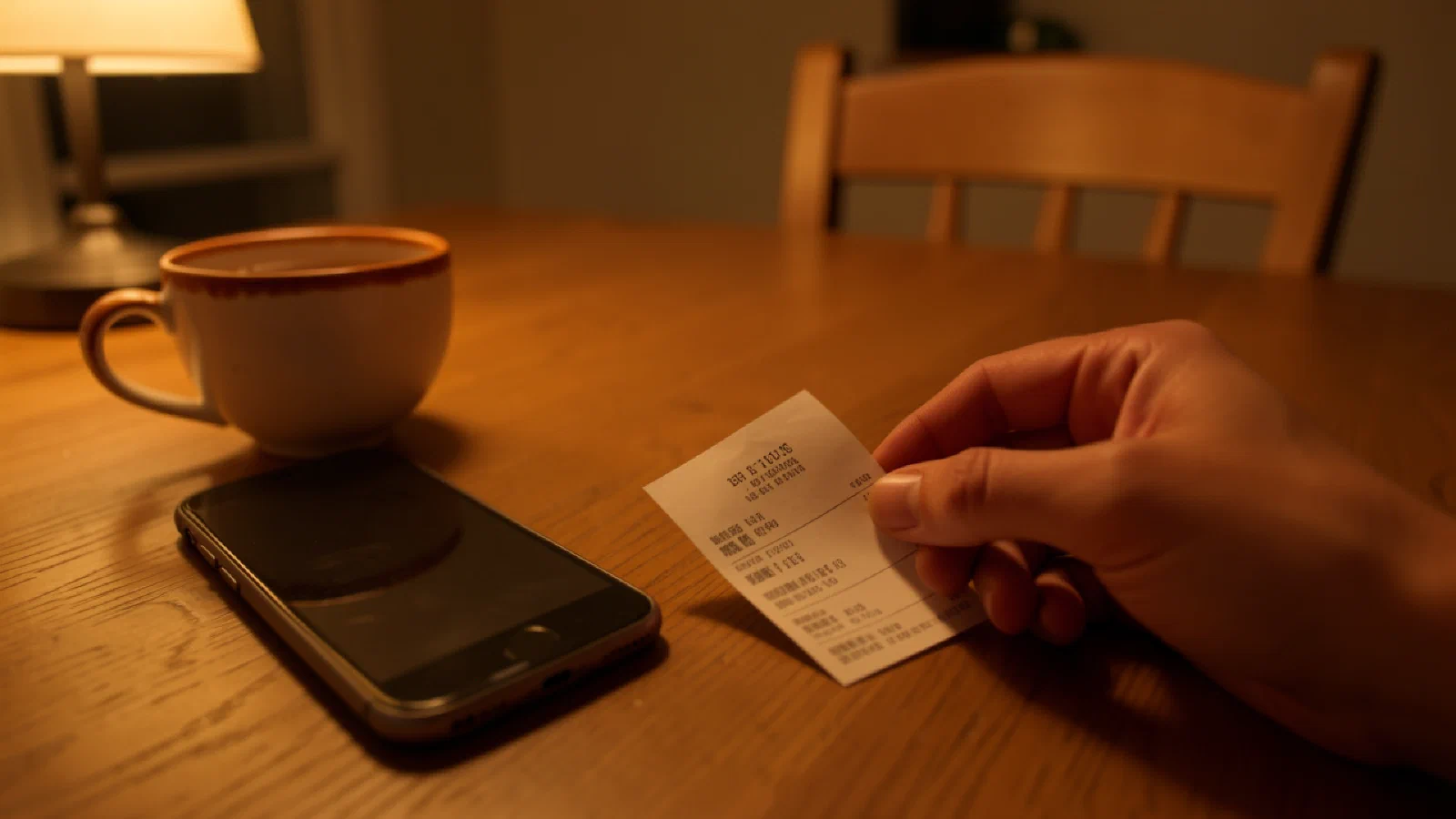
Then she reads every line, the way she does, and finds it. A service fee. A few dollars and a small percentage, charged by the app, for the convenience of not needing Deb. And below it, in the part most people scroll past, a line saying the cabins shown were selected for her, which means that somewhere a system decided what she saw and what she never knew was there.
She got rid of one middleman and met another. The new one is cheaper and faster and she will use it again next year. But it is a middleman, and she caught it, because catching the fine print is the thing she does.
That small noticing, the new middleman standing one layer up where the old one used to be, is the whole of what the last essay, The New Arbitrageurs, was about. It traced the figure Cora just met: when an old arbitrage dissolves, the person who stood between you and what you wanted and charged for the standing, the value does not simply come home to you. Some of it does. Cora keeps the money Deb used to take. But the rest moves up a layer, to whoever built the thing that dissolved Deb, and that party becomes the new arbitrageur, quieter and larger and harder to see, taking a smaller slice from a great many more people than Deb ever could.
I thought, when I first wrote about the new arbitrageurs, that I had noticed a small thing about a few industries. A travel agent here, a stockbroker there, the familiar story of an app cutting out a middleman and quietly becoming one. It looked like a handful of separate disruptions, each its own little drama of a tollgate falling and a platform rising. It was not. It was one shape, repeating, and the repetition turned out to reach almost everywhere I looked.
That is the thread this essay exists to hand you, and the place it leads is a series of its own.
What the Noticing Opened#
The thing worth seeing is not that some businesses are being automated. Most people already feel that, the way Cora felt the cabin booking get easier. The thing worth seeing is what kind of technology is doing it, because the name we use for it shapes what we expect.
We call it automation, and picture machines doing tasks people used to do. But the deeper description is stranger and more useful. AI is an auditing technology before it is anything else. It looks at a business, any business, and it prices the gap that business charges for. The travel agent’s gap was knowing the lakes. The tax preparer’s gap was reading the code. The broker’s gap was standing where you could not reach. Each of these is a spread, a distance between two parties, with a tollgate placed across it, and the audit walks up to every tollgate in the economy and asks what the toll is actually for. Some tolls turn out to cover something real, a genuine value, a true risk borne, a history that cannot be faked. Most do not. Most are Deb’s cut, folded into the price, defensible only as long as nobody could see it.
You have your own Deb, almost certainly more than one. The person or the company or the quiet line on the statement that sits between you and something you want, and charges you for the distance, and has for years. Most of us do not notice them, not because we are careless but because the whole point of a well-placed tollgate is that it stops looking like a choice and starts looking like the way things simply are. Cora noticed hers only because Deb retired and the replacement arrived with a fee printed plainly enough to read. The tolls that have always been a line in the price, with no Deb to retire, are the ones we never learned to see at all. The audit is about to make a great many of them visible at once, which is a strange kind of gift, the sudden ability to see what you have been paying for all along.
When you start looking through that lens, the small noticing stops being small. You begin to see that an enormous share of what the modern economy does is not make things or grow things or heal people. It is stand in the gaps and charge for passage. And a technology that prices every gap at once is not disrupting a few industries. It is reaching the load-bearing structure of how most companies actually make their money.
Some of those tolls were never owed, and the people paying them have been paying for a long time. Cora paid Deb for thirty years for the privilege of not knowing which cabins existed. A farmer halfway around the world paid a middleman for generations for the privilege of not knowing the price of his own crop. When those tolls fall, something good and overdue happens, and it would be a mistake to mourn the tollgate just because someone we know stood in it.
And some of the tolls were holding up a roof. The work a person built a life around, the skill that took years to earn, the standing in a community that came with a profession, these were spreads too, and the audit does not care that one spread was a theft and another was a livelihood. It prices them the same. That is the hard part, and it is the part the small noticing does not prepare you for.
Where the Thread Goes#
I will not lay the whole thing out here, because the whole thing is the series this essay points at, and an invitation that delivers the destination is no longer an invitation.
What I can tell you is the shape of the walk. The series names the kinds of arbitrage, the gaps and the tollgates, and sorts them not by industry but by fate, by what the audit does to each one: the ones that dissolve, the ones that get steeper, the ones that come apart in layers at different speeds, and the rare one that survives everything because it was never an information gap at all, only a history between two particular people that nobody can copy. It walks each kind. It asks what the destruction does to power, and to the people standing in the gaps when they close. And it ends where the honest version of this question always ends, with money: when the spread is closing, where does the value go, and the answer is not the comfortable one, because the value does not come home to all of us evenly. It goes up.
There is a woman in that series, a tax preparer, who experiences her work as a craft and is good at it and does not yet know that her craft is a spread. You may recognize her. She has been in these essays before. The series follows her further than I have followed anyone here, all the way to the far side of the change, and what happens to her is the human version of what happens to Deb, and to the farmer, and to a great many people who were good at standing in a gap.
I wondered, the further I followed the thread, whether I was making more of it than was there, whether one noticing about one travel agent could really be load-bearing for a whole economy. I have come to think it is, and the series is the working out of why.
The Line She Reads#
You do not have to follow the thread. The small thing Cora noticed is enough on its own to change how a person reads a price, and reading the price honestly is most of what any of this asks.
But if you want to know how far the small thing runs, the door is open, and it is the next essay, and the one after that, all the way down. The series is called Arbitrage. It starts where the old structure starts coming apart and it does not look away from where the pieces land.
Cora will go to the cabin in July. The lake will be real, the dock will be good, the loons will do the thing at dusk that she and her husband used to wait up for. None of that was ever the part that could be audited away. And when the next bill comes, for the cabin or the car or the policy or the care, she will do what she has always done. She will read every line, including the one folded into the price, because that line is where the new middleman lives, quiet and large and counting on her to scroll past. Someone should read it. She always has.
How this essay connects to others across The Approximate Mind.
- Spulber, Daniel F. “Market Microstructure and Intermediation.” Journal of Economic Perspectives, vol. 10, no. 3, 1996, pp. 135-152.
- Parker, Geoffrey G., Marshall W. Van Alstyne, and Sangeet Paul Choudary. Platform Revolution. W. W. Norton, 2016.
- The Approximate Mind, TAM-092 (The New Arbitrageurs): the figure of the new middleman, the first bookend.
- The Approximate Mind, TAM-059 (The Dissolved Middle): where the thread was first pulled.
- The Approximate Mind, the Arbitrage series: where the thread leads.