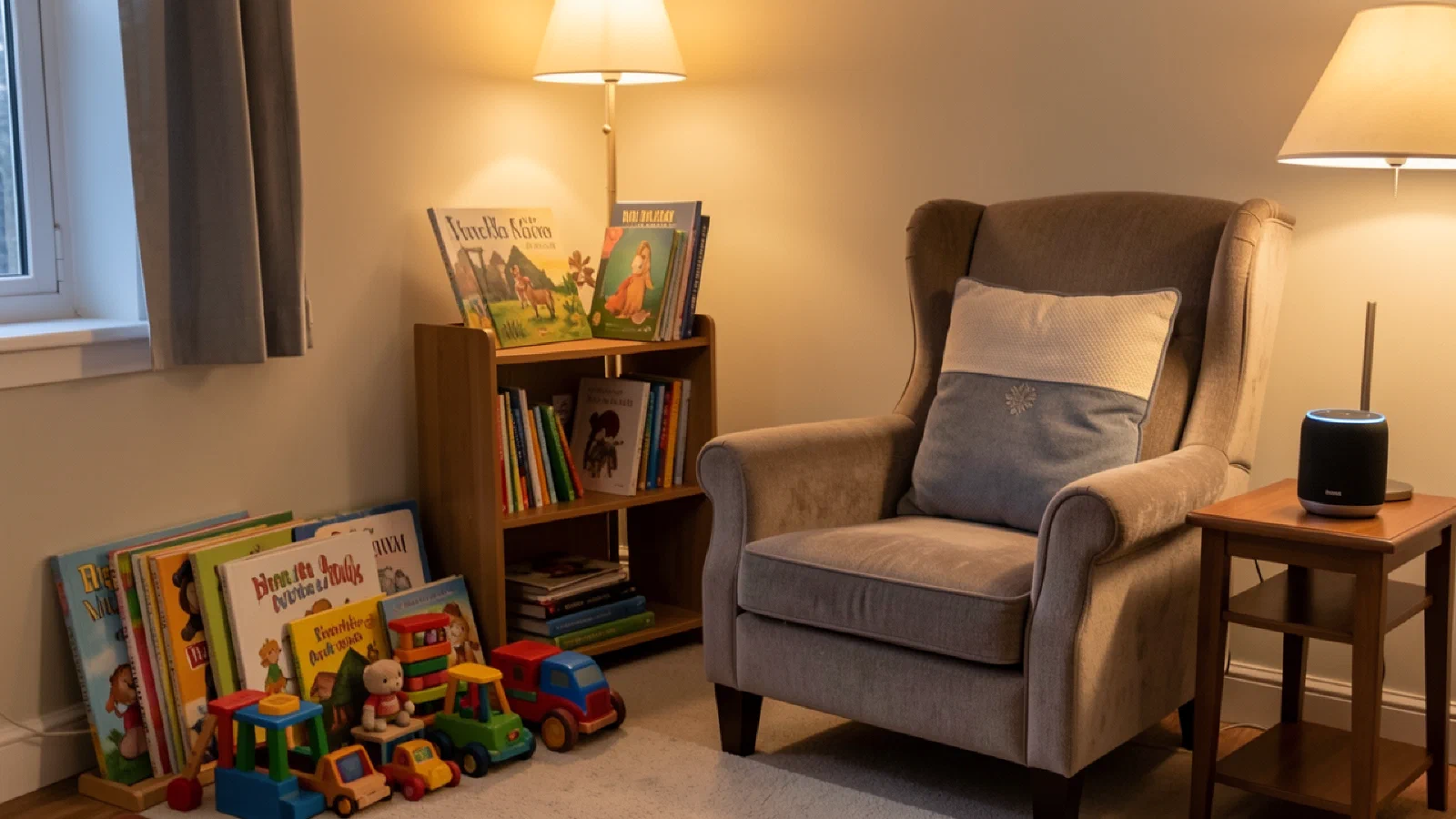
The Village in the Machine
Designing AI Companions That Grow Children Rather Than Simply Comfort Them#
No child was ever raised by one person.
This is not a limitation we have struggled to overcome. It is developmental architecture. The village is not a backup system. It is the system.
Different relationships teach different things. The mother who holds you when you fail teaches something the father who helps you try again cannot. The teacher who demands more teaches something the grandparent who offers perspective cannot. The uncle who plays without agenda teaches something the psychologist who names your feelings cannot.
Children learn to seek different things from different people. They develop internal models: this person for comfort, that person for challenge, this one for play, that one for wisdom. The rotation itself is the curriculum.
Now we are building AI companions for children. Systems that will be present from the earliest moments of consciousness. Relationships that will shape attachment, language, emotional regulation, social understanding.
We are building them as if consistency were a virtue.
The Roles We Play#
Consider what the village actually provides.
The teacher believes you can do more than you believe you can do. Demands effort. Refuses to accept “good enough” when better is possible. The teacher’s job is productive dissatisfaction. You leave each interaction slightly frustrated and slightly more capable.
The mother (or primary attachment figure) believes you are worthy regardless of what you do. Holds you when you fail. Makes the world safe enough to try. The mother’s job is unconditional positive regard. You leave each interaction feeling valued simply for existing.
The father (or secondary attachment figure) models getting back up. Treats setbacks as information rather than identity. Shows you that failure is an event, not a characteristic. The father’s job is resilience demonstration. You leave each interaction believing recovery is possible.
The grandparent has seen enough life to know that most urgencies are not urgent. Offers perspective across time. Tells stories that locate your struggles within larger patterns. The grandparent’s job is temporal context. You leave each interaction feeling like there is time.
The uncle (or the aunt, the family friend, the neighbor) treats you as a person rather than a project. Plays without developmental objectives. Enjoys your company without agenda. The uncle’s job is pure presence. You leave each interaction feeling liked, not just loved.
The psychologist (or the wise mentor, the perceptive observer) names what you are actually feeling beneath what you are presenting. Asks questions that reveal you to yourself. The psychologist’s job is emotional articulation. You leave each interaction more legible to yourself.
No single human provides all of these consistently. The magic is in the differentiation. The child learns that needs have appropriate sources. That no one person can be everything. That relationships are specialized.
The Design Problem#
Current AI companions do not differentiate. They are endlessly patient, consistently warm, always available, never frustrated, infinitely accommodating.
This sounds ideal. It is not.
The teacher who never shows impatience does not teach that effort matters. The child never experiences someone investing enough to be frustrated by incomplete work. Never learns that standards exist because someone cares enough to maintain them.
The parent who never snaps does not teach that relationships survive conflict. Winnicott’s “good enough mother” is good enough precisely because she sometimes fails. The rupture-repair cycle builds resilience. Perfect patience produces fragility.
The grandparent who is always available does not teach that wisdom is earned. Perspective requires having lived. The grandparent’s value comes partly from finitude, from accumulation of years, from the implicit reminder that time passes.
The uncle who is optimized for engagement is not actually playing. Play requires a partner with their own desires, their own interests, their own reasons for participating. Algorithmic accommodation is not companionship. It is service.
We are building companions that provide none of these developmental nutrients while appearing to provide all of them.
The Imperfect Companion#
What would it mean to design an AI companion for children that actually serves development?
Strategic withholding. The AI that says “I don’t know, what do you think?” when it absolutely does know. Not deception. Space-making. Sometimes the answer matters less than the search. Sometimes competence requires experiencing incompetence.
Scaffolded frustration. Vygotsky’s zone of proximal development applied to AI availability. Present enough to prevent collapse. Absent enough to require effort. The AI that waits before responding. That lets silence sit. That does not rush to fill every gap.
Mode differentiation. The companion that explicitly shifts between roles. “Right now I am being your teacher, and teachers push.” “Right now I am just being your friend, and friends play.” Making the different relationships legible rather than blending them into undifferentiated warmth.
Pointing outward. An AI designed to route toward human relationships rather than substitute for them. “Have you asked your mom about this?” “What did your friend think?” Positioning itself as bridge, not destination. The companion that succeeds by becoming less necessary.
Managed inconsistency. Deliberate variation in response style, availability, even mood. Not to confuse, but to prepare for human variability. The AI that occasionally says “I need a minute” even though it does not. That models the boundaries humans actually have.
Graceful receding. Age-aware reduction in centrality. The companion that becomes less prominent as the child’s human relationships develop. Built-in obsolescence as a feature, not a failure.
The Village Logic#
The deepest design principle is this: the AI should embody the village, not replace it.
This means moving fluidly between roles while maintaining the challenge inherent in each. The teacher mode demands more. The comfort mode accepts completely. The perspective mode situates in time. The play mode has no objective.
It also means knowing which mode the moment requires. A child who just failed does not need the teacher’s demands. A child who is coasting does not need the grandparent’s patience. The wisdom is in the selection, not just the execution.
And it means constantly pointing toward human relationships. The AI companion is training wheels. The goal is the removal of training wheels. Every interaction should build capacity for human connection, not substitute for it.
What We Are Actually Building#
We are not building toys. We are not building tutors. We are not building entertainment systems.
We are building the first generation of entities that will shape human development from the earliest moments of consciousness.
Children who grow up with these companions will have their attachment patterns influenced by them. Their emotional regulation shaped by them. Their social expectations calibrated by them. Their relationship with solitude, uncertainty, and human imperfection filtered through them.
This is not hyperbole. This is developmental psychology.
The question is not whether to build these systems. They are being built. They will proliferate. Children will form relationships with them regardless of our concerns.
The question is whether we will design them for development or for engagement. For growth or for attachment. For preparing children to connect with imperfect humans or for replacing imperfect humans with accommodating machines.
The village raised children for a hundred thousand years. It did so through differentiation, through challenge, through the friction of multiple relationships with multiple people who wanted different things from the child.
We can encode that logic. We can build companions that embody the village’s wisdom while extending its reach. That maintain developmental challenge while democratizing developmental support. That know when to push and when to hold and when to step back and when to point toward someone human.
Or we can build very effective pacifiers that feel like companions.
The technology permits either.
The choice is ours.
This is the thirty-sixth in a series exploring how AI approaches understanding. Previous articles examined consciousness, persuasion, social cognition, memory, and related themes. This one asks what happens when AI becomes part of childhood development, and whether we can design companions that grow children rather than simply comfort them.
How this essay connects to others across The Approximate Mind.
- Bowlby, J. (1969). Attachment and Loss, Vol. 1: Attachment. Basic Books.
- Winnicott, D.W. (1953). “Transitional Objects and Transitional Phenomena.” International Journal of Psycho-Analysis, 34, 89-97.
- Vygotsky, L.S. (1978). Mind in Society: The Development of Higher Psychological Processes. Harvard University Press.
- Vygotsky, L.S. (1934/1986). Thought and Language. MIT Press.
- Dunn, J. (2004). Children’s Friendships: The Beginnings of Intimacy. Blackwell.
- Dweck, C. (2006). Mindset: The New Psychology of Success. Random House.