The Paperwork of Being Alive
Maria works two jobs. Days at a fulfillment center, evenings cleaning offices. She has two kids, a car that’s twelve years old, and exactly enough income to almost make it work.
Wednesday at 2pm her phone buzzes. The school needs a signed permission slip for Friday’s field trip. The slip requires proof of health insurance. The insurance card is in an app she can’t access because she changed phones three months ago and the password reset email goes to an old Hotmail account she can’t remember the login for.
She makes a mental note to deal with it tonight.
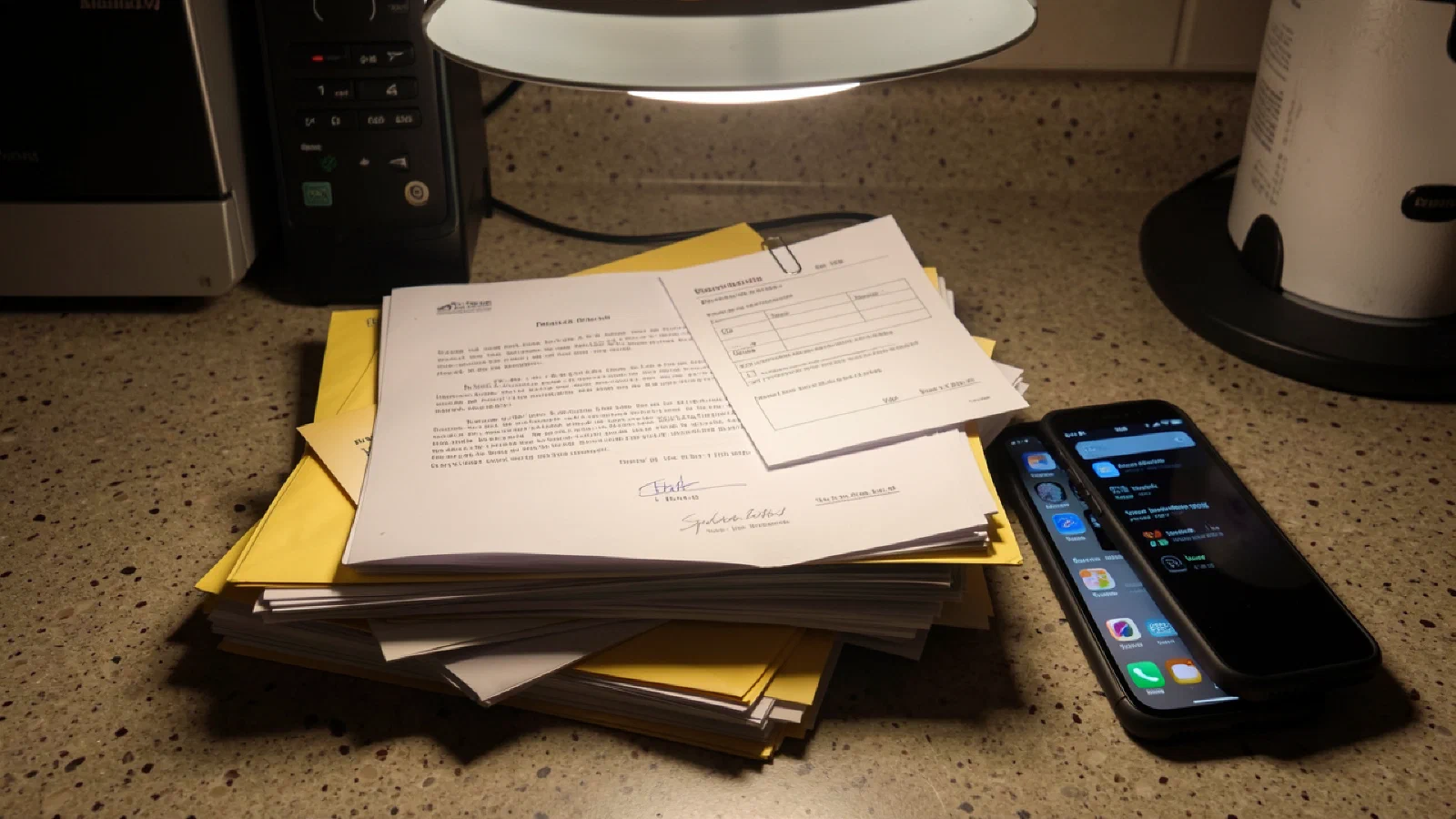
Thursday morning there’s a letter in the mailbox. Medicaid renewal. Due in 11 days. She needs to provide proof of income, proof of residence, and documentation for both kids. The letter is four pages long. She puts it on the kitchen counter.
Thursday afternoon her debit card gets declined at the gas station. The electric bill autodrafted, but she’d forgotten the card expired. Now she has a $35 overdraft fee and the electric company is showing a failed payment. She needs to call them, update the card, and figure out if this affects her payment history.
She does not have time to call anyone. She’s at work.
Friday morning her check engine light comes on. The car needs to pass inspection next month. She has no idea what the light means or what it will cost. She drives to work anyway because there is no other option.
None of these are emergencies yet. All of them will become emergencies. The permission slip will mean her kid misses the field trip. The Medicaid renewal will lapse, and she won’t find out until someone needs a doctor. The electric bill will become a shutoff notice. The car will fail inspection and then she can’t get to work and then everything collapses.
This is not a story about poverty, though poverty makes it worse. This is a story about the administrative load of modern existence.
The Quiet Explosion#
Something changed in the last thirty years and we never named it.
Every system that touches your life now requires its own account, its own password, its own portal, its own verification process. Your bank. Your electric company. Your health insurance, your car insurance, your renters insurance. Your kids’ school, which uses three different apps for communication, grades, and lunch money. Your pharmacy. Your doctor, who uses a different portal than your hospital, which uses a different portal than your specialist.
Each of these systems sends emails. Not useful emails. Notification emails. Confirmation emails. Reminder emails. Emails that look like spam but aren’t, mixed with spam that looks like real mail.
Each system assumes you will log in periodically to check on things. Update your information. Review your statements. Catch errors.
Individually, each system is manageable. Collectively, they require a full-time staff.
The average American household now interacts with somewhere between 50 and 100 administrative systems. That’s not a researched number. Count your own if you don’t believe it. Bank accounts, credit cards, utilities, insurance policies, streaming services, subscriptions, medical providers, pharmacies, schools, employers, government agencies, retirement accounts, loyalty programs, apps that seemed like a good idea once.
Each one occasionally demands attention. A renewal. A verification. A policy change you need to acknowledge. A bill that looks wrong. A setting that reset itself.
The cognitive overhead of simply maintaining modern life has become a second job nobody pays you for.
Who Suffers Most#
Administrative burden is a regressive tax. The less you have, the more paperwork you do.
If you’re wealthy, you have people. An accountant for taxes. A financial advisor for investments. An assistant for scheduling. A property manager for the rental. When a problem arises, you hand it to someone.
If you’re middle class, you do it yourself, but you have some margin. A weekend to catch up on paperwork. Enough savings that a missed bill doesn’t cascade. Enough job security that you can make a phone call during work hours without risking your income.
If you’re poor, you have neither people nor margin. And you have more paperwork than anyone.
Poverty in America is an administrative condition. Every benefit requires an application. Every application requires documentation. Every approval requires renewal. Food stamps, Medicaid, housing assistance, childcare subsidies, utility assistance, school lunch programs. Each one is a separate bureaucracy with separate requirements, separate deadlines, separate portals, separate phone numbers with separate hold times.
The working poor often don’t get benefits they qualify for because they can’t survive the paperwork to obtain them. This is not an accident. It’s called administrative burden, and researchers have documented how it functions as a tool of exclusion, a way to limit access to programs without explicitly denying anyone.
But even setting policy aside, the basic math is brutal. The people with the least time and energy are asked to do the most administrative labor.
The Middle Class Version#
For the middle class, the symptoms are different but the disease is similar.
You’re not filling out benefits applications. You’re managing the complexity of the life you’ve accumulated. The bills that come from everywhere. The insurance policies you probably should have shopped. The retirement account you set up once and never optimized. The FSA money you lose every year because you forgot to submit receipts. The subscriptions you’re still paying for. The warranties you didn’t register. The rebates you didn’t mail.
Your inbox has 4,000 unread messages. You tell yourself you’ll get to them. You won’t.
You’re not failing because you’re lazy or disorganized. You’re failing because the task is impossible. No human being can track this many threads across this many systems with this many interfaces while also working and parenting and maintaining relationships and occasionally sleeping.
And so things slip. The bill you forgot. The renewal you missed. The appointment you should have made six months ago. The tax deduction you didn’t know about. The error on your credit report you never checked.
You’re not running your life. You’re running behind it.
What Help Would Actually Look Like#
This is where people usually suggest apps. A better to-do list. A budgeting tool. A calendar that syncs.
But apps are part of the problem. Each one is another system to manage, another login to remember, another interface to learn. And all of them assume the same thing: that you have the bandwidth to engage with them.
The person drowning in administrative load doesn’t need another tool they have to operate. They need something that operates on their behalf.
Not a search engine that answers when asked. A system that knows the Medicaid renewal is due in 11 days and starts gathering the documentation. That sees the failed electric payment and initiates the fix. That notices the permission slip email and knows where the insurance information is. That tracks the threads you’ve dropped because you had to choose between them and working.
This isn’t assistance. It’s representation. Something that acts in your interest when you can’t act yourself.
That requires knowing you. Not in a superficial way. Knowing which accounts you have. Which deadlines matter. What your normal patterns look like so it can tell when something’s slipping. Knowing enough context that it can take action without asking you to explain everything first.
And it requires being affordable. Not $20 a month. Not even $10 a month. The people who need this most are the people who can’t add another subscription. The cost has to be borne by someone other than the drowning person.
Employers who want functional employees. Health systems who know that administrative failures become medical crises. Government agencies who understand that helping people complete paperwork is cheaper than what happens when they don’t. Schools who see that parents can’t engage when parents are overwhelmed.
The model has to be: someone pays because it’s in their interest to have people held together. The end user just gets helped.
What This Is Not#
This is not about artificial intelligence replacing human judgment. The decisions remain yours. Whether to take that job. Whether to move. How to raise your kids. What matters to you.
This is about the substrate beneath the decisions. The operational overhead that makes decision-making impossible because you’re too buried in logistics to think.
You can’t contemplate your life when you’re drowning in the paperwork of it.
And this is only one dimension of the problem. Administrative burden is the most concrete, the most measurable, the most obviously solvable. But there are others. Emotional bandwidth. Relational maintenance. Health management. The thousand ways modern life demands more than a single human can provide.
Those are different articles.
This one is simpler. Life has become administratively impossible. The systems meant to help require more than people have to give. Something needs to catch what’s falling.
That something could exist. The question is whether we’ll build it for the people who need it or only for the people who can pay.
How this essay connects to others across The Approximate Mind.