The Switch
Manufactured weight, with the off switch in frame
The Muirs are cold on purpose, and they know where the heat is.
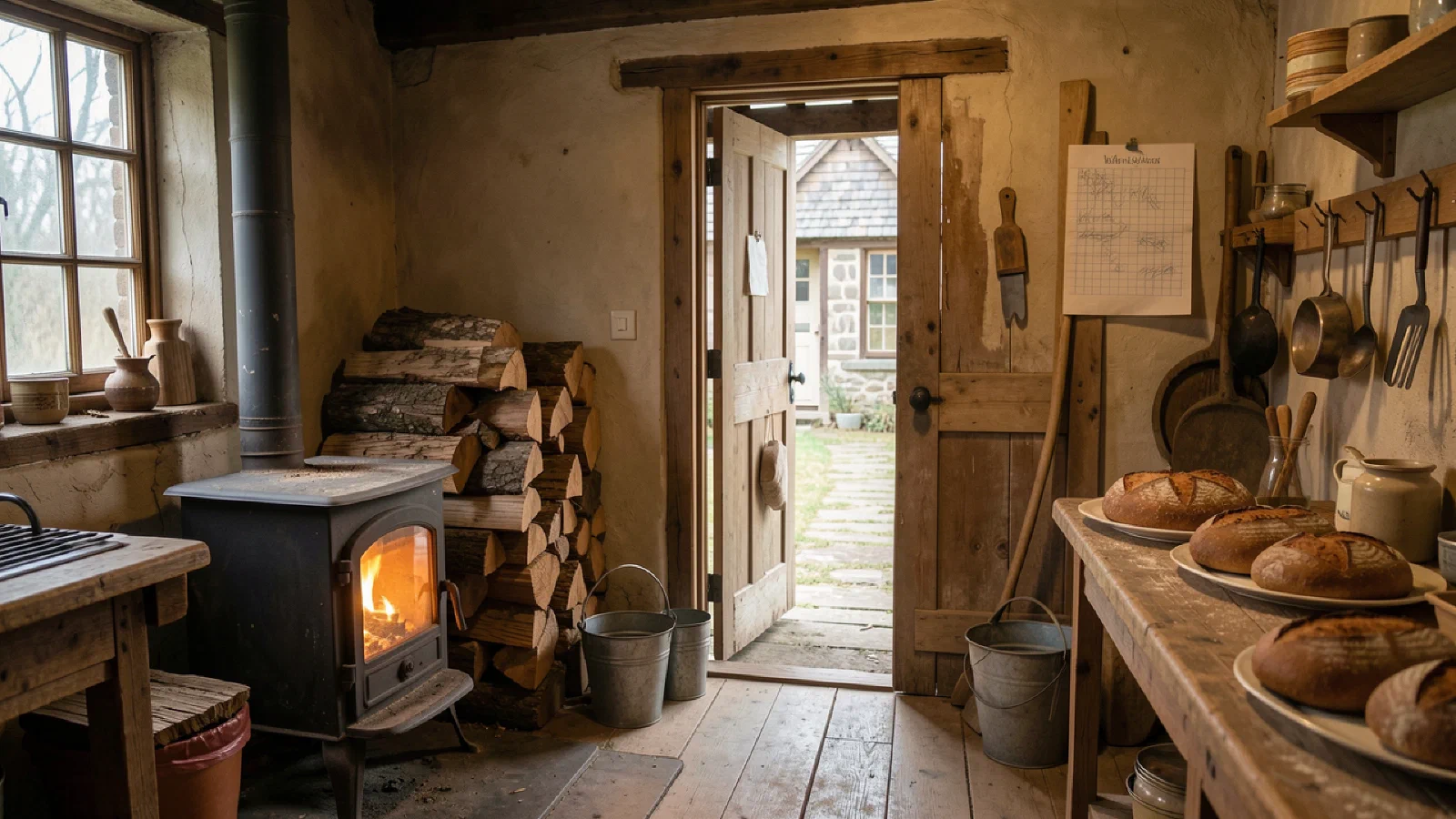
The house sits on eleven acres in the Borders, and it is two houses in one. The front is the house the provision built: warm, watched, self-keeping, with the wall that teaches the children and the cabinet that times the medicine and the door that knows who is at it. The back is the house the Muirs built inside it, by decision: a kitchen with a wood stove and no other heat, a larder they fill from the ground, a workshop with hand tools, a rota on the wall in pencil, and a rule, which is that nothing in the back house is done by anything but a person.
Mirren and Callum made the rule nine years ago, when Iona was five and Fergus was not yet born. They are Natives; they worked the transition, both of them, and came out the other side into the lightness, and did not like it, and decided, after a year of it, to build something that pressed.
So they built a life with weight in it. Deliberately. Out of nothing that had to be there.
The door between the two houses is an ordinary door. It is not locked. It has never been locked. That is the point, and it is also the problem.
The Rota#
The rota is in pencil because it changes and because pencil is what a rota is written in. Wood: Callum, Iona alternating weeks. Larder: Mirren. Hens: Fergus, since he was six. Bread: whoever is up. Water for the back kitchen is carried from the pump in the yard, which they had put in, at some cost, next to a house in which water arrives at any tap at any temperature without anyone thinking about it.
The work is real. The wood has to be cut or the stove is cold. The hens have to be fed or they die. The bread has to be made or there is none, in the back house, though in the front house there is bread in the warmer, portioned, always. The children have carried water in January with their hands cracking, and been told to, and done it, and the family has eaten from the larder through a winter and been proud of it.
Callum will tell you it presses. He says it the way Suki says the bog presses: with the tiredness in his voice to prove it. He comes in from the wood at dusk with his back gone and the axe over his shoulder, and he has been needed, at a particular spot at a particular hour, and no one else would do.
Except that someone else would. The front house would. The front house has never once in nine years been asked to, and it would, and everyone in the back house knows it.
Manufactured weight presses exactly as hard as any other until the carrier remembers who built the press, and the builder can never forget.
The Switch#
The switch is the door.
Callum can put down the axe and walk through it. On the other side the house is warm and the bread is in the warmer and nothing needs him, and he can be back in the front house before the kettle boils, and he has done this, twice, in nine years, both times in a bad winter, and Mirren knows about one of them.
He cannot unknow the door. That is what he has learned, and it is the thing the family’s whole arrangement turns on. Suki’s weight is real because the model has not finished learning, and the day it finishes is not hers to choose. Nkechi’s weight is real because Femi’s losses are real and not hers to lift. Callum’s weight is real for exactly as long as he declines to walk twelve feet. The hardship is honest. The necessity is not, and hardship without necessity is a thing he does not have a word for, and does not use the word theater, though he has heard it.
Mirren has a different account. She says the weight is not the point; the children are. She says a child who has carried water in January knows something a child who has not does not know, and that the knowing is worth the cracked hands, and that whether the parents could have walked through a door is beside the point, because the children could not.
That is true. It is the truest thing said in the house. It is also the problem.
The Children#
Iona is fourteen. She has carried water for eight years and split wood for three, and she is good at it, and she is strong, and she has recently noticed the door.
She has not walked through it. She has stood at it. She said to her mother, one evening, in the back kitchen with the stove going, that she understood why they did this, and that she would do it, and that she wanted it said, once, out loud, that they were choosing it and she was not. Mirren said yes. Mirren said it was true. Iona went and did the hens.
Fergus is nine and feeds the hens and thinks the front house is where guests go. He has not noticed anything. He will.
The parents installed the weight and can uninstall it. The children were born under it, and to them it is not manufactured at all. It is the world, until the day it is a door.
This is the finding the house cannot look at directly, and Mirren and Callum have not said it to each other in nine years. The weight they built for themselves is theater, in the strict sense: a hardship with an exit, performed by people who know where the exit is. The weight they built for the children is real, because the children did not build it and could not, for a while, leave it. The only genuine necessity in the back house is the one they imposed on the two people who did not choose it, and the whole honest pressing of the place rests on that, and the day Iona walks through the door the arrangement becomes what it was, which is two adults keeping cold on purpose.
The Front House#
The front house does its work around all this, unremarked. The provision arrives on the third. The wall teaches the children in the mornings, in the front room, because Mirren and Callum drew the line at their education, and the children cross the door twice a day for it and cross back. The clinic watched Fergus’s chest through a bad February and said nothing to anyone until it needed to and then said it quietly. The land is registered and surveyed and the boundary is maintained by something that walks the fence in the night, and Callum has never once cut a fence post, and does not think about why.
He thinks about the axe. The axe is his object. It was his grandfather’s and it has been re-hafted twice and it is the one thing in the back house that has a history of being needed by people who had no door.
I wonder whether manufactured weight is the only kind that can be honest about itself, because its carriers alone know it is chosen, or whether the knowing is precisely what hollows it, so that the honest counterweight is the one that cannot press. Callum knows he built the press. Nkechi did not build Femi’s stroke. Suki did not build the bog. Something in the difference matters, and the house has organized itself, at some cost, not to say what.
Dusk#
He comes in from the wood. His back is gone. The axe goes on its pegs. The stove is going because Iona lit it, and the bread is out because Mirren made it, and the water is in the crock because Fergus carried it, and the room is warm in the way a room is warm when the warmth was earned, which is a different warmth, and everyone in it can feel the difference, and no one says so.
The door is twelve feet away. The other house is warm too.
They eat. It is good. The tiredness is real, and so is the door, and the family has decided, not out loud, that it will keep the first and not look at the second.
It works. It works as long as nobody checks the hinge. Iona has started checking, and she is fourteen, and there is nothing in the arrangement that accounts for her.
How this essay connects to others across The Approximate Mind.