The Second Cup
Presence, the counterweight nobody designed
Nkechi has found the weight, and it is not hers.
It is Femi’s. He is forty-nine and three years ago a vessel in the left side of his brain closed, and the house caught it before he did, and the clinic had him inside twenty minutes, and he lived, and the right side of him did not come all the way back. He walks with a frame. He speaks, slowly, in a voice that the house has learned to understand better than most people can. He is not in pain. He is, by the measure of what the vessel could have done, lucky, and he knows it, and he says so, and it takes him a while to say.
Nkechi is forty-six. She was a Native, in the sense the word is used now: she grew up inside the transition and worked it, in a planning office, on the things that made the provision reach the streets it had missed. That work ended when the streets were reached. She had, for two years, the lightness Kai’s generation calls by that name, and then the vessel closed, and the lightness went, and she has not missed it once.
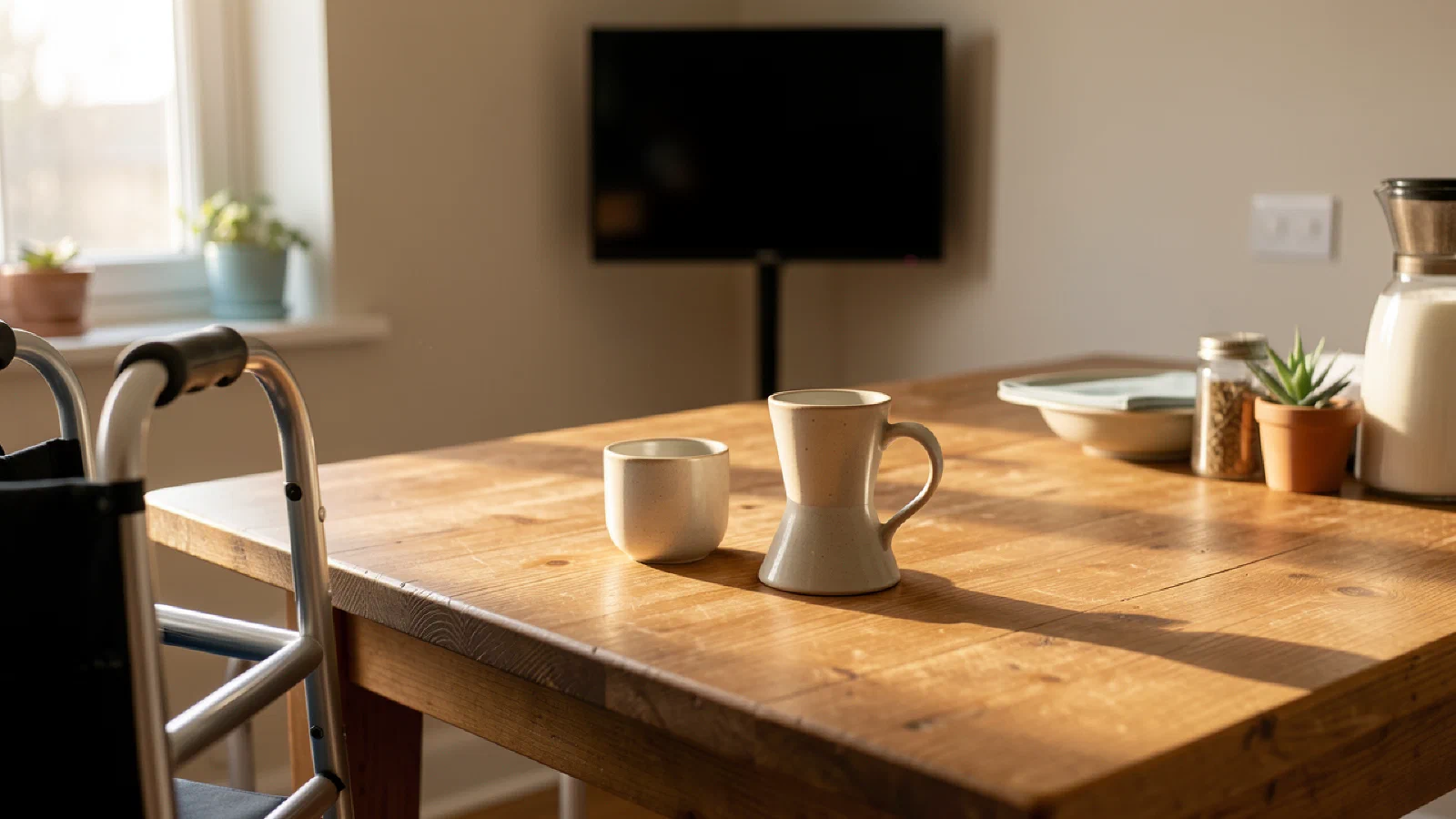
There are two cups on the kitchen table. One is ordinary. The other has a wide base and a handle shaped for a hand that does not close well. The house did not make the second cup. She bought it, in the first month, in a shop, from a person.
What the House Does#
The house does almost everything, and she does not remark on it, and neither does he. The floor of the bathroom warms before he gets to it. The bed adjusts through the night to the side that stiffens. His medication is measured and timed and the cabinet opens at the hour and closes after, and if he forgets, which he does, the house says his name in the voice he prefers, and he goes. His speech is tracked, session by session, against a model of the recovery, and the exercises come to him on the wall at ten and at three, and they are good exercises, and he is a little better every month than the month before, and the model says so, and it is right.
If she were not here, he would be cared for. That is the plain fact and she has looked at it directly. The house would do all of the above. A person would come from the service, a good person, trained, twice a day, and would do the parts that need hands, and he would be clean and fed and safe and exercised and a little better every month.
She is not needed for any of the care.
The one counterweight nobody designed is the one nothing was built to remove, and it is not care. It is presence.
She is the person who is there when he gets the word wrong and laughs at himself and looks up to see if someone laughed with him. She is the one across the table when the cup with the wide base tips and he saves it and is pleased. She is the one who was there before, and remembers him fast, and does not mind that he is slow, and he knows both of those things every hour, and the house cannot know either.
That is the weight. Not the lifting, which the frame does. Not the schedule, which the house keeps. Being the other person in the room, for a long time, on purpose.
The Ledger#
Her mother nursed her father through a long illness in the old world, with no house to warm the floor and no service to send hands, and it broke her body and shortened her life, and nobody in the family calls that anything but what it was.
Nkechi has none of that cost. She sleeps. Her back is fine. The house does the lifting and the timing and the watching, and what is left to her is the part her mother would have given anything to have left to her alone: the sitting with him.
Her daughter, Ada, is twenty and floats. Ada comes on Sundays and is kind to her father and is, Nkechi thinks, a little afraid of the house, of how much of him it holds, and Ada does not have the question yet or has it and has not said, and Nkechi will not ask, because she remembers what it was to be twenty.
Three generations. Her mother carried the whole of it and was crushed. Nkechi carries the one part that cannot be lifted off and is, most days, upright. Ada will carry, if she carries anything, something Nkechi cannot picture, because by then the house will hold more of the person than it holds now, and what is left to sit with may be smaller.
The Cups#
They sit at the table in the late afternoon. The wall has finished with the three o’clock exercises and gone quiet. The light does what the light does at that hour in that room.
He is telling her something about the neighbor’s cat, and it is taking a while, and she is not helping, because he has asked her not to help, and she has learned that not helping is most of the job.
She holds the ordinary cup. He holds the wide one. He gets to the end of the cat and is pleased, and she is pleased, and the tea is cold, and neither of them minds.
This is where she has found the weight. Not in any act. In a slow story about a cat that she could have finished for him in four seconds and did not.
Weight through another person holds because the other person is real and the pressing is theirs. It answers the question by lending it, and a loan is not a gift.
The Loan#
She knows the terms of the loan. She is not a fool and the house is not coy. The model of his recovery has a shape, and the shape flattens, and past the flattening is a long plateau, and past the plateau is a decline that the house will manage as kindly as it manages everything, and then the second cup will be on the shelf and the weight will be off her, and she will have the lightness back, and she will be sixty, or seventy, and she will be Ilona.
The Question#
She has the question. She would not have said so. It came in the second year, on an evening like this one, after a story like this one, when he had gone to lie down and she was alone at the table with the two cups.
Not: what am I for. She knows what she is for, at the moment; she is for the chair across from his. The question was underneath that. What is this, this being for someone, when the being is borrowed against his losses and will be returned when the losses are complete. What is she, apart from the chair. She could not find anything, that evening, and she has not looked hard since, because looking hard would mean looking at the day the chair is empty, and she has decided that day can wait for her.
I wonder whether weight carried for another person is the only counterweight that holds, because it is the only one that is not about the carrier at all, or whether that is exactly why it cannot answer the question, because the question is about the carrier and this weight refuses to be. Suki’s weight is hers and is borrowed from a machine that is learning. Nkechi’s is Femi’s and is borrowed from a body that is not. She would not trade. That is not the same as saying it answers anything.
He calls from the other room, slowly, her name. The house has already told her what he wants. She goes anyway, because being told is not being asked.
The two cups stay on the table. In a while she will wash them, by hand, which the house would do, and dry them, which the house would do, and put them side by side on the shelf, which the house would not think to do.
It holds. She will say that to anyone who asks. It holds, and it is his, and she is only holding it for him.
How this essay connects to others across The Approximate Mind.