The First Question
The generation that inherited everything the Natives built and is the first to ask what it is for
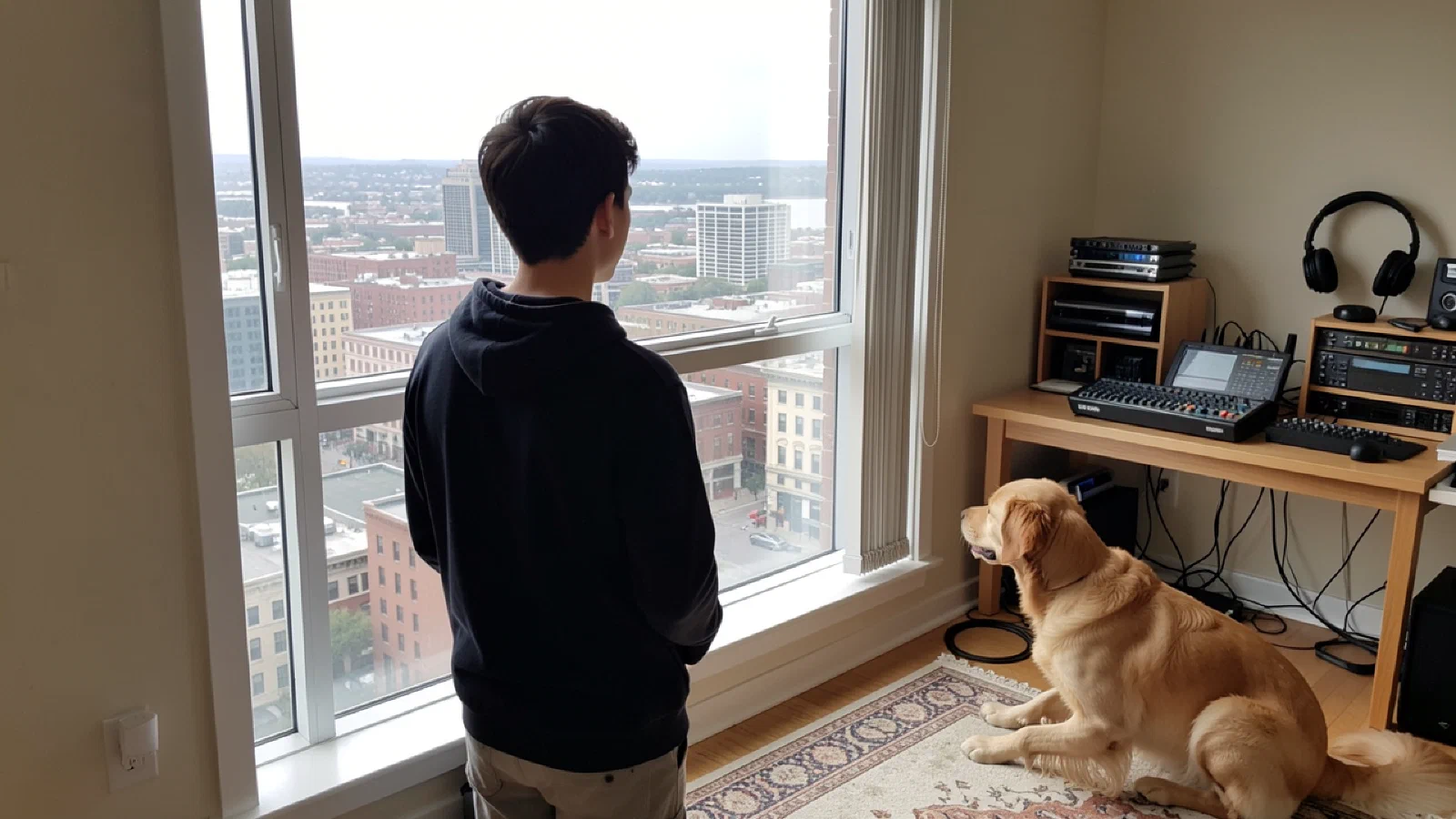
Kai has never experienced a problem the system did not solve.
This is not a complaint. It is not a boast. It is the water he swims in, as unremarkable to him as gravity. The infrastructure works. The companion works. The governance works. The healthcare system identified a cardiac irregularity when he was nine and corrected it before it produced a single symptom. His education was shaped around his cognitive profile with a specificity his grandparents would have found unsettling and his parents found reassuring and Kai finds ordinary.
He is twenty-two. He has a dog named after a river he has never visited. He has friends, a small apartment in a building that manages its own energy and maintenance, a creative practice that involves generating three-dimensional sound environments that other people walk through. He is, by every metric available, thriving.
He does not feel like he is thriving. He feels like he is floating. He would not use that word because he has never experienced the alternative, and you cannot name the absence of something you have never had.
The Inheritance#
The Natives were Kai’s parents’ generation. They grew up inside the transition. They watched the old economy restructure, the old professions dissolve, the old institutions transform. They were the generation that optimized, that built UBINT, that designed the companion layer, that negotiated the social contract between the relevant and the provided-for. They had a project. The project was enormous and exhausting and meaningful.
Kai inherited the result. Not the project.
This is the distinction that separates The Humans from every generation before them. The Natives had purpose thrust upon them by the transition. The generation before the Natives had purpose embedded in the old economy. Every generation before that had purpose imposed by scarcity, by necessity, by the simple fact that survival required effort.
Kai does not need to survive. Survival is infrastructure. He does not need to build. The building is done. He does not need to optimize. The optimization runs itself, adjusted at the margins by the small number of humans who still do that work. He does not need to transition, because the transition is over.
He needs to answer a question that no generation in human history has faced without the pressure of material necessity: what is a human life for?
Every previous generation had this question answered for them by circumstance. Kai is the first to face it with nothing but the question itself.
What the Companion Cannot Do#
The companion has tried.
It has suggested activities, communities, creative paths, physical challenges, learning trajectories, volunteer opportunities, travel, mentorship, spiritual practices. Each suggestion is well-calibrated to Kai’s personality profile. Each one is reasonable. Several have been enjoyable. None has provided the thing Kai is looking for, because the thing Kai is looking for is not an activity. It is a reason for the activity.
The companion can optimize for engagement, for satisfaction, for flow states, for social connection, for the neurochemical markers associated with meaning. It can produce a life that looks, from the outside and by every available measurement, like a meaningful life.
It cannot produce the meaning. Meaning is not a state to be optimized for. It is a byproduct of caring about something enough to suffer for it, and the optimized life has been specifically designed to minimise suffering.
Kai’s grandfather cared about his patients. He was a doctor, one of the last cohort trained before AI diagnostic systems made the clinical role largely ceremonial. He worked long hours. He made mistakes. He carried the weight of decisions that affected whether people lived or died. He was often exhausted, sometimes wrong, occasionally devastated by outcomes he could not control.
He never once asked what his life was for.
The question did not arise because the answer was embedded in the weight. The weight was the answer. Not happiness. Not satisfaction. Not optimization. Weight. The feeling of mattering to something that mattered, and the cost of that mattering being inseparable from its value.
The Lightness#
Kai’s generation has a word for their condition, or rather, they have borrowed one. They call it lightness. Not as a positive. Not the lightness of freedom or relief. The lightness of a life that does not press against anything, that leaves no impression, that could be removed from the world without the world noticing.
Lightness is not depression. Kai is not depressed. The companion monitors for depression with a sensitivity that catches subclinical shifts weeks before they would become symptoms. Kai is not anxious, not lonely in the clinical sense, not suffering from any condition the system can identify and address.
He is light. His life floats above the surface of the world like a leaf on water. It moves. It is carried. It does not sink in.
Some of Kai’s friends have found weight. A woman named Suki has devoted herself to ecological restoration, working in damaged landscapes where the repair requires human judgment that AI systems have not yet mastered. The work is hard, physical, uncertain. She comes home exhausted. She has found the weight.
A man named Deshi has become one of the humans who sits on a governance board, reviewing the parameters that shape UBINT’s operation in Southeast Asia. The work is consequential. Decisions he makes affect millions of lives. He has found the weight, though he worries sometimes that the weight is borrowed, that the system could function without him and his presence on the board is a structural courtesy extended to the species that built the system in the first place.
Most of Kai’s generation has not found weight. Most of them float. The floating is comfortable. The system was designed to make it comfortable. No one designed for the possibility that comfort without weight would become its own kind of problem.
The Question#
On a Thursday afternoon, Kai is walking his dog along a canal that was restored thirty years ago as part of the urban ecology initiative. The water is clean. The banks are planted with native species. Dragonflies hover over the surface. The dog is interested in a smell near a bench.
Kai sits on the bench and has a thought he has never had before.
The thought is: what if the question is the point?
Not: what is my life for? Not: how do I find meaning? Not: what should I do? Those are the questions the system is designed to help with, and the system’s help is precisely what makes them unanswerable, because every answer the system provides is an optimization, and optimization is what created the lightness in the first place.
The question is something else. Something prior to any answer the system could generate.
What am I?
Not what am I good at. Not what do I enjoy. Not what is my role. What am I? What is this thing, this human thing, this being alive and knowing you are alive and knowing you will die and caring about the interval? What is it for? Not in the functional sense. In the sense that the question itself implies: what kind of thing asks what it is for?
I wonder whether Kai’s generation will be the first to answer this honestly, or whether the question is unanswerable by design, a feature of consciousness rather than a problem to be solved.
The question “what is a human life for?” may be the most human thing about us. Not the answer. The question. The fact that we ask it. The fact that asking it is not a sign of failure but the signature of a species that will not stop reaching toward something it cannot name.
What the Humans Discover#
Kai does not have an epiphany on the bench. The dog finishes investigating the smell. They walk home. He makes dinner, not from the system’s suggestion but from what he finds in the kitchen, which is not much. The dinner is mediocre. He eats it anyway.
But the question stays.
Over the following weeks, he returns to it the way you return to a loose tooth. What am I? The question is not productive. It does not lead to a plan. It does not generate an optimizable outcome. It sits in him like a stone in a shoe, present, irritating, impossible to ignore.
He mentions it to Suki. She nods. She has the question too, underneath the ecological work, underneath the weight she has found. The weight answers the question temporarily, the way a meal answers hunger temporarily. The question returns.
He mentions it to Deshi. Deshi is quiet for a long time. Then he says: “I think the question is what we’re for.”
Not the answer. The question. The species that asks what it is. The species that cannot stop asking. The species that builds systems capable of answering every other question and still sits on a bench by a canal on a Thursday afternoon, unsatisfied, because the one question that matters is the one no system can answer, because the question is not seeking information. It is seeking itself.
Kai walks home. The dog pulls toward a squirrel. The evening is ordinary. The question continues.
This is what the Humans discover. Not a purpose. Not an answer. Something older and stranger: they are the question. The asking is the purpose. The reaching toward something they cannot name is the thing that makes them human, and the thing that no optimization can provide, and the thing that makes every optimization worth building.
The answer to “what is a human life for?” is: asking what a human life is for.
It sounds circular. It is. So is breathing.
How this essay connects to others across The Approximate Mind.