The Weight of Each Other
How Pebbles Hold Without Moving
Rosa drives a silver Corolla with 187,000 miles on it. She has been a home health aide for nine years, and in that time she has cared for, by her count, somewhere around forty people. She does not keep a precise number. She keeps the names.
On Mondays and Wednesdays she sees Mrs. Chen, who had a stroke eighteen months ago and is relearning how to button her own shirts. On Tuesdays and Thursdays she sees Mr. Okafor, who has early Parkinson’s and whose tremor is worse in the mornings than his neurologist thinks it is, because Mr. Okafor steadies his hands before appointments. On Fridays she sees Margaret, who has been forgetting names since February in a way that her daughter Elena notices and her physician does not, because the physician sees Margaret for fifteen minutes every three months and Rosa sees her for four hours every week.
Rosa carries something between these households that no chart captures. Not data. Not information. Something closer to pattern recognition built from proximity and repetition. She noticed that Mrs. Chen’s agitation on Tuesday afternoons looked familiar, and it took her two weeks to place it: Mr. Okafor had the same pattern six months ago, and it turned out to be a medication interaction with a new blood pressure drug. Rosa mentioned it to Mrs. Chen’s daughter. The daughter mentioned it to the physician. The physician changed the medication. The agitation stopped.
Rosa did not share Mr. Okafor’s medical records with Mrs. Chen’s family. She did not violate anyone’s privacy. She carried a structural insight, a pattern stripped of its identifying details, from one context to another. The insight was: afternoon agitation that starts two weeks after a medication change sometimes means the medication is the problem, not the disease.
Rosa is a network effect made of one person.
The question is whether the pebble architecture can do what Rosa does. And the harder question beneath it: can it do what Rosa does without becoming the thing Rosa is not, a platform that treats people’s intimate behavioral data as a resource to be harvested?
The Wrong Network Effect#
The phrase “network effects” has a specific meaning in technology, and the precision matters here.
A platform network effect works like this: more users generate more data, which trains a better model, which attracts more users, which generates more data. Facebook becomes more valuable as more people join. Uber becomes more reliable as more drivers sign up. Alexa becomes smarter as more households talk to it. The value accrues to the platform. The data flows to the center. The user is, in the most literal sense, the product.
This is structurally incompatible with intimate models. The entire value of a pebble is its specificity to one person, held locally, compounding over time. The moment Margaret’s behavioral data flows to a central server to train a general model, it stops being about Margaret and starts being about people statistically similar to Margaret. The “I AM NOT AVERAGE” principle is not just a philosophical stance here. It is an architectural requirement. The data must stay put, or the pebble stops being a pebble and becomes a data point in someone else’s boulder.
So the investor’s question is fair: if the data doesn’t move, where are the network effects? If each pebble is an island, trained on one person, held on one device, what gets better as more people use the system?
What Moves Instead#
What moves is not data but structure.
Margaret’s drift model, after three months, has learned what “declining morning routine” looks like for Margaret specifically. Her wake time has shifted later by twelve minutes. The interval between waking and making coffee has lengthened. She has stopped watering the porch plants on three of the last ten mornings, which is a break in a pattern she has maintained since her husband planted them.
None of this information can leave Margaret’s device. It is hers. But the structural pattern, the insight that when a morning routine contracts by more than a certain percentage over a certain number of weeks, and the contraction accelerates in the final weeks, this correlates with clinically meaningful cognitive change, that structural insight can be extracted without any identifying information attached.
This is what federated learning promises, not as a technical protocol but as a philosophical proposition: learning from many without knowing any.
The drift model deployed on Margaret’s device is version one. It knows what it has observed about Margaret. The structural patterns distilled across thousands of similar observations, anonymized and aggregated, make version two better at its job on the next person’s device. Not better at knowing that person. Better at knowing what to look for.
The individual stays private. The architecture gets smarter. These are not in tension. They are the same operation.
This is a real network effect, but it is a different species from the platform kind. It does not get better because more data flows to the center. It gets better because more contexts teach the architecture what context-specific attention looks like. The difference is the difference between a surveillance camera that records everyone and a medical school that trains doctors. The camera accumulates footage. The school accumulates judgment. The footage requires access to individuals. The judgment does not.
The Care Network#
The pebble architecture becomes genuinely powerful not when one person uses it but when the people around that person use it too.
Margaret has Elena, her daughter, who lives forty minutes away and visits twice a week. Margaret has Rosa, who comes on Fridays. Margaret has a pharmacy that fills her prescriptions. Margaret has a physician she sees quarterly. Margaret has a neighbor, Dorothy, who used to come for coffee on Saturdays but has come less frequently since January, which is itself a signal that no one has noticed yet.
In the current world, each of these relationships operates in isolation. Elena knows what she observes during visits. Rosa knows what she observes during shifts. The pharmacy knows what it dispenses. The physician knows what the chart says. Dorothy knows that Margaret seemed a little off the last time they talked but didn’t think it was her place to say anything.
Now give each node in this network a pebble calibrated to its role. Elena’s pebble tracks what she reports after visits and correlates it with what the sensing layer observes between visits. Rosa’s pebble gives her a behavioral context layer: here is what has changed since your last shift, here is what to watch for today. The pharmacy’s pebble surfaces an adherence signal: Margaret has been two days late refilling her blood pressure medication for the last three months, a pattern that was one day late six months ago. The physician’s pebble compiles a drift summary before each appointment: here is what fifteen-minute exams cannot see.
None of these pebbles share Margaret’s data with each other. Each one receives only what it needs for its role. Elena does not see the pharmacy’s adherence data. The pharmacy does not see Rosa’s behavioral observations. The physician sees a summary, not the raw signals.
But the pebbles are aware of each other’s existence, and they are calibrated to work together. The escalation model knows that a concerning drift signal should reach Rosa first, because Rosa is the person who sees Margaret most frequently and can assess in person. It knows that Elena should be contacted if Rosa confirms the concern, and that the physician should be notified if the pattern persists across two weekly cycles. It knows that Dorothy’s declining visits are a social signal that belongs in Elena’s awareness, not the physician’s.
The network effect is not “more users make the model better.” It is “more nodes in the care network make the pebbles more useful to each other.”
This is Rosa’s insight, architecturalized. Rosa carries patterns between households. The care network carries coordination between roles. Neither requires anyone’s private data to leave its source. Both require a system that understands what each node needs to know and, equally important, what each node does not need to know.
The Temporal Moat#
There is a question that technology investors ask that sounds like a question about competition but is really a question about time. The question is: what stops a well-funded competitor from building this?
The answer is: nothing, eventually. The technology is not secret. Small language models, federated learning, edge computing, behavioral signal processing: these are available or nearly so. Anyone with sufficient resources can build version one of any layer.
What a competitor cannot build on day one is the three months of behavioral observation that make Margaret’s drift model meaningful. The eight months of pattern accumulation that let James’s model detect the absence of alcohol searches. The six months of care network calibration that teach the escalation model when to call Rosa and when to call Elena and when to call the physician.
Time is the moat. Not data. Not technology. Not patents. Time.
A frontier model company could, in theory, deploy a competing system tomorrow. It would have every technical capability. It would know nothing about Margaret. It would not know that she waters the plants in a specific order, starting with the one her husband planted. It would not know that her voice drops when she is confused but rises when she is pretending not to be. It would not know that Friday mornings are better than Friday afternoons, or that Rosa’s presence changes Margaret’s baseline in ways that make Friday observations structurally different from Monday observations.
All of this is learned through presence. Presence takes time. Time cannot be compressed by adding parameters.
This is a moat that compounds. Every day the system runs, the pebbles learn more about Margaret. Every day a competitor has not been present, they are further behind. The gap does not close when the competitor’s model gets smarter, because the gap is not about intelligence. It is about duration.
Where This Strains#
The temporal moat is real, but it is not invulnerable, and honesty requires naming where it strains.
Federated learning is imperfect. Structural patterns stripped of identifying information can still, in small populations, leak identity. If there are only four people in a rural county using the system, a pattern labeled “anonymous user, age 68, cognitive decline” may not be anonymous at all. The privacy guarantee weakens as the population shrinks, which is exactly the population where the technology is most needed.
The care network model assumes coordination that many families do not have. Margaret has Elena and Rosa and a pharmacy and a physician. Many aging adults have none of these, or have them inconsistently, or have family members who disagree about care, or have no one at all. A single-node system, one person with one device and no care network, still benefits from the sensing and drift layers. But the network effects described here require a network, and many of the people who most need this architecture are the people least likely to have one.
And the temporal moat cuts in both directions. If the system fails early, if it misses a signal, if it escalates at the wrong time, if it surfaces a concern that turns out to be nothing, trust is damaged. Trust with a vulnerable person is not like trust with a consumer choosing between streaming services. It is closer to trust with a physician or a caretaker. Once broken, it may not return. The same temporal depth that makes the system valuable after six months makes the first six months precarious. The pebbles have to earn their place before they can hold it.
I wonder sometimes whether the right analogy for this architecture is not a technology platform at all, but something closer to a neighborhood. A neighborhood has network effects: more engaged residents make the block safer, cleaner, more connected. But the network effects are not extractive. No one’s participation makes a distant corporation richer. The value stays local. And the moat is the same: you cannot build a neighborhood overnight. You can only build houses. The neighborhood emerges from the accumulation of presence over time.
That may be the most honest description of what the pebble architecture offers. Not a platform. Not a product. A neighborhood of small, attentive, purpose-built presences that learn their roles by staying in place.
What Rosa Knows#
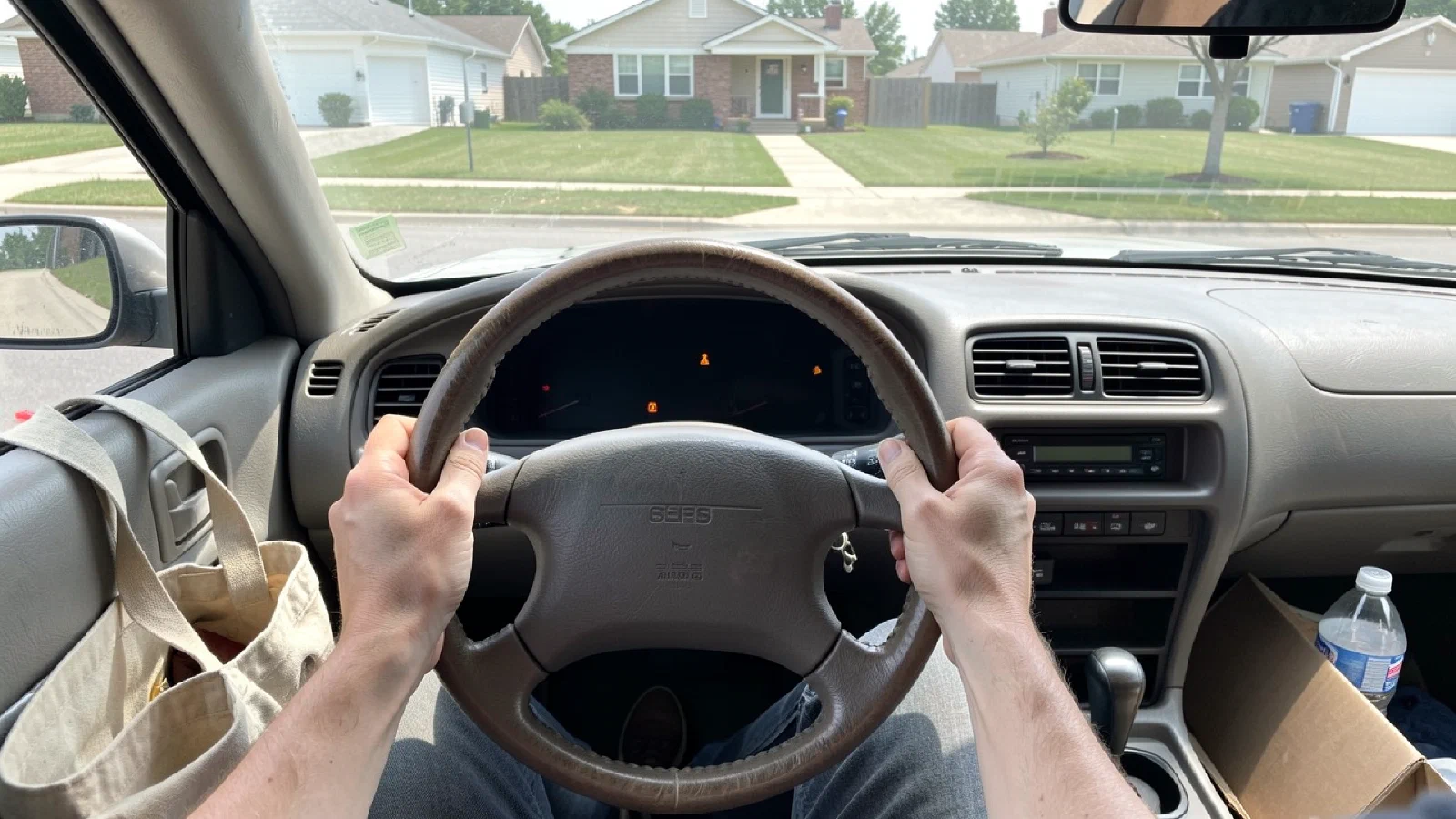
Rosa is driving between Mrs. Chen’s house and Mr. Okafor’s apartment. It is Tuesday. The Corolla needs an oil change and the check engine light has been on for two weeks and she will deal with it when she deals with it.
She is thinking about Mrs. Chen’s buttons. Last week, Mrs. Chen buttoned her shirt in four minutes. This week it took six. That might mean nothing. It might mean the new occupational therapy exercises are not working. It might mean Mrs. Chen slept badly. Rosa will watch for it next week. If it happens again, she will mention it to Mrs. Chen’s daughter, who will mention it to the therapist, who will adjust the exercises or not.
This is what Rosa carries: the accumulated weight of paying attention to specific people over specific time. Not general knowledge. Not statistical insight. The particular knowledge that Mrs. Chen’s buttons took six minutes today and four minutes last week and that this might matter.
No system will replace Rosa. The hours she spends, the hands she uses to help with buttons, the conversation she makes while helping, the fact that she is a person and Mrs. Chen knows it and the knowing matters: these are not replicable by any architecture, intimate or otherwise.
But Rosa cannot be everywhere. There are not enough Rosas. There have never been enough Rosas, and the shortage is getting worse. The pebble architecture is not a replacement for Rosa. It is an attempt to hold some of what Rosa holds, in the hours when Rosa is not there, so that when she arrives on Friday, she is not starting from scratch.
The pebbles do not replace the person. They hold the space until the person arrives.
Rosa will retire someday. When she does, what she knows about Mrs. Chen and Mr. Okafor and Margaret will leave with her, the way it always has, the way it has always been a quiet catastrophe for the people she cared for. The pebbles cannot carry Rosa’s warmth. They cannot carry her judgment. But they can carry the pattern she noticed about Tuesday afternoons and blood pressure medications, so that the next aide, the one who has never met Mrs. Chen, does not have to learn it from scratch.
That is the network effect. Not data flowing to a server. Knowledge staying in place, accumulating, holding the weight of each other, so that care does not reset every time a person walks out the door.
References
Federated Learning and Privacy-Preserving AI
McMahan, Brendan, and Daniel Ramage. “Federated Learning: Collaborative Machine Learning without Centralized Training Data.” Google AI Blog, 2017.
Li, Tian, et al. “Federated Learning: Challenges, Methods, and Future Directions.” IEEE Signal Processing Magazine, vol. 37, no. 3, 2020, pp. 50-60.
Kairouz, Peter, et al. “Advances and Open Problems in Federated Learning.” Foundations and Trends in Machine Learning, vol. 14, no. 1-2, 2021, pp. 1-210.
Network Effects and Platform Economics
Parker, Geoffrey, Marshall Van Alstyne, and Sangeet Paul Choudary. Platform Revolution: How Networked Markets Are Transforming the Economy. W.W. Norton, 2016.
Evans, David S., and Richard Schmalensee. Matchmakers: The New Economics of Multisided Platforms. Harvard Business Review Press, 2016.
Home Health Care and Caregiver Knowledge
Stacey, Clare L. The Caring Self: The Work Experiences of Home Care Aides. Cornell University Press, 2011.
Buch, Elana D. Inequalities of Aging: Paradoxes of Independence in American Home Care. NYU Press, 2018.
Behavioral Monitoring and Cognitive Decline
Kaye, Jeffrey A., et al. “Intelligent Systems for Assessing Aging Changes.” Annals of Biomedical Engineering, vol. 39, no. 6, 2011, pp. 1629-1637.
Dodge, Hiroko H., et al. “Web-Enabled Conversational Interactions as a Method to Improve Cognitive Functions.” Alzheimer’s & Dementia: Translational Research & Clinical Interventions, vol. 1, no. 1, 2015, pp. 1-12.
Care Coordination and Health Information Exchange
Naylor, Mary D., et al. “Transitional Care of Older Adults Hospitalized with Heart Failure.” Journal of the American Geriatrics Society, vol. 52, no. 5, 2004, pp. 675-684.
Bodenheimer, Thomas. “Coordinating Care: A Perilous Journey through the Health Care System.” New England Journal of Medicine, vol. 358, no. 10, 2008, pp. 1064-1071.
How this essay connects to others across The Approximate Mind.
- McMahan, Brendan, and Daniel Ramage. “Federated Learning: Collaborative Machine Learning without Centralized Training Data.” Google AI Blog, 2017.
- Li, Tian, et al. “Federated Learning: Challenges, Methods, and Future Directions.” IEEE Signal Processing Magazine, vol. 37, no. 3, 2020, pp. 50-60.
- Kairouz, Peter, et al. “Advances and Open Problems in Federated Learning.” Foundations and Trends in Machine Learning, vol. 14, no. 1-2, 2021, pp. 1-210.
- Parker, Geoffrey, Marshall Van Alstyne, and Sangeet Paul Choudary. Platform Revolution: How Networked Markets Are Transforming the Economy. W.W. Norton, 2016.
- Evans, David S., and Richard Schmalensee. Matchmakers: The New Economics of Multisided Platforms. Harvard Business Review Press, 2016.
- Stacey, Clare L. The Caring Self: The Work Experiences of Home Care Aides. Cornell University Press, 2011.
- Buch, Elana D. Inequalities of Aging: Paradoxes of Independence in American Home Care. NYU Press, 2018.
- Kaye, Jeffrey A., et al. “Intelligent Systems for Assessing Aging Changes.” Annals of Biomedical Engineering, vol. 39, no. 6, 2011, pp. 1629-1637.
- Dodge, Hiroko H., et al. “Web-Enabled Conversational Interactions as a Method to Improve Cognitive Functions.” Alzheimer’s & Dementia: Translational Research & Clinical Interventions, vol. 1, no. 1, 2015, pp. 1-12.
- Naylor, Mary D., et al. “Transitional Care of Older Adults Hospitalized with Heart Failure.” Journal of the American Geriatrics Society, vol. 52, no. 5, 2004, pp. 675-684.
- Bodenheimer, Thomas. “Coordinating Care: A Perilous Journey through the Health Care System.” New England Journal of Medicine, vol. 358, no. 10, 2008, pp. 1064-1071.