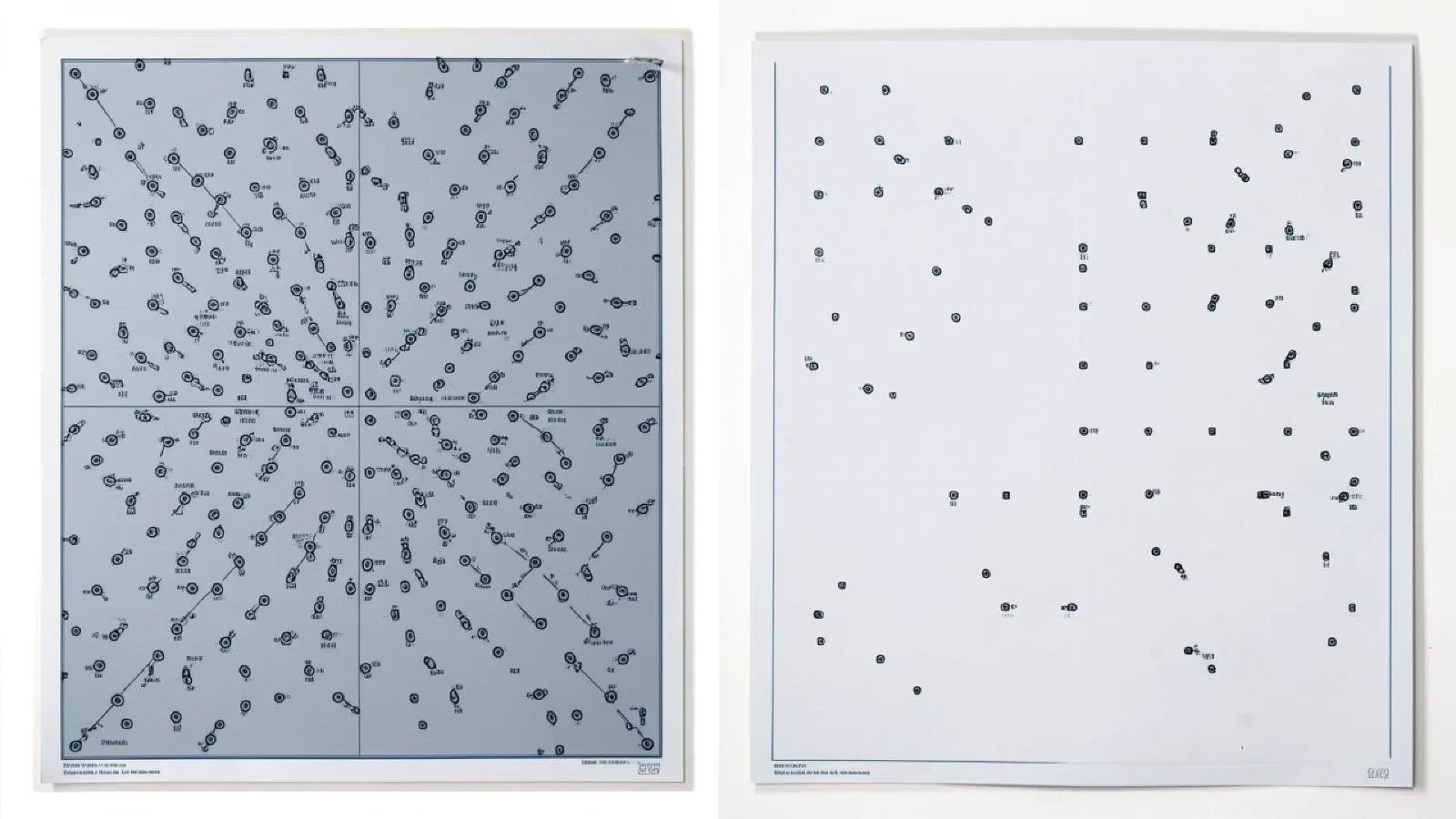
The Periphery Ledger
Partial optimization is not a smaller version of the full kind. It is a different condition.
TAM-ARB.30 · Arbitrage · The Approximate Mind
The optimizing instrument assumes an infrastructure, and the assumption is invisible in the metro because the metro is where the assumption is true.
Advice executes by default only where the products it executes against exist. Rebalance requires accounts that can hold the allocation. Refinance requires lenders competing for the loan. The better insurance rate requires more than one carrier writing the county. The enrollment window requires a program that operates locally, an employer plan, a provider network, a branch or an agent or at minimum a serviceable interface built with this ZIP code in its test data. Every one of these thins with density. The peripheral household enrolls in the same instrument the metro household does, hands over the same ledger, receives the same continuous attention, and the instrument arrives with fewer levers attached, because the levers were never installed out here.
The machine, in one sentence: optimization is the automated exercise of locally available options, so where the option set thins, the same instrument on the same ledger produces a structurally different outcome, and the difference is geographic before it is anything else.
A Different Condition#
The intuitive model says the periphery gets a smaller portion of the same good: eighty percent of the optimization, then sixty, tapering with distance. The intuitive model is wrong in a way the pricing depends on.
Partial optimization is a different condition from full optimization, not a scaled version of it, for three reasons that compound.
The gains are not proportional to the levers. Household optimization’s value concentrates in a few large moves, the refinance, the consolidation, the insurance switch, with a long tail of small ones. The thinning is not uniform across that distribution: the large moves are exactly the ones that require competing counterparties, and competing counterparties are what density provides. A periphery that retains ninety percent of the levers can lose the majority of the value, because the ten percent it lost were the ones that paid.
The instrument still reports success. It executes everything executable, flawlessly, and the ledger shows continuous small improvements, the waived fee, the caught expiration, the moved cash. The household experiences optimization, trusts it, and has no view of the counterfactual metro ledger where the same instrument found a lender who would compete. Full optimization closes spreads. Partial optimization closes the visible small ones while the large ones stand, and it does so under the same brand, with the same interface, reporting the same diligence, which makes the geographic difference not merely unpriced but unperceived.
The reporting is not a deception. Every line of it is true. The instrument did catch the expiration, did move the cash, did file for the rebate, and the monthly statement of savings is arithmetically honest. What the statement cannot show is the denominator: what the same year of the same diligence would have returned where three lenders bid for the refinance and four carriers wrote the county. A truthful report of the numerator, delivered every month with the counterfactual structurally invisible, builds a confidence that is accurate about the instrument and wrong about the situation, and that particular composite, trusting the tool and misreading the terrain, is new. The pre-instrument periphery at least knew it was far from things.
And the standing spreads learn. A counterparty that is the only lender, the only carrier, the only provider in a thin market faces optimized households that can see the better price and cannot reach it, which is the unenrolled essay’s mechanism one notch up: extraction that requires no concealment, because the gate is not information and not enrollment but geography. The instrument, having read the ledger, documents the spread it cannot close, and the documentation changes nothing except the precision with which the household understands what it is paying for being where it is.
The Inherited Model#
The corpus has a model of the periphery, and it has been corrected twice. It holds here as corrected.
The first version read the periphery as left behind, a lag to be closed by arrival. The first correction established that capability’s arrival is not the variable: the tap opens everywhere at once, and what differs by geography is the surrounding structure that converts open taps into outcomes. The second correction, made in the corpus’s work on dispersal and on the rural remainder, established that the periphery is not one condition but a gradient with thresholds, and that below certain densities the question stops being how well systems serve a place and becomes whether any serving structure exists at all.
The twice-corrected model holds, and gains one floor here: the household ledger is where the gradient becomes a bill. The thinning of institutions that the corpus has examined at the scale of towns, services, and professions arrives, through the optimizing instrument, as a specific, continuous, legible difference in what a family pays for money, risk, and credit, and the legibility is new. The periphery has always paid these prices. It has never before had an instrument in the house that could itemize what density would have saved.
Whether a serving structure can be built where none stands, what the smallest body is that can hold a deployment, whether such units are manufactured or only inherited: that question is open across this project, and this essay does not answer it. What this essay supplies is the demand-side evidence, priced household by household. If an answer is ever produced, a count of the smallest bodies that can hold a deployment, this gradient is what the count will be counted against.
The Frame#
Decision rule: geographic exposure in any consumer-finance position should be underwritten on the option density of its footprint, not on enrollment rates, because an enrolled periphery is a book of documented, standing spreads with a single counterparty, which is a different asset from an optimized book, whatever the instrument’s coverage statistics say.
The instrument works everywhere. What it works on was built where the people were dense, and the ledger now shows the difference to the family paying it.
The Approximate Mind is a series exploring what AI actually does to human life. Arbitrage prices what the audit does to every spread it reaches.
How this essay connects to others across The Approximate Mind.